
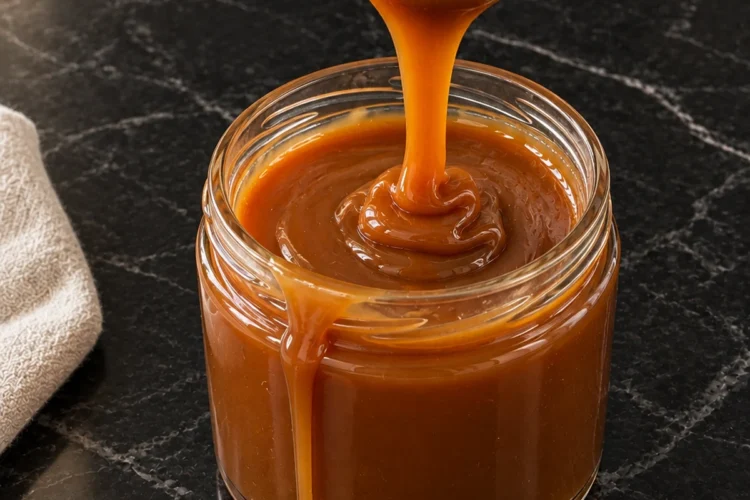
Homemade caramel sauce is glossy, deep amber and pourable while warm, then thick enough to hold a ribbon on a spoon once it cools. It tastes like toasted sugar and butter with a little salt at the end, much richer than the jarred kind, and it takes 5 ingredients you probably already have.
Everything depends on one moment: taking the sugar to a deep amber, about 340 to 350°F (170 to 175°C), the color of a copper penny. Stop earlier and the sauce tastes only sweet; go past 355°F (180°C) and it turns bitter. Warm the cream before it goes in so the caramel does not seize. The whole batch takes about 20 minutes in one small saucepan and makes 1 1/4 cups (300 ml).
At a Glance
- Yield: about 1 1/4 cups (300 ml), 20 tablespoon servings
- Pan: a 2 quart (2 liter) light-colored saucepan with a heavy base
- Time: 5 minutes prep, 15 minutes on the stove, 15 minutes to cool and thicken
- Difficulty: easy, but stay at the stove once the sugar starts to color
- Key technique: cook the sugar to deep amber, then add room-temperature butter and warm cream
Why This Caramel Stays Smooth
Caramel turns grainy when sugar crystals form again after the sugar has dissolved. The water in this recipe, 1/4 cup (60 ml) for 1 cup (200 g) of sugar, lets the sugar dissolve completely before it starts to brown. After that, the only job is to stop stirring. A spoon dragging through boiling syrup pushes sugar onto the cooler sides of the pan, where it dries into crystals that can seed the whole batch. Swirl the pan instead.
Fat and cream finish the job. Six tablespoons (85 g) of butter and 1/2 cup (120 ml) of heavy cream coat the sugar so it cannot set hard, which is why the sauce stays spoonable even straight from the fridge. More cream makes it thinner, less cream makes it thicker; the ratio here sits in the middle and works for drizzling and for dipping.
Ingredient Notes
The full list is in the recipe card below. Three of the five ingredients change the result:
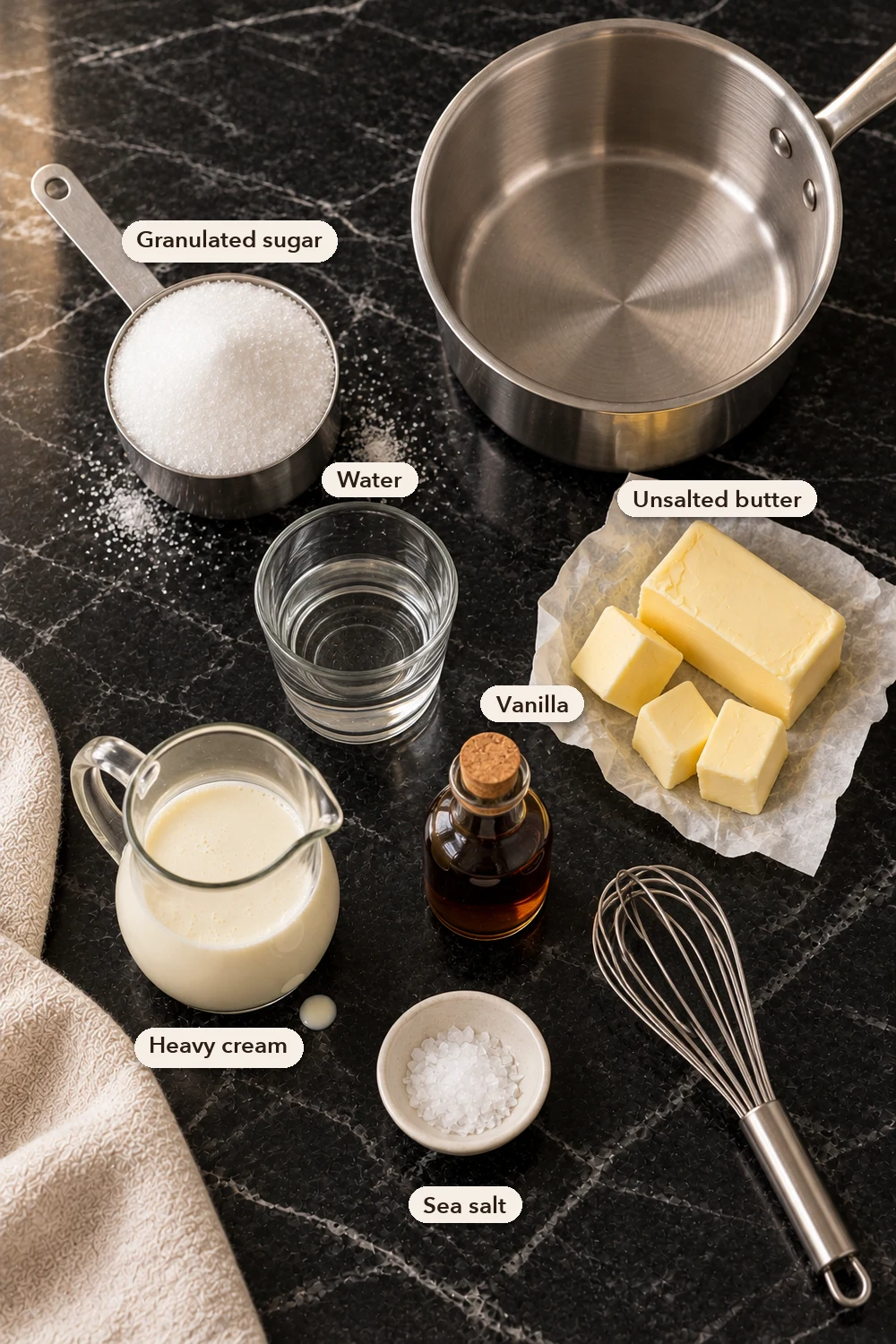
- Sugar: plain granulated white sugar, 1 cup (200 g). It shows the color change clearly. Brown sugar already looks dark, which makes it hard to judge the amber, and it scorches faster.
- Butter: 6 tablespoons (85 g) unsalted, cut into cubes and left at room temperature. Cold butter drops the temperature too fast and can make the sugar clump.
- Heavy cream: 1/2 cup (120 ml) with at least 36 percent fat, warmed for 30 seconds in the microwave. Half-and-half or milk have too much water; the sauce bubbles harder, tastes thinner and can separate.
- Salt: 1/2 teaspoon of fine sea salt gives a balanced caramel. For salted caramel sauce, add another 1/2 to 1 teaspoon of flaky salt at the end.
Cooking the Sugar to Amber
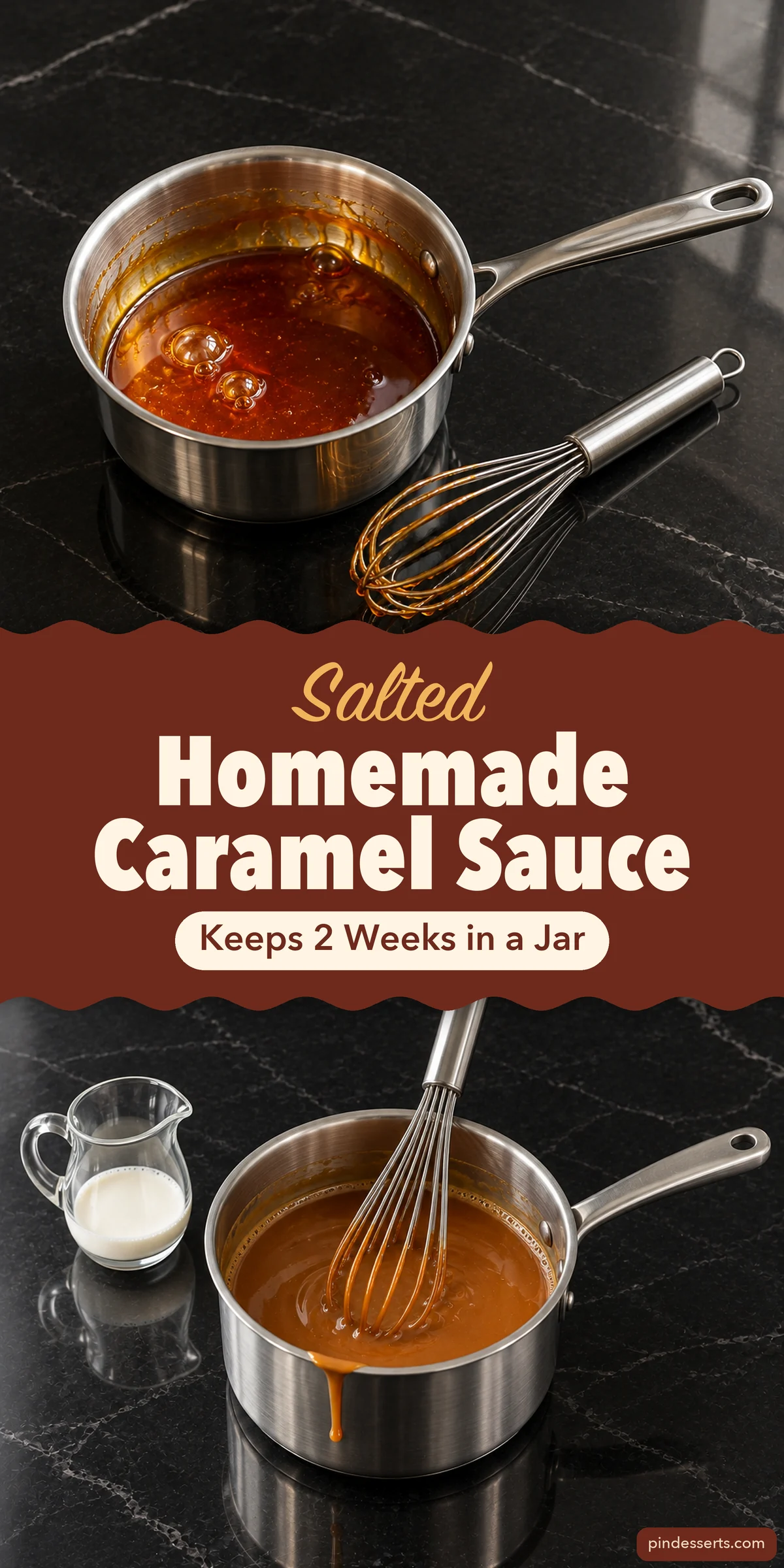
Put the sugar and water in the saucepan over medium heat and stir gently just until the sugar dissolves and the liquid looks clear, 2 to 3 minutes. Then put the spoon away. Let it boil without stirring for 6 to 8 minutes. If sugar crystals cling to the sides, brush them down with a pastry brush dipped in water.
The syrup stays clear for a few minutes, then turns pale gold at the edges. From there it moves fast. Swirl the pan every 20 to 30 seconds so the color evens out, and take it off the heat when it reaches a deep amber and smells nutty, or reads 340 to 350°F (170 to 175°C) on a thermometer.
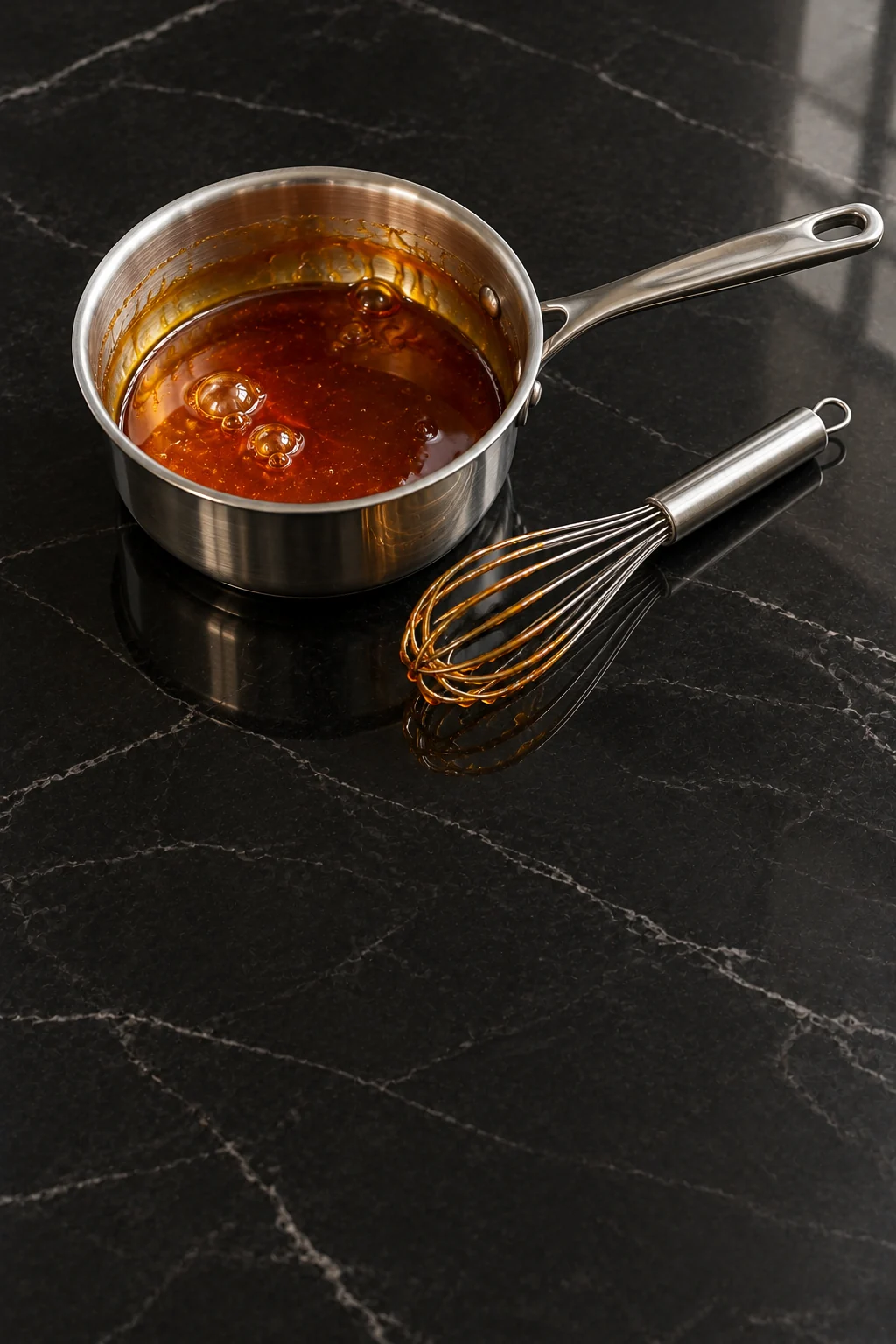
A light-colored pan makes this much easier. On a dark nonstick pan, a caramel that looks perfect can already be burnt.
Adding the Butter and Cream
Off the heat, whisk in the butter all at once. The caramel will foam up hard, so use a pan with tall sides and keep your face back. When the butter has melted, pour in the warm cream in a slow stream while whisking. It bubbles up again and then settles into a smooth, lighter sauce.
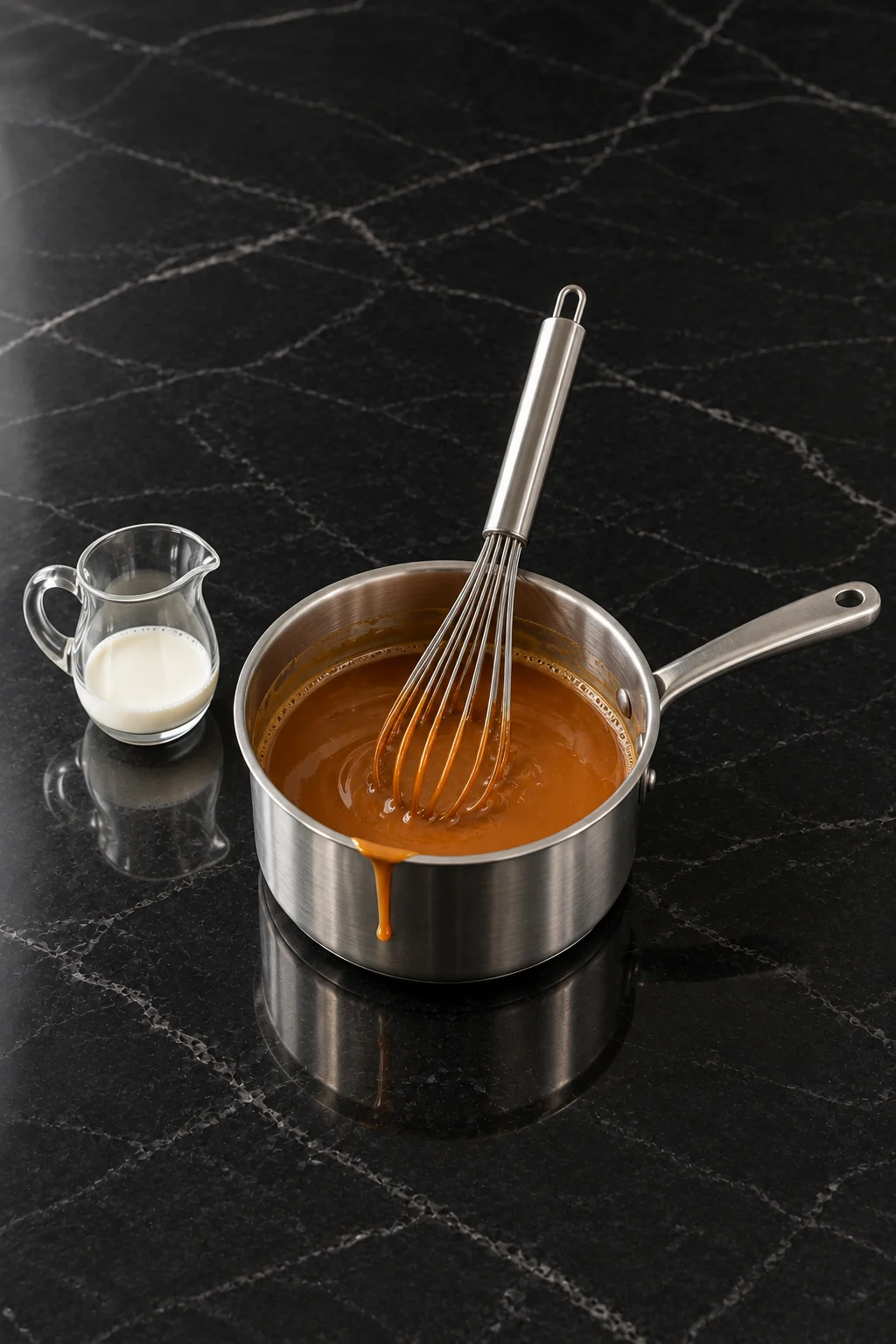
Put the pan back over medium heat and let it boil for 1 minute, whisking, to thicken slightly. Take it off the heat and whisk in 1 teaspoon of vanilla and the salt.
How to Tell It Is Done
- Color: deep copper amber before the dairy goes in; a lighter toffee brown after.
- Smell: toasty and nutty. A sharp, smoky smell means it went too far.
- Texture: thin and fluid while hot, about like warm honey. It coats the back of a spoon.
- Cooling: it thickens a lot in 15 minutes. Judge the thickness warm, not boiling.
Troubleshooting Caramel Sauce
| Problem | Cause | Fix |
|---|---|---|
| Grainy or sandy | Stirred after boiling, or crystals on the pan sides | Add 2 tablespoons (30 ml) water, heat gently until smooth |
| Hard lumps after the cream | Cold cream or butter | Whisk over low heat until the lumps melt |
| Bitter, smoky taste | Sugar went past 355°F (180°C) | Start again; it cannot be fixed |
| Too thin once cool | Pulled too pale or too much cream | Simmer 2 to 3 minutes more |
| Greasy layer on top | Butter separated | Whisk in 1 tablespoon hot cream or water |
Ways to Use It
Warm caramel sauce goes over vanilla ice cream, brownies, pancakes and coffee. It is the drizzle on Snickers apple salad and a good dip for apple slices; for a thicker, party-style dip, the caramel apple dip is made for that job.
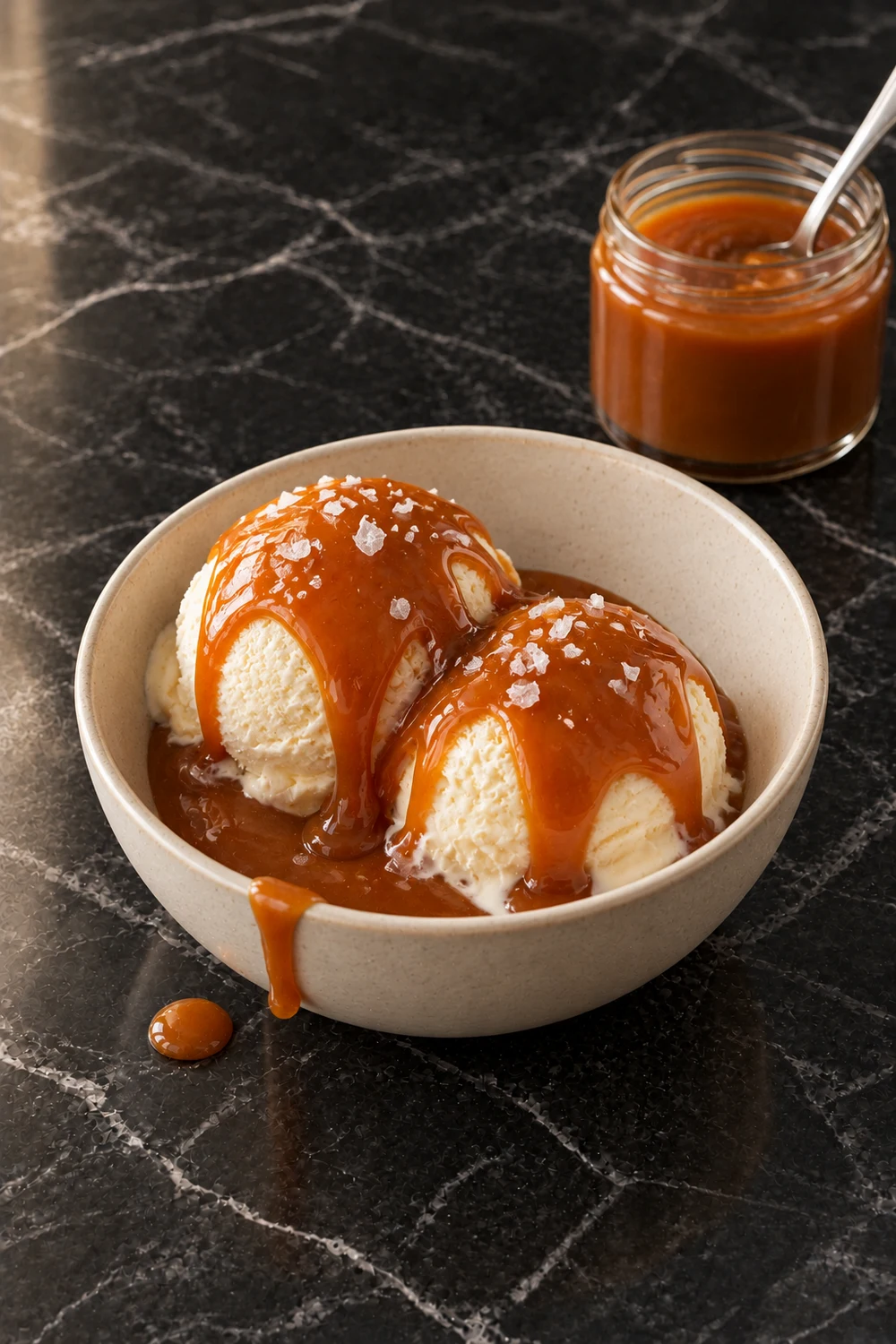
Spoon it over a slice of pecan pie cheesecake or Basque burnt cheesecake, or warm it and pour it over pumpkin dump cake and stovetop cinnamon apples. For dipped apples, use a firmer caramel like the one in gourmet caramel apples; this sauce is too soft to set on the fruit. To frost a cake, beat cooled sauce into caramel buttercream frosting.
Variations
- Salted caramel: add 1/2 to 1 teaspoon flaky sea salt with the vanilla.
- Thicker for filling: use 1/3 cup (80 ml) cream.
- Thinner for drinks: use 2/3 cup (160 ml) cream.
- Bourbon: stir in 1 tablespoon bourbon with the vanilla.
- Brown butter: brown the butter in a small pan before adding it.
Storing and Reheating
Let the sauce cool for 15 minutes, then pour it into a clean glass jar. It keeps for 2 weeks in the fridge, where it firms up to a thick, spreadable caramel. Freeze it for up to 3 months and thaw it overnight in the fridge.
Reheat it in the microwave in 15 second bursts, stirring between them, or set the jar in a bowl of hot water for 10 minutes. If it looks oily after reheating, a brisk whisk brings it back together.
Caramel Sauce Questions
Can I make caramel sauce without a thermometer?
Yes. Go by color and smell: pull it at deep amber, like a copper penny, when it smells nutty.
Why did my caramel harden in the fridge?
Cold butter and sugar set firm. Warm it for 15 to 30 seconds and it pours again.
Can I double the recipe?
Yes, in a 3 quart (3 liter) pan. The sugar takes a few minutes longer to reach amber.
Is caramel sauce the same as dulce de leche?
No. Dulce de leche is milk and sugar cooked slowly; this sauce is cooked sugar finished with butter and cream.
Save This Caramel Sauce
Pin it to a fall desserts board, so the copper penny color and the warm cream are there the next time you need a drizzle.
Homemade Caramel Sauce
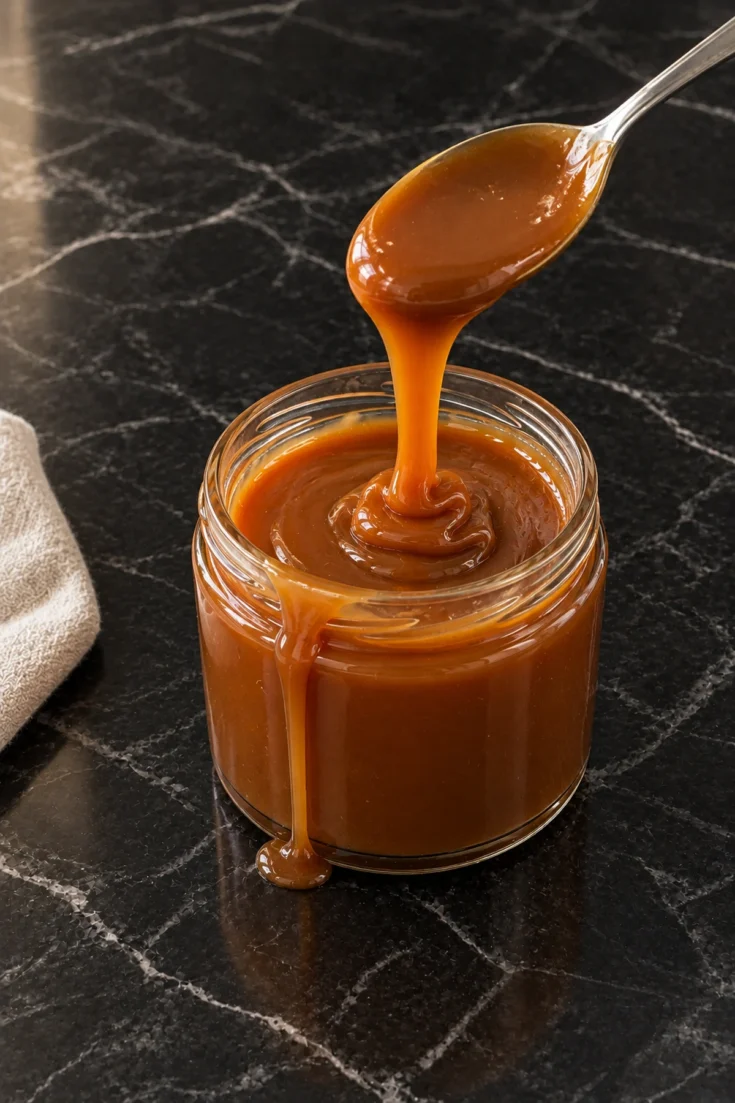
Homemade caramel sauce that is glossy and pourable when warm and thick when cold, made with 5 ingredients in one saucepan. Granulated sugar and a little water cook to a deep amber, 340 to 350°F, without stirring, then room-temperature butter and warm heavy cream are whisked in so it stays smooth. A pinch of salt and a splash of vanilla finish it, and more flaky salt turns it into salted caramel sauce. Ready in 20 minutes, keeps 2 weeks in the fridge.
Ingredients
Caramel sauce
- 1 cup (200 g) granulated sugar
- 1/4 cup (60 ml) water
- 6 tablespoons (85 g) unsalted butter, cubed, room temperature
- 1/2 cup (120 ml) heavy cream, warmed
- 1 teaspoon vanilla extract
- 1/2 teaspoon fine sea salt
Optional
- 1/2 to 1 teaspoon flaky sea salt, for salted caramel
Instructions
- PREP: Cube the butter and let it sit at room temperature. Warm the cream in the microwave for 30 seconds.
- DISSOLVE: Put the sugar and water in a light-colored 2 quart saucepan over medium heat. Stir gently only until the sugar dissolves and the syrup is clear, 2 to 3 minutes.
- COOK: Boil without stirring for 6 to 8 minutes, swirling the pan once it colors, until deep amber (340 to 350°F / 170 to 175°C). Brush any crystals off the sides with a wet pastry brush.
- BUTTER: Off the heat, whisk in the butter; it will foam up.
- CREAM: Slowly pour in the warm cream while whisking. Return to medium heat and boil 1 minute.
- FINISH: Off the heat, whisk in the vanilla and salt. Cool 15 minutes, then pour into a jar.
Notes
- Stop stirring once the sugar dissolves; swirl the pan instead so it does not crystallize.
- Done: deep amber like a copper penny, nutty smell, 340 to 350°F (170 to 175°C).
- Use room-temperature butter and warm cream; cold dairy makes the caramel seize.
- Grainy? Add 2 tablespoons water and warm gently until smooth.
- Storage: glass jar in the fridge 2 weeks, freezer 3 months. Rewarm in 15 second bursts.
Nutrition Information:
Yield:
20Serving Size:
1Amount Per Serving: Calories: 89Total Fat: 6gSaturated Fat: 4gTrans Fat: 0gUnsaturated Fat: 2gCholesterol: 16mgSodium: 60mgCarbohydrates: 10gFiber: 0gSugar: 10gProtein: 0g
