

Some desserts whisper comfort. New York style cheesecake stands up and announces it. That first creamy slice carries the weight of tradition, technique, and a little kitchen confidence. And that is exactly what you will gain here.
You will learn how to bake a tall and creamy New York cheesecake that holds its shape, stays smooth, and delivers a dense, rich bite without cracks. I will share how I make mine reliable every time. My notes are open to you.
There is a quiet trick hiding inside this cheesecake. One ingredient shifts the entire texture and helps you avoid those hairline cracks that ruin the finish. Stay with me, I will get to it.

How To Make Graham Cracker Crust For New York Cheesecake
The graham cracker crust creates the steady base. I crush the crackers into fine crumbs, using either a rolling pin or my small food processor. Both work, but the food processor gets a finer texture that packs more evenly.
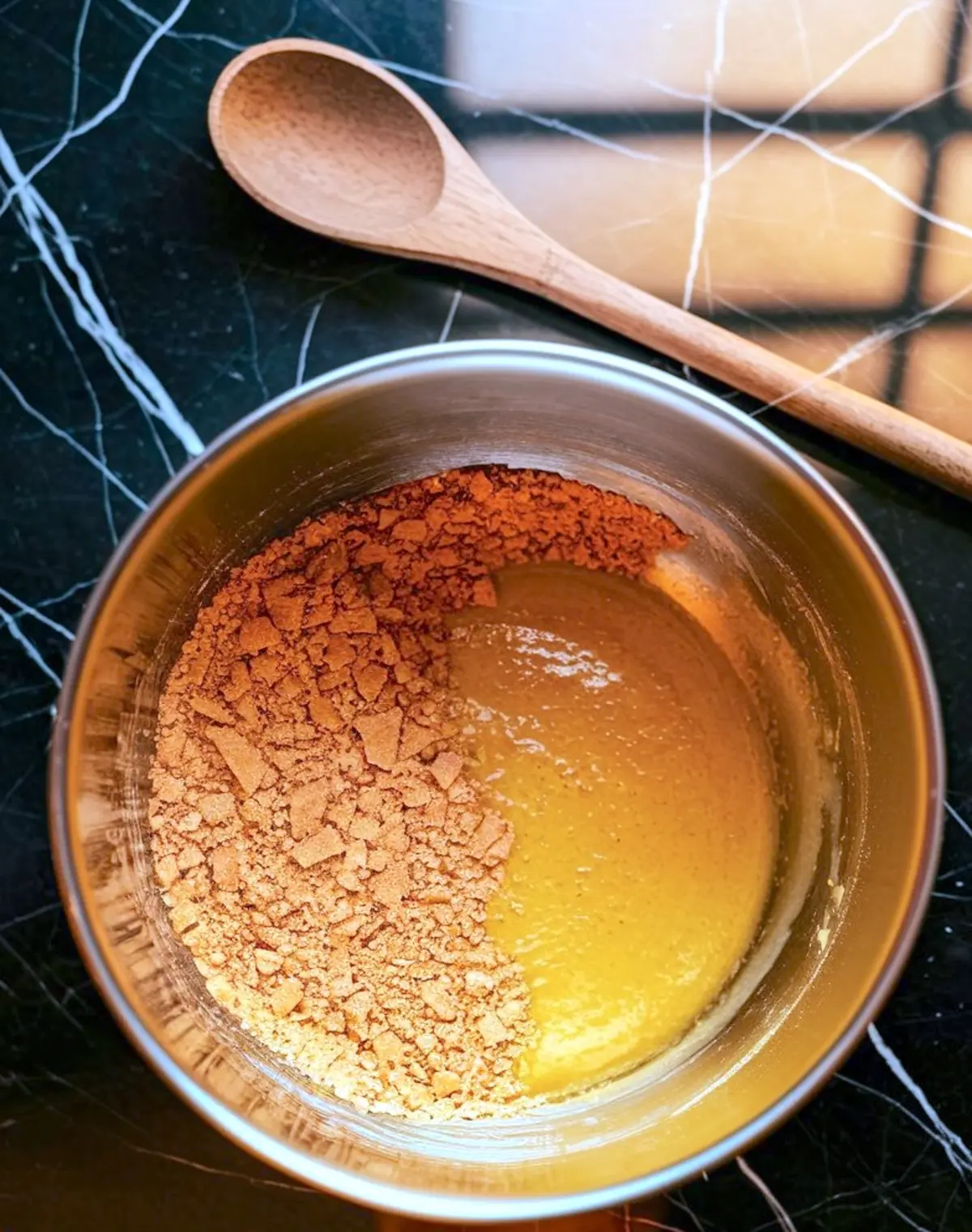
The crumbs mix with melted unsalted butter and a little sugar. This mixture presses into the springform pan. I only press it flat on the bottom, never up the sides. That gives the cheesecake a clean, bakery-style edge.
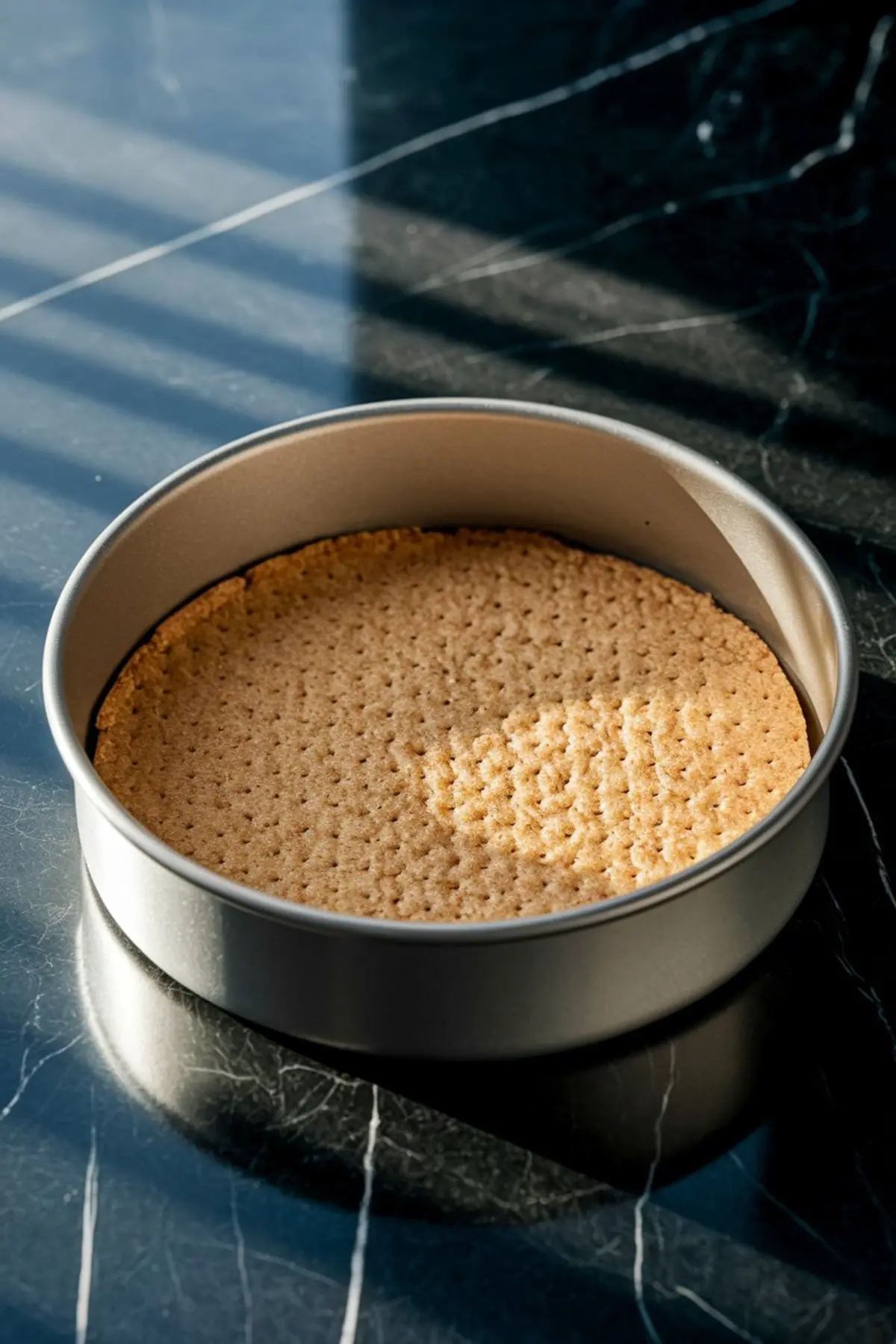
Before filling, the crust needs a short bake at 350°F. Just 10 minutes creates the faint golden color and locks it in place. Then I reduce the oven to 325°F, setting the stage for a gentle bake later.
Preparing The Cream Cheese Filling

Full-fat cream cheese sits at the center of every proper New York cheesecake. I let mine rest at room temperature for at least two hours. Cold cream cheese leads to lumps, and lumps ruin the smooth texture.
I beat the cream cheese alone first, scraping the sides as I go. This breaks down any lumps before adding anything else.
Now, here comes the moment where most bakers slip: the sugar.
Why Sugar And Mixing Speed Matter
Gradually blending in the sugar allows it to dissolve into the softened cheese. I add the flour, sour cream, and vanilla after that, mixing slowly. Low speed is important. Air bubbles invite cracks.
How To Add Eggs For Smooth Cheesecake Batter
The eggs always go in one at a time. Each must fully blend before the next enters the bowl. I keep the mixer on low, keeping the batter thick but not whipped.
Overmixing eggs creates pockets of air. Those pockets expand and contract as the cheesecake bakes, causing the dreaded surface cracks.
Pouring The Cheesecake And Releasing Air Bubbles
Once the batter smooths out, I pour it over the cooled crust. A few gentle taps on the counter bring trapped air bubbles to the surface. They rise and pop before they can cause any problems inside the oven.
Why Water Bath Baking Prevents Cracks
This part often feels complicated, but it matters. I wrap my springform pan tightly with two layers of foil. That prevents water from seeping inside. The wrapped pan sits inside a large roasting pan filled halfway with hot water.
The water bath creates an even baking environment, keeping the heat stable and moist. My cheesecakes never bake without it.
The Secret Ingredient That Makes It Tall And Creamy
Now I will reveal the trick I hinted at. The small addition of flour gives structure without sacrificing creaminess. Many New York cheesecake recipes skip it, but I never do.
I have tested both ways. Cheesecakes without flour turn out silkier but risk sinking and cracking more easily. That tablespoon of flour gives the batter just enough stability to hold shape while still tasting rich and creamy.
If you want to explore flourless options, something like my Nutella Cheesecake works better for that softer, no-bake texture.
How To Know When New York Cheesecake Is Done
Into the oven the water bath goes, set for one hour and fifteen minutes. The outer edges will firm up while the center stays slightly jiggly. That movement signals doneness. If the entire surface firms up fully in the oven, the cheesecake will turn dense and dry later.
How To Cool Cheesecake Properly To Avoid Cracks
Patience continues after baking. I turn off the oven and crack the door. The cheesecake rests inside for another hour. Sudden temperature changes cause cracks, so the slow cooling avoids that risk.
Once out, it cools fully on a rack, then chills in the refrigerator uncovered for at least six hours, often overnight. This long rest allows the texture to set properly.
How To Slice And Serve New York Cheesecake
When ready, I run a thin knife around the pan to release the edges. A warm, clean knife slices neatly through each portion. Clean the blade between cuts for sharp, smooth edges.
This dense texture reminds me why this dessert holds its place alongside other favorites like my Mango Cheesecake or the rich Brownie Cheesecake.
The Cream Cheese Brand Comparison You Should Know
Here is something I learned after multiple rounds of testing. Cream cheese brand changes the final texture. Philadelphia brand creates the thick, dense structure true to classic New York style. Store brands can work but often introduce more moisture, softening the set.
If you want that tall, creamy New York cheesecake look with a sharp edge, choose a high-quality full-fat cream cheese. That small choice makes a big difference.
More Cheesecake Recipes To Try Next
Once you master this base, you might feel ready to explore different flavor directions. My Snickers Cheesecake brings caramel and peanuts into the mix. The Protein Cheesecake shows a lighter, high-protein option without sacrificing flavor. And for something indulgent, the Oreo Cheesecake stays no-bake but still deeply satisfying.
Pin This Recipe And Share Your Results

Now you hold the full process to bake your own New York cheesecake. Tall, creamy, smooth, and without cracks. Keep these notes close and trust your hands as you work.
Save this recipe to your Pinterest board for your next special occasion. And when you bake it, share your results in the comments. I love seeing your photos and hearing your questions. We are building this dessert table together.
New York Cheesecake Recipe

New York Style Cheesecake is dense, creamy, and rich with deep vanilla flavor and subtle tang from sour cream. It’s built on a classic graham cracker crust that adds just the right amount of texture. Each slice holds its shape and finishes with a smooth, satisfying bite. Careful mixing and slow baking in a water bath help achieve a crack-free top and custard-like interior.
Ingredients
- FOR THE CRUST
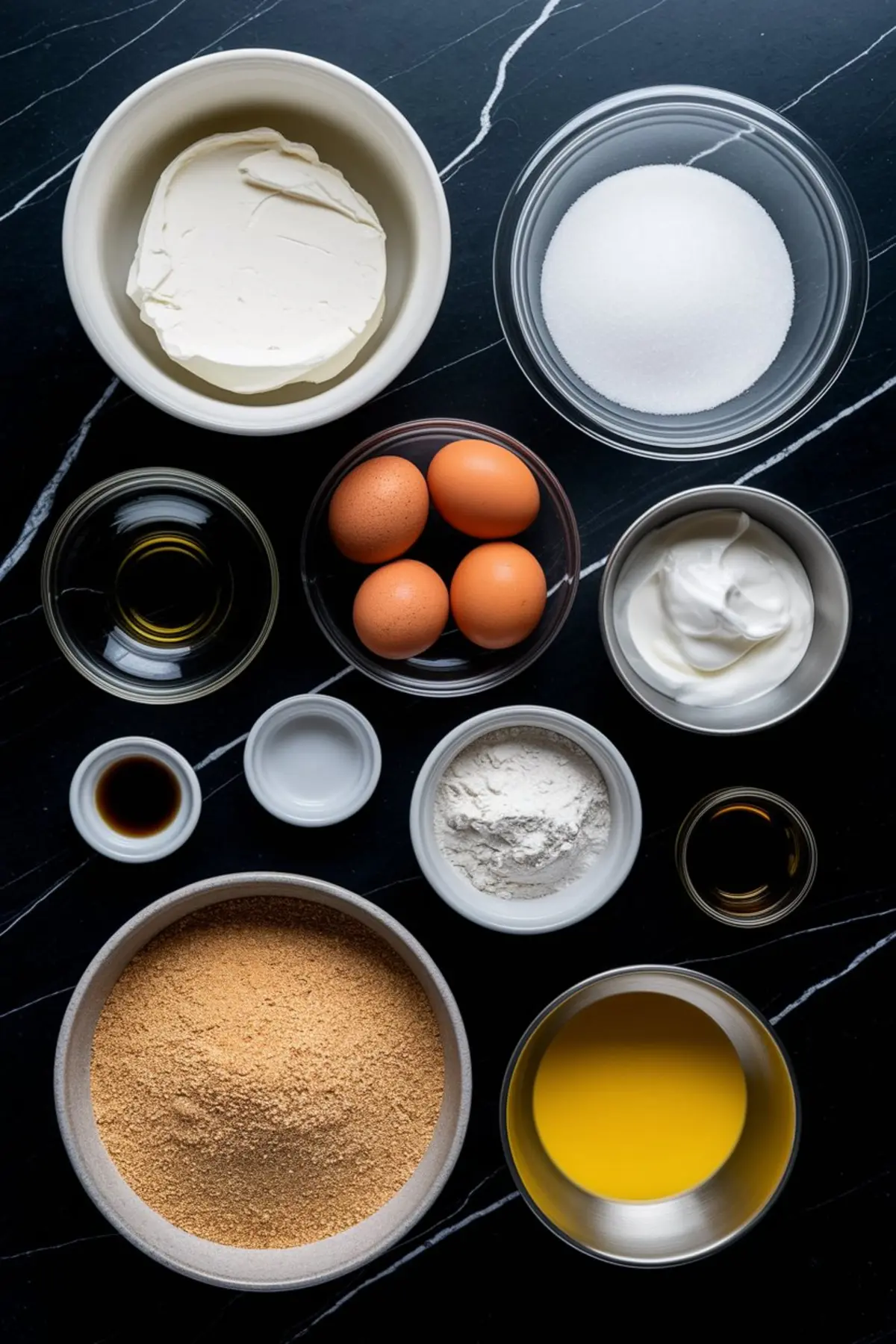
- 1 ¾ cups (about 14 full sheets) graham cracker crumbs
- 6 tablespoons unsalted butter, melted
- 3 tablespoons granulated sugar
- FOR THE FILLING
- 4 (8-ounce) blocks full-fat cream cheese, room temperature
- 1 cup granulated sugar
- 3 tablespoons all-purpose flour
- 1 cup sour cream, room temperature
- 1 tablespoon vanilla extract
- 4 large eggs, room temperature
Instructions
- PREHEAT AND PREPARE THE CRUST: Preheat the oven to 350°F (175°C). Crush graham crackers into fine crumbs using a food processor or rolling pin. In a medium bowl, mix the crumbs with melted butter and sugar until evenly combined. Press the mixture firmly into the bottom of a 9-inch springform pan to form an even base. Do not press up the sides.
- BAKE THE CRUST: Place the pan in the oven and bake for 10 minutes, or until the crust is lightly golden and fragrant. Remove from the oven and allow to cool. Reduce oven temperature to 325°F (160°C).
- BEAT THE CREAM CHEESE: In a large mixing bowl, beat the cream cheese with an electric mixer on medium speed until completely smooth and free of lumps. Scrape down the sides as needed.
- ADD SUGAR AND MIX-INS: Gradually add the sugar and mix until fully incorporated. Add the flour, sour cream, and vanilla extract. Mix on low speed until smooth and well blended.
- INCORPORATE THE EGGS: Add the eggs one at a time, mixing just until each is incorporated. Do not overmix. The goal is to combine the ingredients without introducing excess air.
- FILL THE PAN: Pour the filling over the cooled crust. Tap the pan gently on the counter several times to release air bubbles that could cause cracks during baking.
- PREP FOR WATER BATH: Wrap the outside of the springform pan tightly in a double layer of aluminum foil to prevent leaks. Place the wrapped pan inside a large roasting pan and pour hot water into the roasting pan until it reaches halfway up the sides of the springform pan.
- BAKE THE CHEESECAKE: Carefully transfer the water bath to the oven and bake for 1 hour and 15 minutes. The outer edges should be set, and the center should jiggle slightly when gently shaken.
- COOL IN OVEN: Turn off the oven and crack the door open slightly. Leave the cheesecake inside for 1 hour to cool gradually and prevent surface cracks.
- COOL AT ROOM TEMPERATURE: After the hour in the oven, remove the cheesecake from the water bath and allow it to cool completely at room temperature on a wire rack.
- CHILL TO SET: Once the cheesecake has reached room temperature, refrigerate uncovered for at least 6 hours, or overnight, until fully set.
- RELEASE AND SERVE: When ready to serve, run a thin knife around the edge of the cheesecake to release it from the pan. Carefully remove the springform ring and transfer to a serving plate. Slice with a warm, clean knife for neat portions.
Notes
Use only room temperature ingredients for smooth blending. Avoid overmixing to reduce air in the batter and prevent cracking. A water bath creates gentle, even heat for the best texture. Cheesecake can be made up to two days in advance and stored tightly covered in the refrigerator.
Nutrition Information:
Yield:
12Serving Size:
1Amount Per Serving: Calories: 211Total Fat: 12gSaturated Fat: 7gTrans Fat: 0gUnsaturated Fat: 4gCholesterol: 91mgSodium: 43mgCarbohydrates: 23gFiber: 0gSugar: 21gProtein: 3g
