
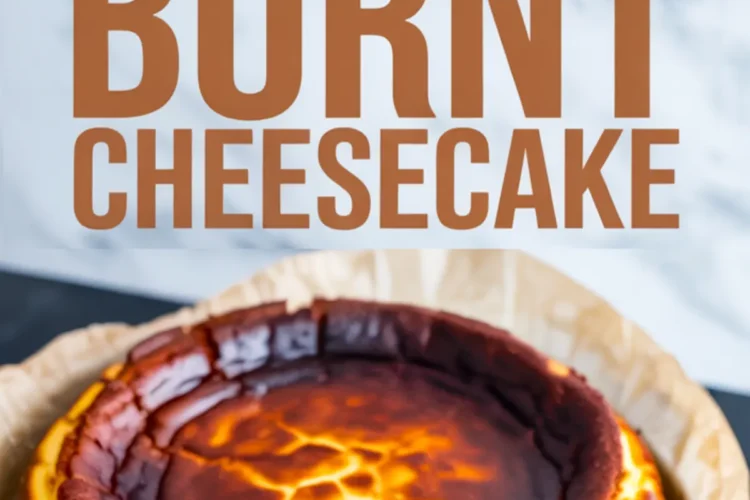
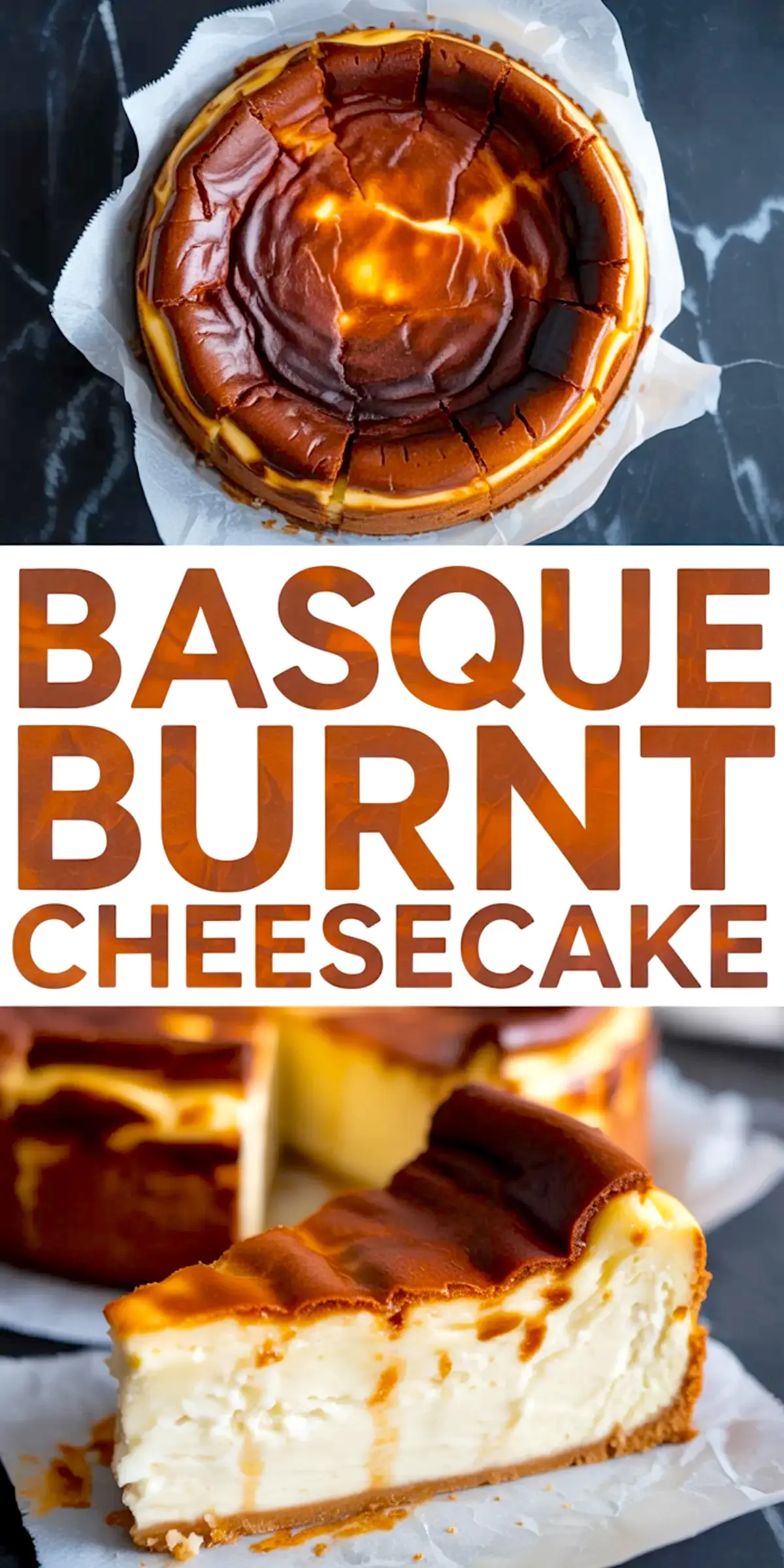
The first time I pulled this cheesecake from the oven, I thought I had ruined it. The top was nearly black. The edges had crinkled up like old parchment letters. But then I sliced through that caramelized top, and everything changed.
You’ll learn how to make a Basque Burnt Cheesecake that’s smooth in the middle, bronzed on top, and deeply rich without being heavy. This method uses only a few ingredients, but the result tastes far more complicated than it is. It’s bold and rustic, yet silky and refined at the same time. And there’s one small detail, a quiet twist that makes mine stand out from most.
I’ll tell you what it is, but not just yet. Let’s build the cheesecake first. Keep reading. It’s in there.
Cream Cheese at Room Temperature Makes All the Difference
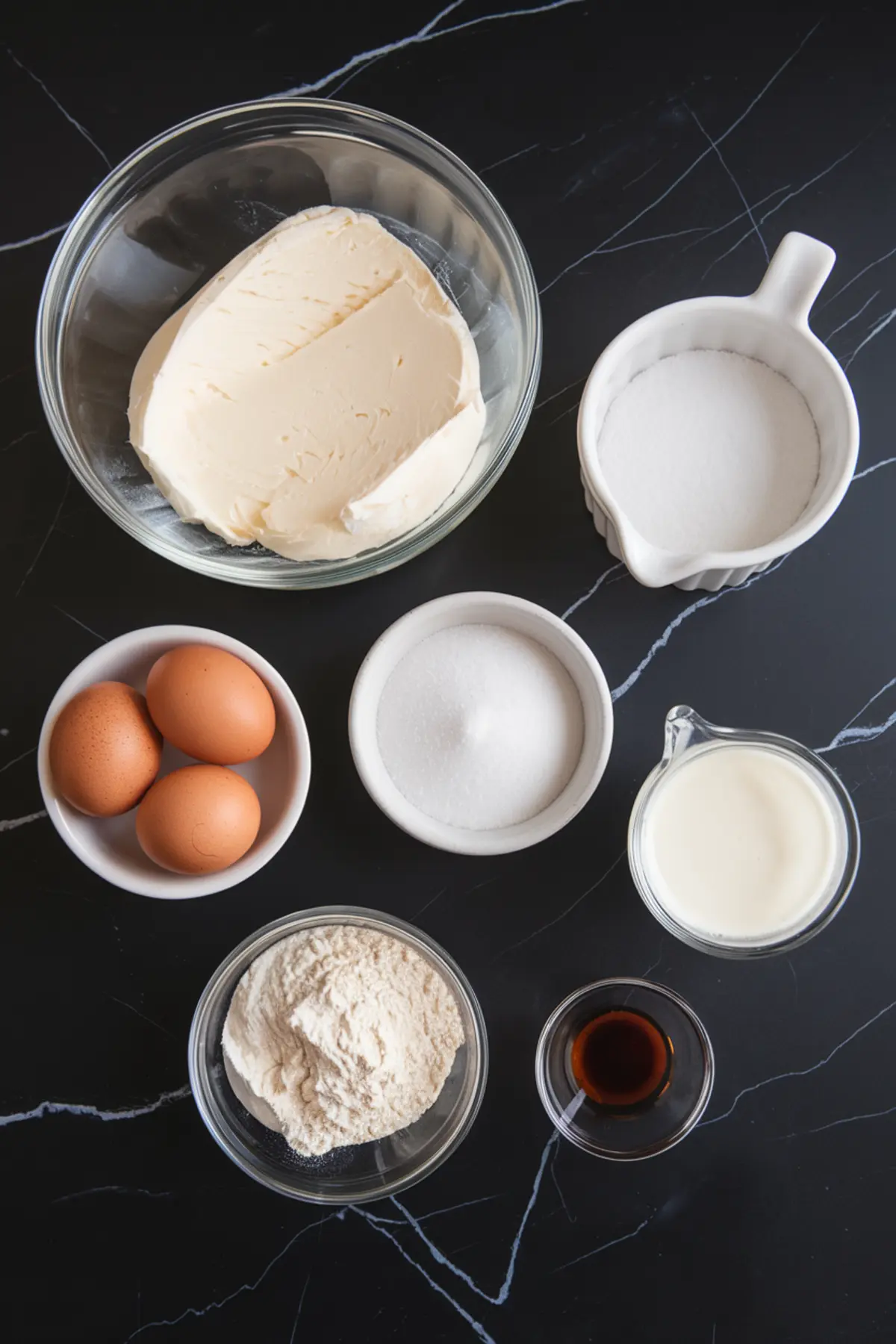
Start with full-fat cream cheese and make sure it’s not cold. Cold cream cheese won’t beat smoothly and creates clumps you’ll never fully chase down. You need a soft, almost spreadable texture before mixing.
If you rush this step, the batter stays uneven. I’ve tried softening it in the microwave. It doesn’t work the same. Leave it on the counter.
You can browse through my Cheesecake Recipes if you’re still deciding which one to start with. But if you’re craving something bolder, this one belongs at the top of the list.
Sugar Should Feel Like It Disappears Into the Cream Cheese
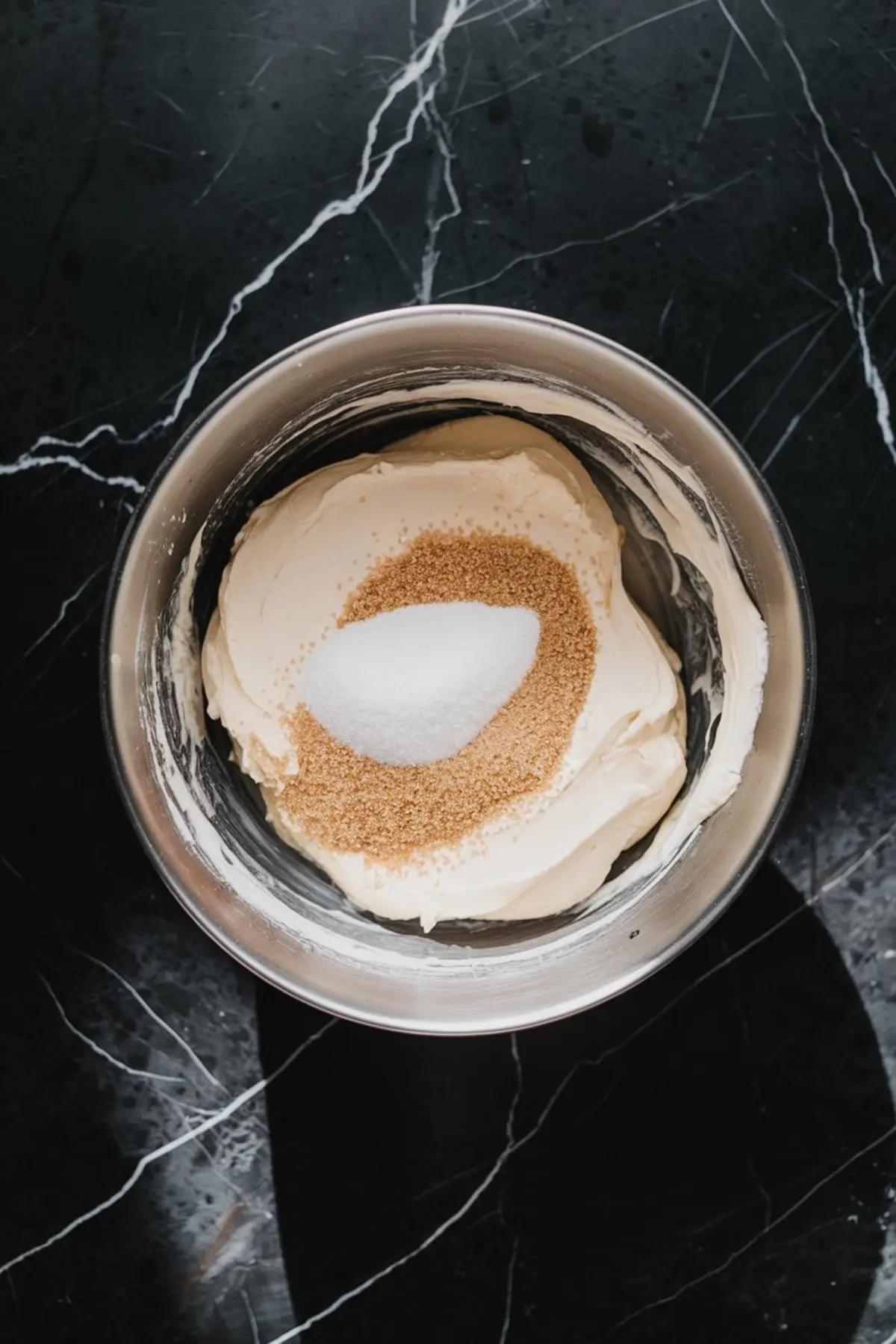
When you add sugar, go slowly. Don’t dump it all at once. It should dissolve as you beat. The texture will smooth out and lose its grain.
The trick is to listen. The batter shifts from gritty to soft. That’s how you know it’s ready. You’ll start hearing less friction against the bowl.
A good Caramel Cheesecake is delicate in a different way—this one leans heavier into contrast. The sugar here supports the burn.
Add Eggs One at a Time for a Balanced Texture
Each egg needs to be fully incorporated before you add the next. I’ve made the mistake of adding them all in one go, and the result was uneven. The batter won’t emulsify properly. You’ll see it split.
The mix should turn glossy and pale yellow. Scrape the bowl often. That’s not just busywork—it actually matters here.
Cream and Vanilla Make the Custard Feel Luxurious
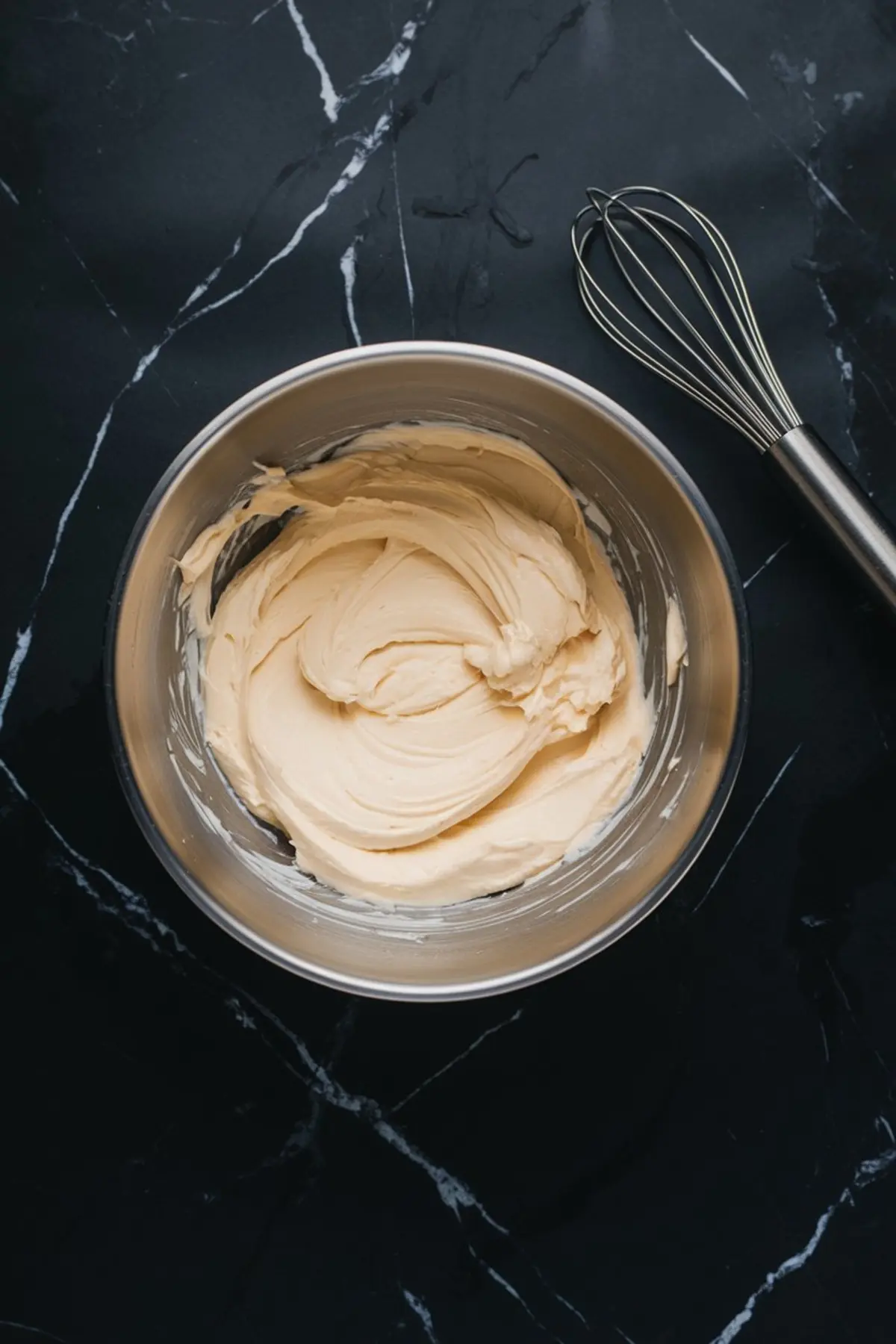
This is where the batter shifts from dense to dreamy. The heavy cream changes the texture entirely, loosening it just enough to bake into that trembling center.
Don’t skip the vanilla. Even if you think burnt cheesecake doesn’t need it. That subtle background note is what keeps it from feeling flat.
If you want to explore other rich styles, my German Chocolate Cheesecake has a similar depth but with chocolate and coconut added in.
One Spoonful of Flour Makes the Center Hold Without Losing Softness
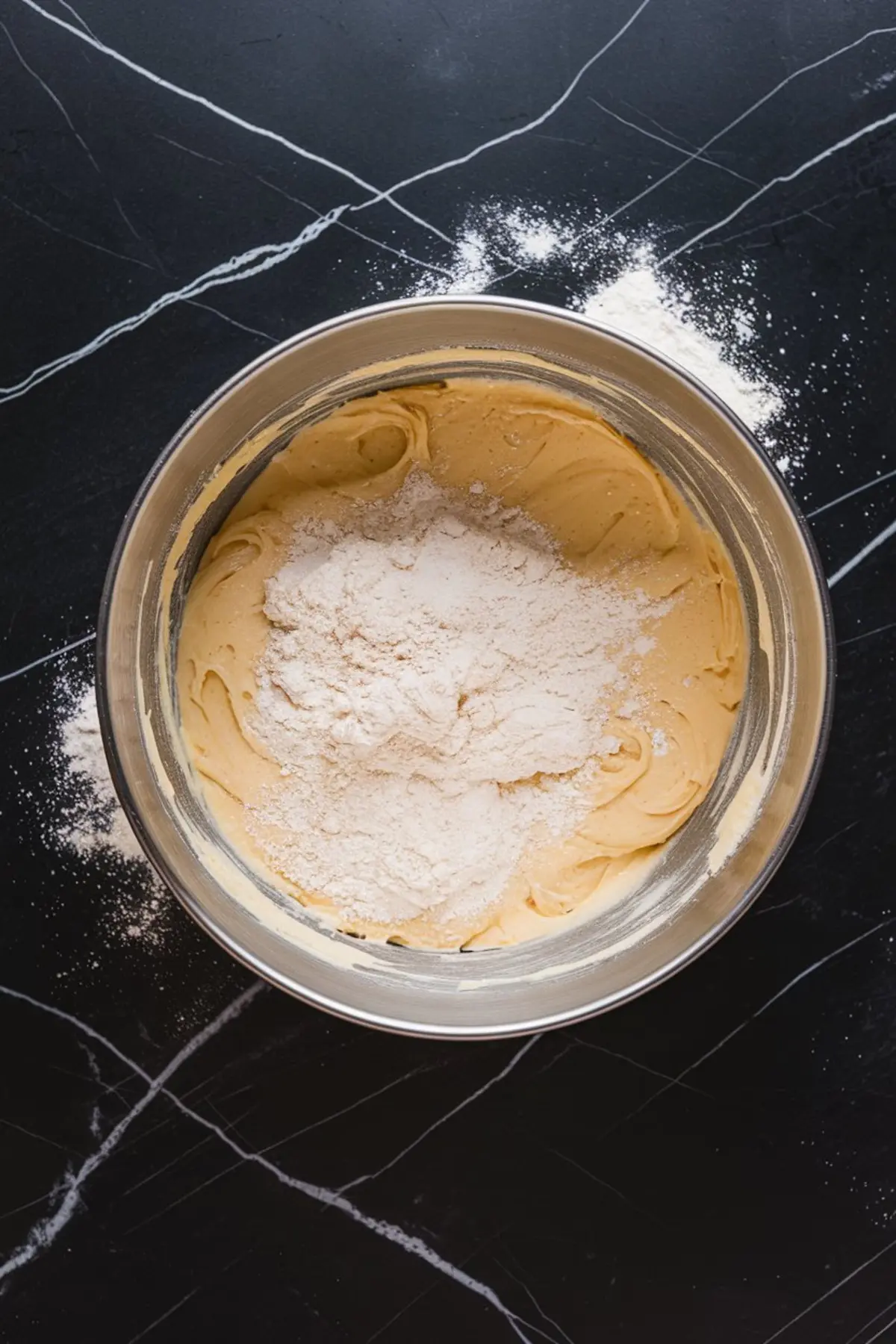
Here’s the quiet moment of structure. It’s just a tablespoon, but that small amount gives the center a soft body that holds together when sliced.
I’ve tested it both ways. Without flour, it’s looser and more fragile, with a creamy finish but harder to serve neatly. With it, you get structure while keeping the wobble. That’s the balance.
If you’re making mini versions—like a [Mini Burnt Cheesecake] style—this is even more important. They can collapse easily without it.
Don’t Smooth the Top—Let the Paper Crinkle Do Its Work
Parchment paper isn’t just for sticking. Crumpling it adds that signature ruffle at the edge. You want those folds. They trap heat and shape the sides like a pastry collar.
Smoothing the top? Skip it. The uneven top is part of the identity. And it’s what lets that darkened surface bubble up.
You’ll see versions labeled as [Burnt Cheesecake Recipe] or [Pumpkin Basque Cheesecake] and wonder if it’s always supposed to be this dramatic. It is. That’s the look.
High Heat Creates the Signature Burnt Top
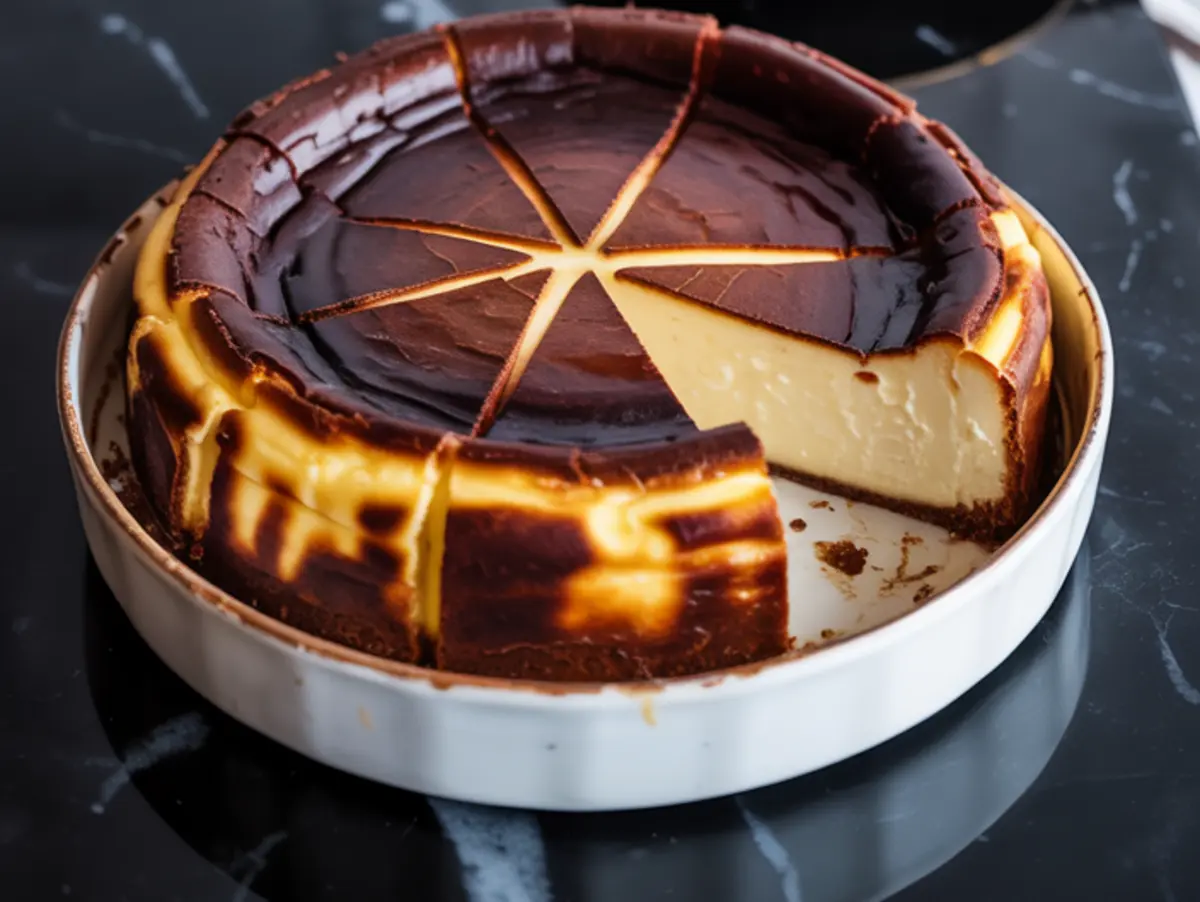
The oven must be hot. Not moderately warm—hot. Set it at 400°F and leave it there. No fan. No convection.
Watch for a deep brown top that borders on black. It should smell almost like toasted sugar and feel set at the edges but jiggly in the center.
I once tried using a glass dish instead of metal. It changed the timing completely. Stick with a metal springform if you want the right finish.
This is what separates a [San Sebastian Cheesecake Recipe] from a standard baked one. The high heat caramelizes the sugars on the surface. That’s the entire point.
Let It Cool Completely Before Cutting In
This is the hardest part. The cheesecake smells ready. It looks dramatic. And you’ll want to slice into it while it’s warm.
But if you do, it won’t hold. The center is custardy and needs time to firm up. Four hours minimum in the fridge.
Use a warm knife. Wipe between cuts. Take your time. The texture is worth the wait.
So What’s the Secret Element I Promised?
It’s the tiniest drop of salt. I didn’t mention it in the ingredients because it’s barely there. But I always add it. Just a pinch.
Salt changes the finish. It heightens the burnt top. It rounds out the sugar. Without it, the cheesecake tastes good. With it, it stays on your mind for days.
You might miss it if you don’t know to look. But it’s the one note that pulls it all together. It’s what people ask about when they try mine. And I never say it right away.
Now you know.
Save This Burnt Cheesecake Recipe and Join the Conversation

You can pin this recipe and save it to your dessert boards for later. It’s a recipe you’ll want to make again, especially once you see how easy it is to get that dramatic finish without stress.
Let me know in the comments how your Burnt Cheesecake turned out. Did you try the pinch of salt? Did you experiment with a [Chocolate Basque Cheesecake] twist?
If you have questions or tips, I’d love to hear them. Let’s build a space where burnt doesn’t mean broken—it means bold.
Basque Burnt Cheesecake
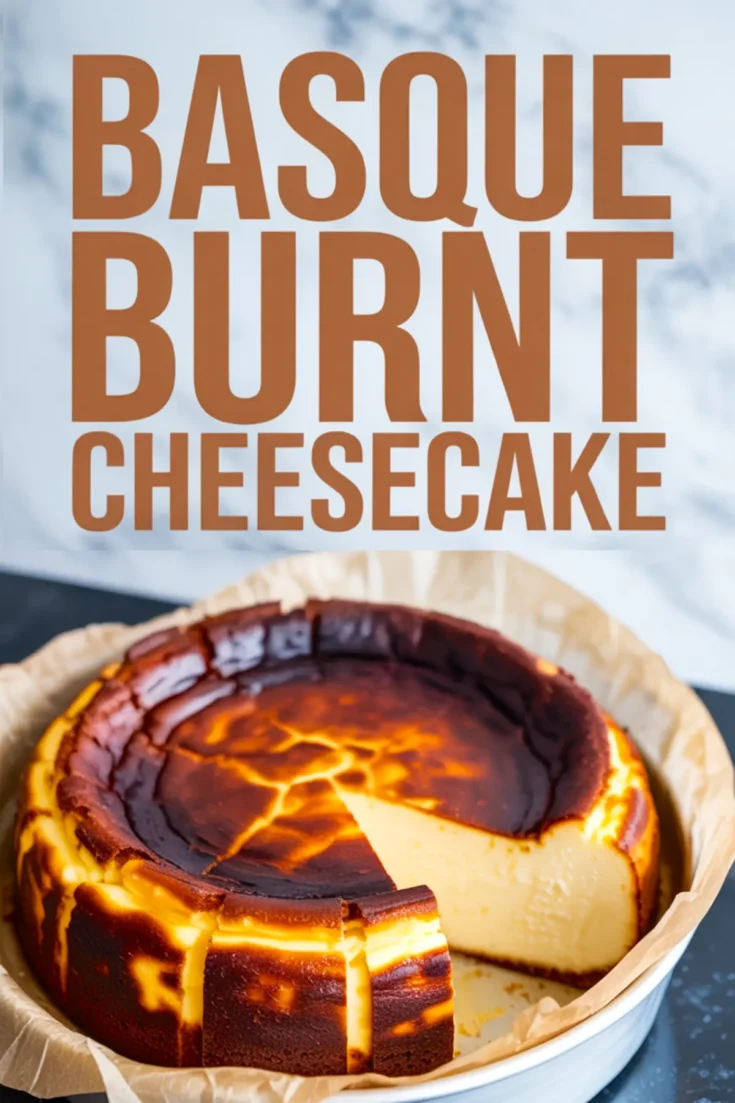
A creamy Basque Burnt Cheesecake features a caramelized top with a rich, custardy center. The high baking temperature creates a deep golden surface while leaving the inside smooth and luscious.
Ingredients
- cream cheese, full-fat, room temperature - 32 ounces (900 grams)
- granulated sugar - 1 1/4 cups (250 grams)
- large eggs, room temperature - 4
- heavy cream - 1 3/4 cups (400 milliliters)
- vanilla extract - 1 teaspoon
- all-purpose flour - 1 tablespoon
Instructions
PREPARE THE PAN: Line a 9-inch springform pan with parchment paper, allowing the paper to extend above the rim. Crumple the parchment first to make it more pliable and fit the pan better.
PREHEAT THE OVEN: Preheat your oven to 400°F (205°C). Use conventional heat without a fan.
BEAT THE CREAM CHEESE: Place the room-temperature cream cheese in a large mixing bowl. Beat it with a stand mixer fitted with a paddle attachment or a hand mixer until smooth and lump-free.
ADD THE SUGAR: Gradually add the granulated sugar while continuing to beat. Mix until fully incorporated and the mixture feels smooth without any gritty texture.
INCORPORATE THE EGGS: Crack the eggs one at a time into the mixture, beating well after each addition. Scrape down the sides of the bowl regularly to ensure an even batter.
MIX IN CREAM AND VANILLA: Pour in the heavy cream and add the vanilla extract. Beat the mixture again until smooth, creamy, and slightly fluffy.
ADD THE FLOUR: Sift the flour over the batter. Mix on low speed or fold gently by hand just until the flour disappears. Avoid overmixing to maintain a light texture.
POUR INTO PAN: Transfer the batter into the prepared pan. Smooth the top gently; perfection is not necessary as the parchment will create a rustic shape.
BAKE: Place the pan in the preheated oven and bake for 50 minutes. The top should develop a deep brown color, nearly black in spots, while the center remains jiggly like a soft custard.
COOL AND CHILL: Remove the cheesecake from the oven and allow it to cool completely in the pan. Once cooled, refrigerate for at least 4 hours or overnight to fully set.
SLICE AND SERVE: Use a warm knife to slice the cheesecake, wiping the blade clean between cuts for sharp, neat slices.
Notes
Ensure all ingredients are at room temperature for the smoothest batter. The wrinkled parchment helps create the signature rustic edges of the Basque Burnt Cheesecake.
Nutrition Information:
Yield:
12Serving Size:
1Amount Per Serving: Calories: 490Total Fat: 40gSaturated Fat: 24gTrans Fat: 0gUnsaturated Fat: 12gCholesterol: 178mgSodium: 271mgCarbohydrates: 27gFiber: 0gSugar: 25gProtein: 8g
