
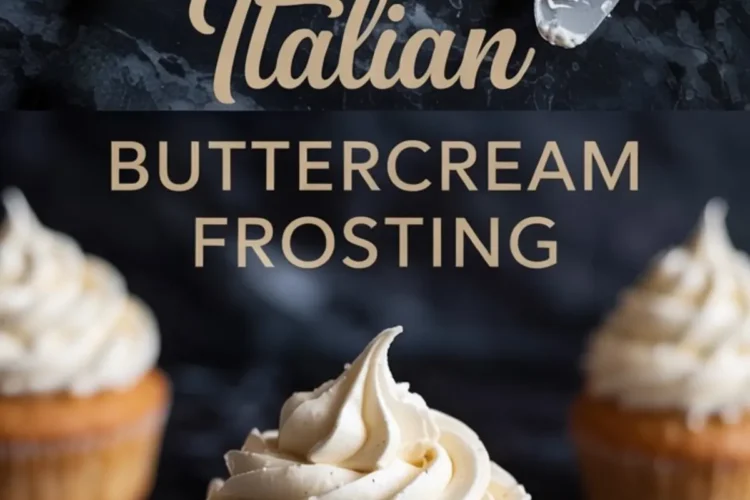
If you’ve ever wanted a frosting that feels smooth, elegant, and less sugary than the usual, Italian buttercream frosting is the answer.
You will learn how to prepare this classic frosting recipe with confidence, why each ingredient plays its role, and how to handle the process without second-guessing yourself.
This Italian buttercream recipe uses the technique of whipping hot sugar syrup into egg whites to make glossy Italian meringue, then folding in butter until it turns into a cloud you can pipe, spread, or spoon straight from the bowl.
What makes this frosting unique is the balance. It has all the flavor of butter without overwhelming sweetness. And I’ve tucked away a detail you may not expect, a little secret that helps explain why this frosting behaves so differently from others. I’ll share it with you after we walk through the steps.
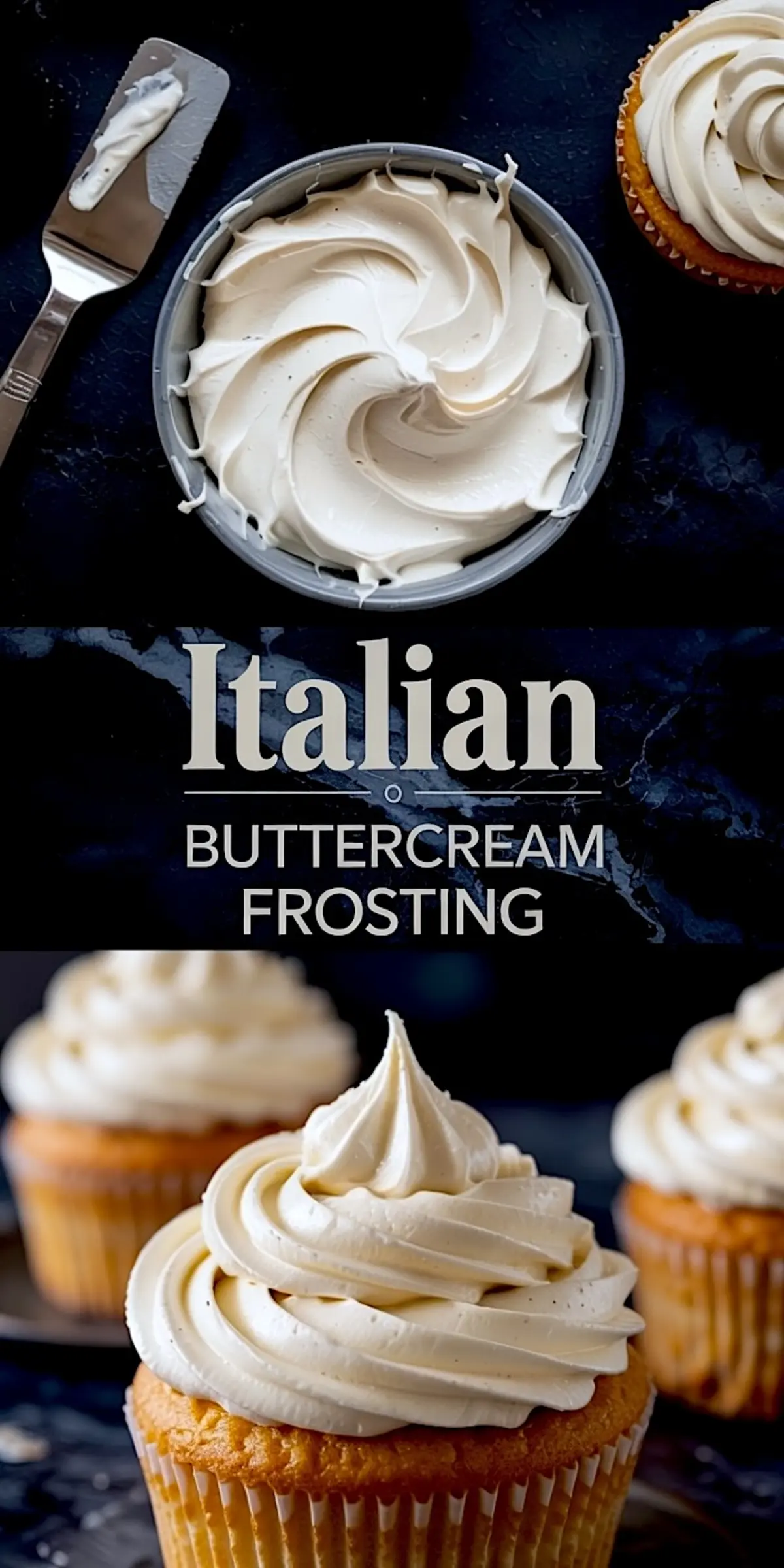
Why Italian Buttercream Frosting Stands Apart
Every buttercream frosting recipe starts with sugar and fat, but the method changes everything.
American buttercream uses powdered sugar blended with butter. It is sweet, thick, and quick. Italian buttercream takes more patience, but the payoff is smoothness and stability. You get a frosting that feels like silk under the spoon and pipes sharp edges on cakes without collapsing.

I’ve tested this Italian butter cream frosting recipe side by side with Swiss meringue buttercream. Both rely on egg whites and sugar, but Swiss cooks the sugar in the egg whites directly while Italian uses a sugar syrup poured into already-whipped whites. The Italian method makes a stronger structure. It holds shape longer and feels lighter on the tongue. That is why I reach for Italian frosting when I want decoration to stay neat on a wedding cake or a celebration cupcake.
Egg Whites Create the Base

The recipe begins with five large egg whites.
They must be clean and free of yolk, as even the smallest bit of fat prevents them from whipping. Room temperature helps them whip faster and higher. When beaten, they expand into a glossy meringue that provides the backbone for the buttercream.
This is where the magic of Italian meringue enters. Pouring in hot sugar syrup cooks the whites while whipping them. You end up with a stable foam that does not collapse quickly. Other buttercream recipes cannot compete with this structure.
If you’ve ever made whipped cream frosting and noticed how quickly it deflates, you’ll appreciate how Italian meringue behaves. It sets like scaffolding inside the frosting.
Sugar Syrup Brings Stability
Sugar and water cook together until they reach 240°F. That exact number matters. Too low and the syrup will not set the meringue. Too high and it becomes brittle.
I remember the first time I tried this step without a thermometer. The frosting failed completely. My notebook now has a star by “always use a thermometer.”
The hot syrup does two jobs. It sweetens the frosting and strengthens the egg whites by cooking them. This is the quiet brilliance of Italian buttercream. Instead of raw foam, you get a cooked meringue that feels safe, glossy, and sturdy.
And compared with cream cheese frosting, which uses acidity for structure, Italian buttercream relies entirely on heat. The difference shows when you spread it on warm cake layers. Cream cheese frosting may slide, but Italian frosting stays put.
Butter Transforms the Texture
Butter softens the meringue into a frosting you can spread. It must be slightly softened, not melted. If it is too firm, it will not blend. If too soft, it will collapse the meringue.
I add one tablespoon at a time, waiting for each to disappear before adding the next. Sometimes the frosting looks broken halfway through. It may even look like soup. This is the moment to trust the process. Keep the mixer running. The butter and meringue will emulsify and become smooth again.
This step feels similar to cream cheese buttercream frosting, where patience pays off. The mixture may look wrong before it looks right. My Pin Notebook has more than one reminder written in bold letters: “Keep going.”
Vanilla Gives Balance
The final spoon of vanilla extract ties the flavors together.
It softens the butter notes and adds a round sweetness. Other flavors can step in here too. Citrus zest brightens it, espresso gives bitterness, and chocolate deepens it. Vanilla, though, is the baseline. I treat it like the punctuation mark that finishes the recipe.
For cakes where you want frosting to taste light, vanilla provides exactly that. If you want a citrus twist, you can look at lemon buttercream frosting for inspiration and borrow some zest.
How the Steps Shape Success
Whipping the egg whites at the right moment matters. If you start too early, the whites collapse before the syrup is ready. If you start too late, the syrup hardens before it blends. Timing is part of the lesson here.
Cooling the meringue completely before adding butter matters too. Warm meringue melts butter. Cool meringue blends it. Patience saves you.
I treat these steps as checkpoints. Each has its reason. Each builds the structure that makes this frosting stand apart from simpler recipes. You do not rush Italian buttercream. You coax it.
The Secret I Promised
I mentioned a secret earlier. Here it is. The success of Italian buttercream rests on contrast. Hot syrup meets cold egg whites. Butter, cool and creamy, softens a structure created by heat. That balance is why the frosting feels different from others. It is science in the bowl, but it tastes like luxury on a cake fork.
I’ve come back to this recipe after failed batches, after rushed mornings, after cakes that leaned too far. It always reminds me that patience creates beauty in baking.
If you want an everyday frosting, buttercream frosting will do. If you want something smooth and special, Italian buttercream frosting holds its place.
A Small Comparison That Matters
I’ve tried both salted and unsalted butter here. Salted makes the frosting savory, which distracts from the light meringue. Unsalted lets you control flavor entirely. In my notes, unsalted always wins. The difference is subtle, but on a wedding cake or a lemon cupcake, subtle matters.
If you want a contrast, you can always sprinkle flaky salt on top of frosted cupcakes. But keep the base frosting with unsalted butter. That is my advice after many tests.
Save and Share This Frosting Recipe
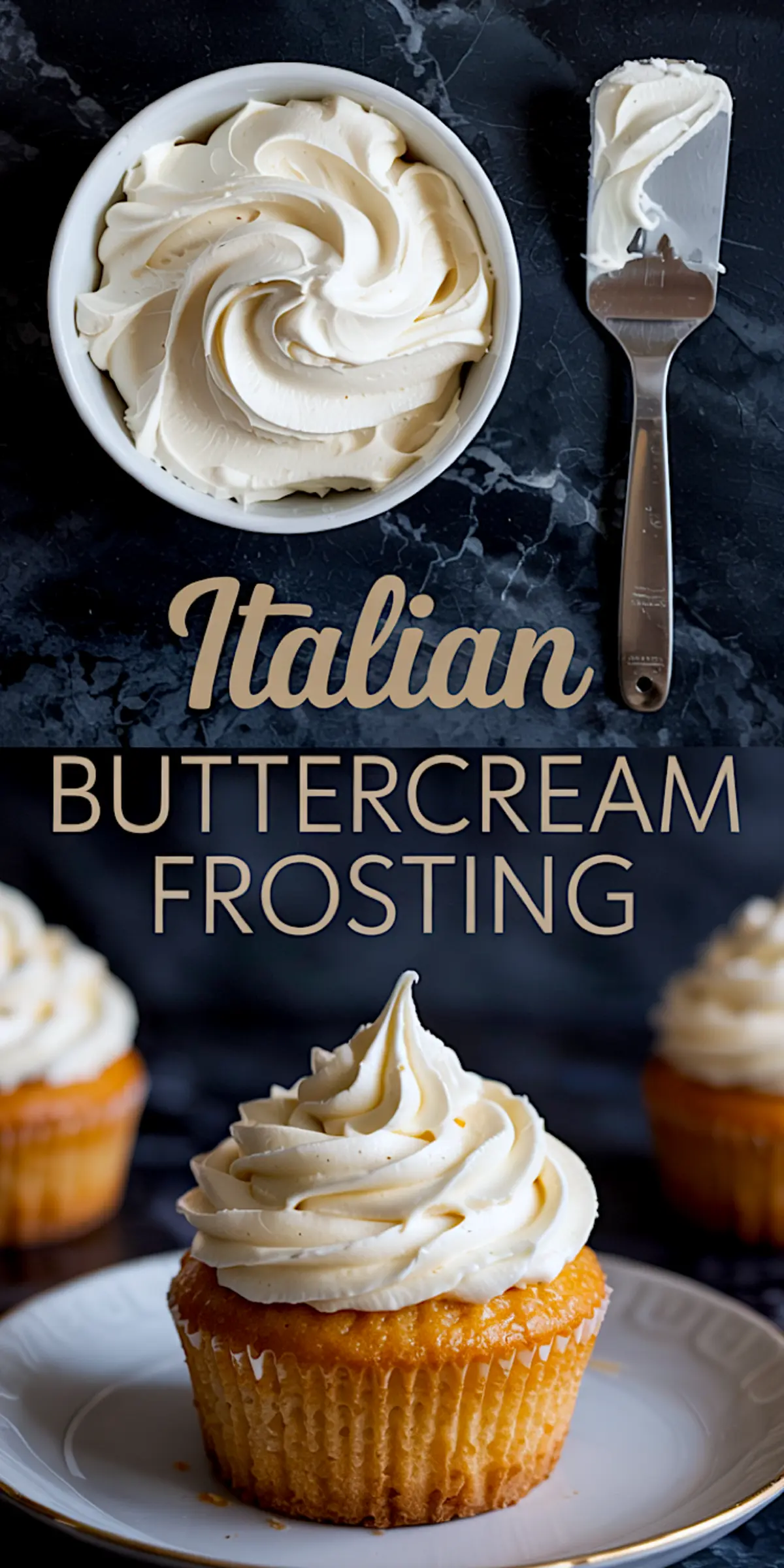
Italian buttercream frosting may sound intimidating, but it becomes easy once you understand each step. Egg whites build the base, sugar syrup locks it in place, butter smooths it, and vanilla ties it all together.
Pin this recipe now so you can find it the next time you bake a layer cake. Try it on cupcakes, macarons, or cookies.
And please share in the comments how your Italian buttercream recipe turned out. Did you add espresso, lemon zest, or chocolate? I would love to hear your twist and answer any questions you may have. This space is for bakers learning together, one frosting bowl at a time.
Italian Buttercream Frosting Recipe

Italian buttercream frosting starts with hot sugar syrup whipped into egg whites to make glossy Italian meringue, then slowly blended with butter for a silky, pipeable finish. It’s the kind of cake frosting recipe I use when I want something smooth and not overly sweet. This Italian buttercream frosting recipe holds its shape well and works beautifully on layered cakes and cupcakes. If you’re looking for an Italian buttercream recipe that’s reliable and light, this one always delivers. I use it when I want an Italian frosting that feels elegant but isn’t hard to make. Save it with your favorite buttercream frosting recipes or try it the next time you need an easy Italian buttercream frosting that actually behaves.
Ingredients
- Egg whites (from 5 large eggs), room temperature
- Granulated sugar, 1 1/4 cups (250 g)
- Water, 1/3 cup (80 ml)
- Unsalted butter, 1 1/2 cups (340 g), slightly softened
- Vanilla extract, 1 teaspoon
Instructions
- PREPARE THE EGG WHITES: Place the egg whites in the bowl of a stand mixer fitted with the whisk attachment. Do not begin whipping yet. Set the bowl aside while you prepare the sugar syrup.
- COOK THE SUGAR SYRUP: In a small saucepan, combine the granulated sugar and water. Stir gently just until the sugar is moistened. Attach a candy thermometer to the pot and heat the mixture over medium-high heat without stirring. Allow it to reach exactly 240°F (115°C).
- START WHIPPING THE EGG WHITES: When the syrup reaches 230°F (110°C), begin whipping the egg whites on medium speed. Beat until soft peaks form—light, foamy, and just starting to hold shape.
- ADD THE SUGAR SYRUP: Once the syrup hits 240°F, immediately remove it from heat. With the mixer running on medium-high speed, slowly pour the syrup into the egg whites in a thin, steady stream, aiming between the bowl and the whisk to avoid splattering.
- WHIP UNTIL COOL: Continue whipping the meringue until it forms stiff, glossy peaks and the bowl has cooled to room temperature. This may take 10 to 15 minutes. The mixture must be fully cool before adding butter to prevent melting.
- ADD THE BUTTER: With the mixer running on medium speed, add the softened butter one tablespoon at a time. Allow each piece to incorporate before adding the next. The mixture may appear curdled or soupy at some point—keep mixing until it smooths out into a creamy, fluffy texture.
- FINISH WITH VANILLA: Once the buttercream is smooth and fully emulsified, add the vanilla extract and whip for another 30 seconds to combine.
Notes
Use a clean, grease-free bowl and utensils to ensure the egg whites whip properly.
If the buttercream stays curdled after extended mixing, it may be too cold—let it sit at room temperature for a few minutes, then re-whip.
Flavor variations can be added after the butter is fully incorporated, such as espresso powder, melted and cooled chocolate, citrus zest, or fruit purées.
Store at room temperature for up to 1 day or refrigerate in an airtight container for up to 5 days. Re-whip before using.
Nutrition Information:
Yield:
1Serving Size:
1Amount Per Serving: Calories: 3438Total Fat: 276gSaturated Fat: 172gTrans Fat: 0gUnsaturated Fat: 90gCholesterol: 732mgSodium: 98mgCarbohydrates: 251gFiber: 0gSugar: 250gProtein: 6g
