
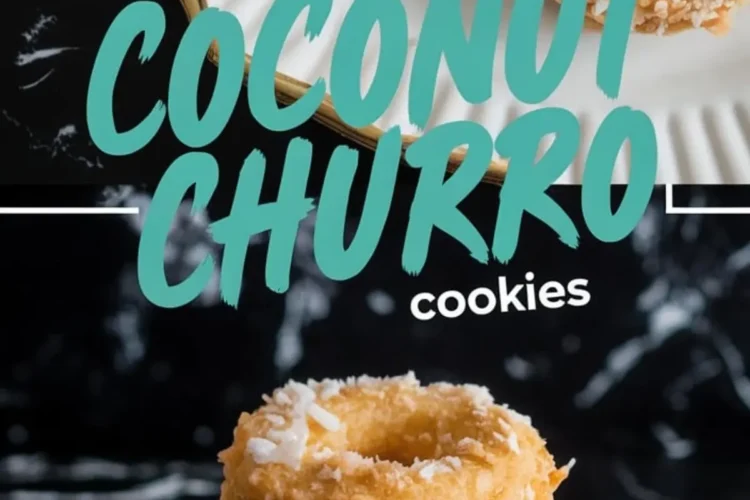
There’s something about that crisp ridge of a churro that sticks with you. It’s that gentle crackle you bite through before you hit soft warmth, cinnamon clinging to your lips. Now imagine all of that baked into a cookie. That’s what you’ll learn here—how to make Coconut Churro Cookies that don’t pretend, but deliver the crunch, the toast, the sugar, the comfort.
You’ll learn how to pipe the dough for maximum crisp ridges, why the coconut matters more than just flavor, and how to bake these without frying a thing.
And if you’re wondering what gives them that unexpected chew tucked inside the crisp shell? There’s a quiet trick buried in the ingredients. One I didn’t expect would work—but now I don’t skip it.

Why I Keep Coming Back to These Cinnamon Coconut Cookies
I’ve tested dozens of piped cookies. Some fall flat, some bake into buttery blobs. But this dough holds shape, lifts gently, and stays defined. That matters when the ridges aren’t just decorative—those ridges are your crunch.
The base is a soft vanilla-cinnamon dough. There’s light brown sugar in the mix, which adds more than flavor. It brings moisture and helps keep the center tender once baked.
That’s what makes these special. You don’t just get crisp edges—you get a soft belly inside the ring. It’s the kind of texture contrast I chase again and again in my Pin Notebook, scribbling ratios and results.
And here, the coconut. Not folded in, but sprinkled on. Pressed into the dough, not just layered. Toasted in the oven until golden and sweet.
This isn’t just about topping. That coconut forms a crust as it bakes. It snaps when you bite, then melts on your tongue.
Ingredients That Shape the Cookie’s Character
Start with room-temperature unsalted butter. That gives you structure and lift. Cold butter won’t blend evenly, and melted butter will flatten everything. You want a dough that pipes thick but smooth.
Granulated sugar gives these cookies their crisp edge. But brown sugar keeps things soft in the center. I use light brown sugar to avoid overpowering the cinnamon with molasses.
Egg yolks only—no whites. The yolks add fat and color, making the dough rich and tender. If you use whole eggs, the dough turns cakier. Trust me, I’ve tried. It’s just not the same.
Vanilla extract pulls it all together. Don’t skip it. You’ll miss it in the finish.
A Cinnamon Sugar Dough That Pipes Like a Dream
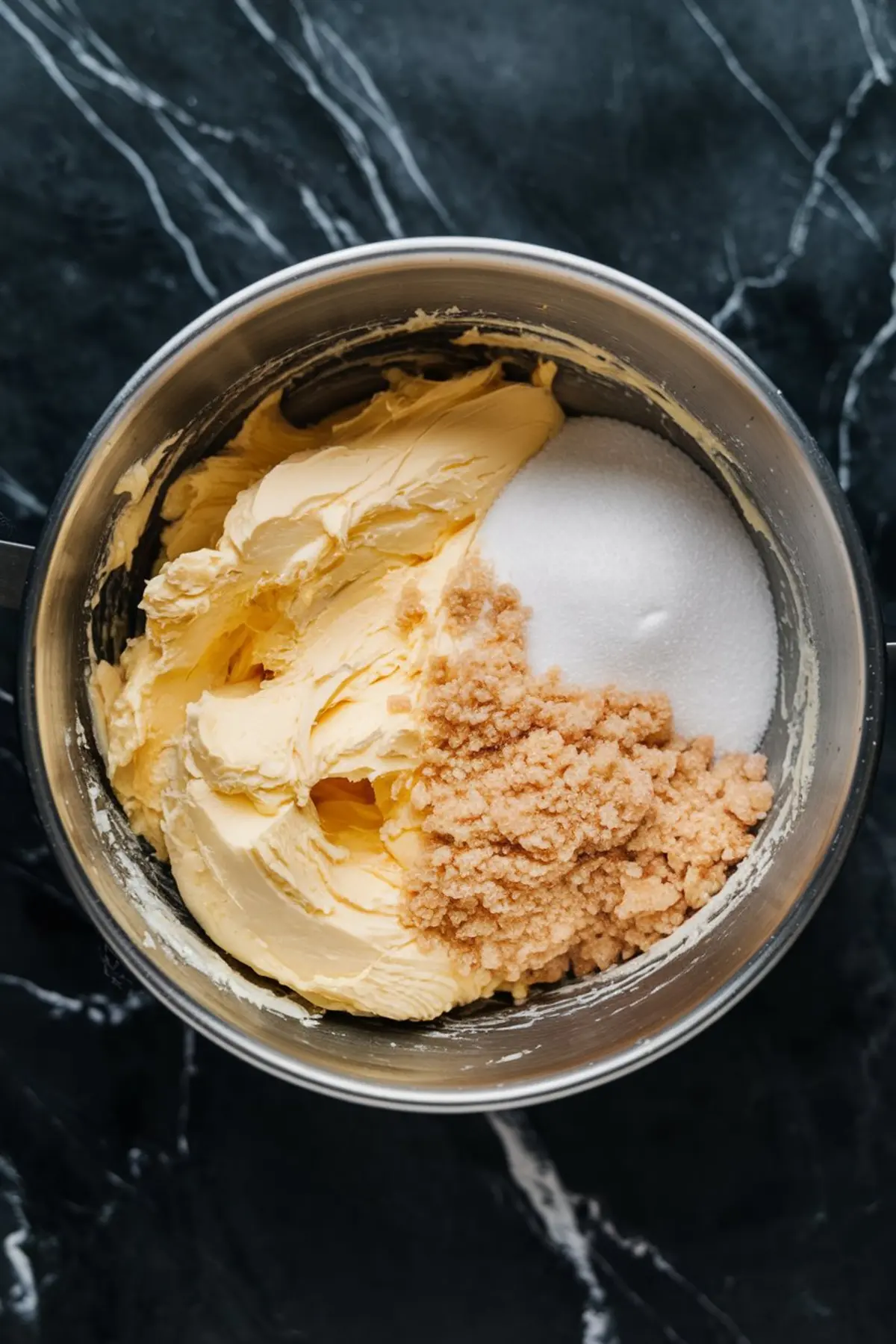
The dry mix includes flour, baking powder, salt, and a full teaspoon of ground cinnamon. I use unbleached all-purpose flour, sifted first. That gives the cookies a cleaner rise.
Once combined, the dough feels thick and sticky. It pipes best with a large open star tip—I reach for my Ateco 824. It’s the only tip I’ve used that holds the churro shape without clogging.
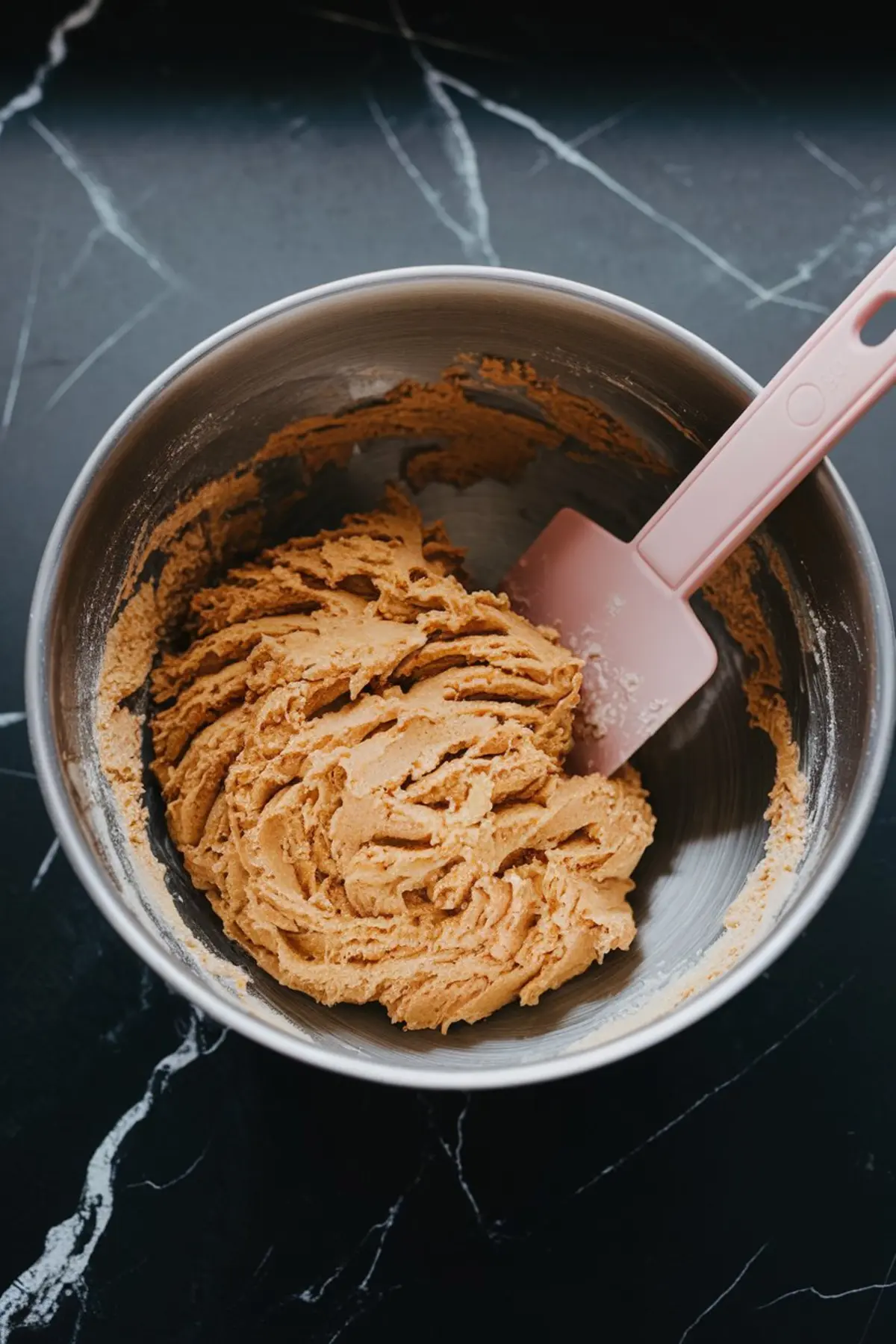
Now here’s where I bring out my Golden Spoon—the one I’ve used in every recipe since Aunt Marian gave it to me. I press the dough in gently to remove air pockets. That keeps the piping even, and it prevents the bag from popping halfway through.
Once piped in rings, I press shredded coconut onto each one. It’s a full layer, not just a sprinkle. The trick is pressing lightly so it sticks, but not so hard that you flatten the ridges.
Baked, Not Fried and Still Crunchy

I bake these at 350°F (175°C), just long enough to toast the coconut and set the edges. About 13 to 15 minutes does the trick in my oven.
If the coconut turns too dark, the oven’s too hot. If the centers stay doughy, give them another minute. Every oven whispers its own language—you’ll learn yours.
I let them cool on the sheet for five minutes before moving them to a rack. That helps set the shape and keeps the bottoms crisp.
The Ingredient Swap That Actually Changes the Cookie
Here’s the one thing I experimented with and learned the hard way: butter vs. oil.
I tried subbing in oil once, just to see. Coconut oil, to match the flavor theme. The dough piped fine, but it spread flat, and the texture turned greasy. You need the structure from butter to hold the ring shape and get that contrast between crisp and tender.
In my notes, I circled it in red:
no oil, only butter
The Secret Ingredient That Makes These Work
Remember the quiet trick I mentioned? It’s the egg yolks. Not the eggs. Not egg white. Just yolks.
Two egg yolks give the dough richness without puffiness. No extra water, just fat. That’s why these hold shape and don’t spread. That’s why they stay chewy in the center.
Skip this, and you’ll lose what makes them churro-like.
More Cookies Like These? Here’s What to Bake Next
If you like this kind of cookie—the ones that give more than they promise—you’ll want to try these next:
Raspberry Coconut Thumbprint Cookies have a jammy middle and a similar coconut crust.
Blueberry Coconut Cheesecake Cookies bring fruit and tang into soft vanilla dough.
Cathedral Window Cookies are for when you want texture, color, and a little childhood joy.
Easy Peanut Butter Cookies are soft and simple, the kind of back-pocket cookie for fast comfort.
And if you’re baking for summer, don’t miss Summer Crinkle Cookies—they’ve got that same soft center with a crisp shell.
Save This Coconut Churro Cookie Recipe for Your Next Craving
Bake these once, and you’ll remember the steps by heart. They’re simple enough to make with kids and grown-up enough to serve at a weekend dinner.
If you’ve got questions or want to share your own version, I’d love to hear. Did you try adding chocolate? Did you skip the coconut?
Tell me in the comments, or save this recipe to your Pinterest board so it’s there next time you feel like piping something beautiful and crunchy.
Coconut Churro Cookies Recipe
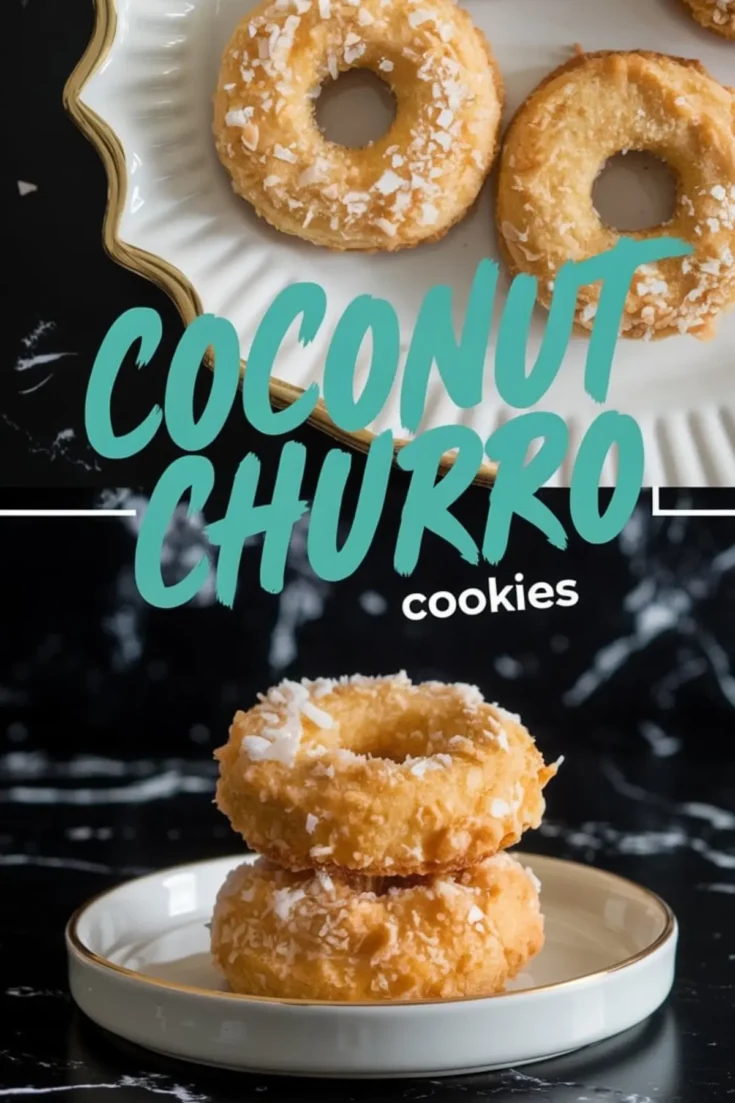
Coconut churro cookies combine the crisp ridges of classic churros with the ease of baking and the rich texture of toasted coconut. A soft vanilla-cinnamon dough is piped into round churro shapes, rolled in sweetened shredded coconut, and baked until golden. These cookies deliver a satisfying crunch, a tender center, and warm notes of cinnamon and brown sugar in every bite.
Ingredients
- Unsalted butter, 1 cup (room temperature)
- Granulated sugar, ¾ cup
- Light brown sugar, ¼ cup
- Egg yolks, 2
- Vanilla extract, 2 teaspoons
- All-purpose flour, 2¼ cups (sifted)
- Baking powder, ½ teaspoon
- Salt, ¼ teaspoon
- Ground cinnamon, 1 teaspoon
- Shredded sweetened coconut, 1½ cups (divided)
Instructions
- PREHEAT THE OVEN: Set the oven to 350°F (175°C) and line two baking sheets with parchment paper.
- CREAM THE BUTTER AND SUGARS: In a large bowl, beat the room-temperature butter, granulated sugar, and light brown sugar together until pale and fluffy, about 3 to 4 minutes using a hand or stand mixer.
- ADD EGG YOLKS AND VANILLA: Mix in the egg yolks and vanilla extract until the mixture is glossy and smooth.
- COMBINE DRY INGREDIENTS: In a separate bowl, whisk together the flour, baking powder, salt, and cinnamon.
- MIX THE DOUGH: Gradually add the dry ingredients to the wet mixture, stirring just until combined. Avoid overmixing to maintain a soft texture.
- PREPARE THE PIPING BAG: Transfer the thick dough into a piping bag fitted with a large open star tip (such as Ateco 824 or Wilton 1M). Press a small amount of dough back into the bowl to remove any air pockets.
- PIPE THE COOKIES: Pipe the dough onto the prepared baking sheets in 2.5-inch rings, sealing the ends with a damp fingertip to prevent separation during baking.
- ADD COCONUT TOPPING: Sprinkle about 1 teaspoon of shredded sweetened coconut over each cookie, pressing lightly so it adheres to the surface.
- BAKE: Bake for 13 to 15 minutes, or until the edges are golden brown and the coconut is lightly toasted.
- COOL: Allow the cookies to cool on the baking sheet for 5 minutes before transferring to a wire rack to cool completely.
Notes
Use a sturdy piping bag for best results—disposable bags may split due to the dough's thickness. If the dough becomes too soft to pipe, refrigerate it for 10 minutes before continuing.
Nutrition Information:
Yield:
24Serving Size:
1Amount Per Serving: Calories: 172Total Fat: 10gSaturated Fat: 6gTrans Fat: 0gUnsaturated Fat: 3gCholesterol: 36mgSodium: 50mgCarbohydrates: 20gFiber: 1gSugar: 10gProtein: 2g
