

There’s a kind of gingerbread loaf that doesn’t ask for much. No mixer, no decoration, no rushing. Just a sturdy wooden spoon, a big bowl, and a bit of time. This one fits that rhythm. It’s a recipe I return to every December, written in my own hand, stained at the corners from years of warm kitchens and winter mornings.
Many ginger bread loaf recipes lean too dry or too sweet. This one finds its balance. It stays moist for days, slices neatly, and carries the warmth of cloves and cinnamon in every piece. I’ve seen it called a Starbucks gingerbread loaf recipe by those who try it. I understand why. The crumb is tender. The flavor is deep. But this one carries something theirs can’t the memory of quiet mornings, the steady tap of a knife on a cutting board, the hush of snow outside.
This gingerbread quick bread recipe belongs on your counter through the holidays. It doesn’t need icing or glaze. It asks for nothing but your patience, and perhaps a bit of quiet while it bakes.

Why This Gingerbread Loaf Feels Familiar
Most gingerbread loaf recipes start with the same things — flour, spices, molasses. But how they come together matters more than how they read on the page. I’ve baked this loaf on cold Sunday mornings when the windows fog over. I’ve sliced it into thin pieces for neighbors who needed something kind. This is the sort of gingerbread loaf cake that holds its shape, keeps its flavor, and doesn’t go stale by Tuesday.
The batter goes into a single bowl. The ingredients behave. There’s no creaming, no folding, no fuss. If you’re searching through gingerbread loaf recipes and want one that won’t fight you, I hope you find some peace in this one. It reminds me of how baking felt when I was young — more quiet, less measuring. Just enough care to make it good.
I remember Chloe, years ago, asking me how I knew when my loaves were done. I told her, “Your hands will know.” She still teases me for that. But I believe it.
Brown Sugar and Molasses — Depth Without Bitterness

Molasses gives this loaf its soul. I always reach for unsulphured molasses, the kind that smells of warm soil and smoke. It deepens the flavor without making the loaf bitter. If you only have blackstrap molasses on hand, the result will lean darker, more intense. Some like that edge. I prefer the rounder flavor of standard molasses. It’s gentler.
Brown sugar matters, too. I use dark brown when I have it. It softens the crumb and adds a toffee warmth that feels right in December. But light brown sugar won’t let you down. I’ve used both, and neither has ever failed me.
You’ll find this gingerbread loaf stays soft, even on the second or third day. That comes from the balance between sugar and oil. I used to use butter, but in my notes, I’ve written many times — “Oil keeps it moist longer. Use oil.”
Spices That Warm, Not Overwhelm
The spices should sit comfortably together. Ginger comes first. I use more of it than most recipes do — a full tablespoon — because I want it to be noticed. Cinnamon follows, and then just a whisper of cloves. That last one can take over if you’re not careful. A quarter teaspoon is enough.
When I was younger, I tried adding nutmeg or cardamom. But those faded the ginger too much. In this recipe, I’ve stayed loyal to what works. Ginger, cinnamon, cloves. No more, no less.
If you want a gingerbread loaf that smells like holiday desserts but still lets you taste the molasses, this balance works. You won’t need to adjust it.
Eggs, Oil, and Milk, Why This Loaf Stays Soft
The combination of eggs and oil makes the structure strong without turning dense. Whole milk keeps the crumb tender. I’ve tried it with buttermilk once or twice, and while the result was fine, the texture lost some of its softness. If all you have is buttermilk, use it. But if you’re choosing, I’d keep to whole milk.
I’ve never used plant-based milk for this recipe, but I imagine unsweetened oat milk could work. If you try that route, I’d recommend tasting your batter before baking. Molasses needs a partner with some fat in it.
This recipe also asks for two eggs. They do more than bind — they add richness. I used to try it with just one, but I wrote in the margin of my card, “Two. Always two. Better crumb.”
One Bowl, One Wooden Spoon
Mixing this loaf won’t take long. Start with the dry ingredients. I use a large ceramic bowl that belonged to my mother. After the flour and spices go in, I whisk them gently. Then I set that bowl aside and whisk the eggs and brown sugar in another, just until they look even.
Molasses goes in next. It moves slow, like syrup in winter. Follow with oil, milk, and vanilla. Once everything looks smooth, combine it with the dry ingredients and stir gently. A wooden spoon works better than a whisk here. It gives you more control. If you overmix, the loaf will still taste good, but it may rise unevenly.
How It Bakes And What the Cracks Mean

I bake this gingerbread loaf at 350°F in a standard 9×5-inch pan. I line mine with parchment, always. It lifts clean every time.
Some readers worry when the top cracks. I used to, too. But over time, I learned to see those cracks as a good sign. They show that the inside is expanding as it should. If it cracks, don’t worry. It means it’s breathing properly.

This ginger bread loaf stays soft in the center and browns just enough on top. Let it rest in the pan for fifteen minutes before lifting it out. If you cut it while it’s warm, it may crumble slightly. Let it cool fully. Then it slices like a dream.
Related Recipes for Holiday Baking

If you’re putting together a dessert table, you might want something smaller alongside this loaf. The Snowman Marshmallow Pops bring a touch of playfulness that children love.
For something a bit more intricate, the Gingerbread Layer Cake has a stronger spice note and layers beautifully for guests.
The Christmas Tree Cake Pops sit well beside the loaf for gifting, especially when packed in small boxes.
And if you prefer a candy-style dessert, the Christmas Cracker Toffee brings crunch and sweetness without turning on the oven again.
Lastly, I’ll gently nudge you toward the Gingerbread Castle. It takes time, yes. But Chloe helped decorate one years ago, and I still remember the smell of clove and icing in the air.
A Loaf You Can Trust
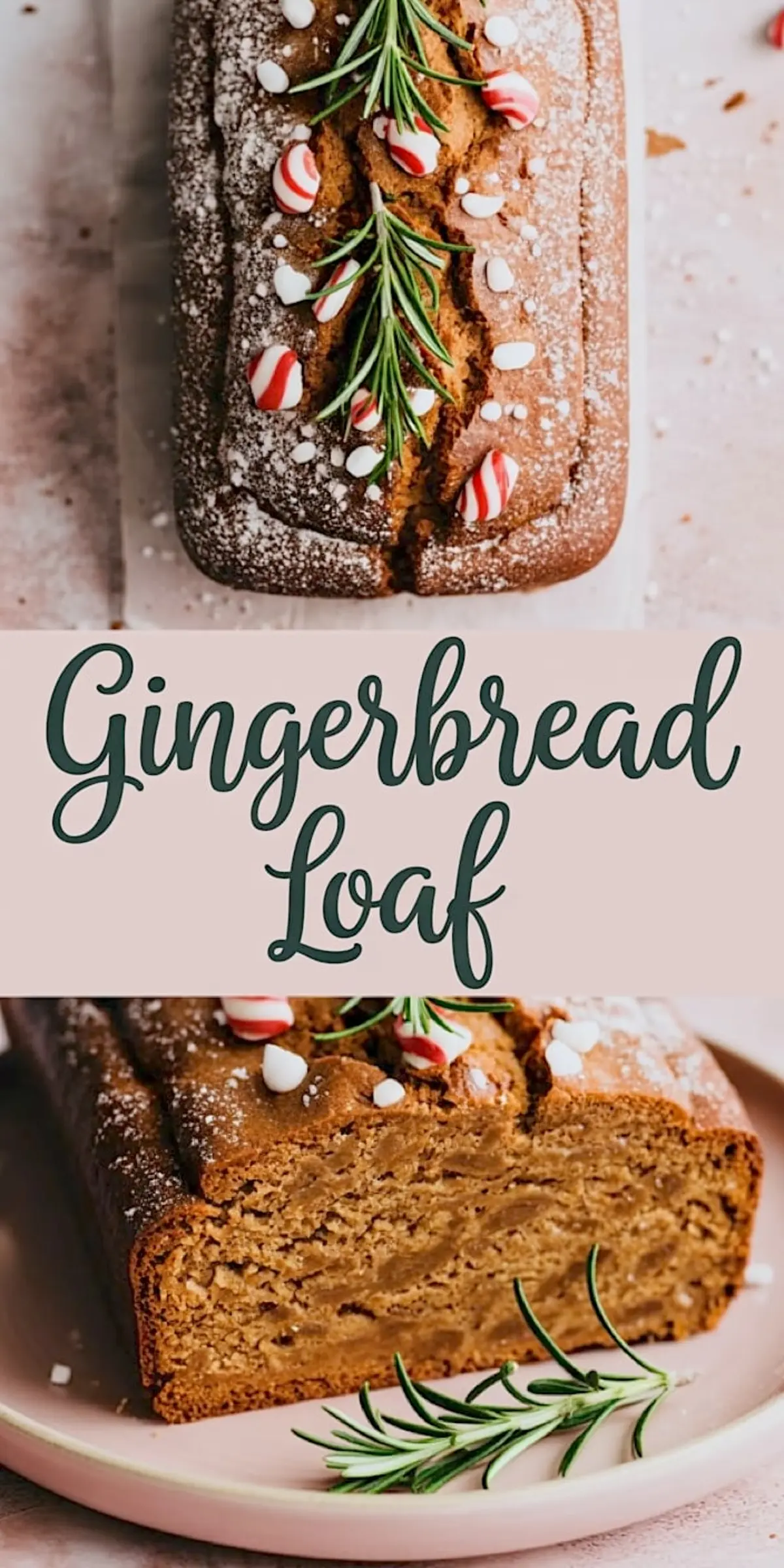
This gingerbread loaf doesn’t ask for anything complicated. It relies on pantry staples and steady hands. It tastes right beside a cup of tea, wrapped in wax paper for a friend, or sliced thin and toasted gently for breakfast. If it sits on your counter long enough, the scent will carry through the kitchen like memory.
If you bake it once, you’ll find it again in your own notes. And if it cracks, don’t worry.
It means it baked the way it was supposed to.
Save this recipe to your baking board if you’re planning your holiday desserts. And if you’ve made this loaf or added your own touches, I’d love to hear what worked for you. You can leave a comment or ask a question below. That’s how recipes grow — from one baker’s hand to another.
Moist Gingerbread Loaf

Gingerbread loaf recipe means rich molasses flavor, warm spices, and a moist, tender crumb that stays fresh for days. I mix everything in one bowl—no mixer needed—and bake it into a classic gingerbread loaf cake that slices clean and smells like the holidays. It’s my go-to when I want gingerbread quick bread recipe results without fuss. Some say it tastes like a Starbucks gingerbread loaf recipe, but better at home. This version works for loaf recipes you can gift, freeze, or serve warm with tea. If you’re browsing ginger bread loaf recipes for something easy and festive, save this one. It’s simple, reliable, and belongs in any collection of ginger bread loaf or holiday desserts that feel like December.
Ingredients
- All-purpose flour – 2 cups (240g)
- Baking soda – 1 teaspoon
- Ground ginger – 1 tablespoon
- Ground cinnamon – 1 teaspoon
- Ground cloves – ¼ teaspoon
- Salt – ½ teaspoon
- Brown sugar – ½ cup (packed)
- Molasses – ¾ cup (180ml), unsulphured
- Eggs – 2 large
- Whole milk – ½ cup (120ml)
- Neutral oil – ½ cup (120ml), such as vegetable oil
- Vanilla extract – 1 teaspoon
Instructions
- PREHEAT AND PREPARE THE PAN: Preheat your oven to 350°F (175°C). Grease a 9x5-inch loaf pan and line it with parchment paper, allowing some overhang on the long sides for easy removal.
- MIX THE DRY INGREDIENTS: In a large mixing bowl, whisk together the flour, baking soda, ground ginger, cinnamon, cloves, and salt until fully combined. Set aside.
- MIX THE WET INGREDIENTS: In a separate bowl, whisk the eggs and brown sugar until smooth and slightly thickened. Add the molasses, milk, oil, and vanilla extract. Whisk until the mixture is fully blended and uniform in color.
- COMBINE THE BATTER: Pour the wet mixture into the bowl with the dry ingredients. Use a spatula or wooden spoon to gently stir until the batter is just combined and no visible streaks of flour remain. Avoid overmixing.
- TRANSFER TO PAN: Pour the batter into the prepared loaf pan and smooth the top with the back of a spoon or an offset spatula.
- BAKE: Bake for 50 to 60 minutes, or until a toothpick inserted into the center comes out with a few moist crumbs but no wet batter. The top may crack slightly as it bakes—this is normal.
- COOL: Allow the loaf to cool in the pan for 15 minutes, then use the parchment overhang to lift it out. Transfer to a wire rack and let it cool completely before slicing.
- SERVE: Optionally, dust the top with powdered sugar before serving, or leave it plain. Store tightly wrapped at room temperature for up to 3 days.
Notes
Dark brown sugar adds deeper flavor, but light brown sugar also works well. If using blackstrap molasses, the loaf will be more robust and slightly bitter. For best texture, don’t slice until the loaf is fully cooled.
