
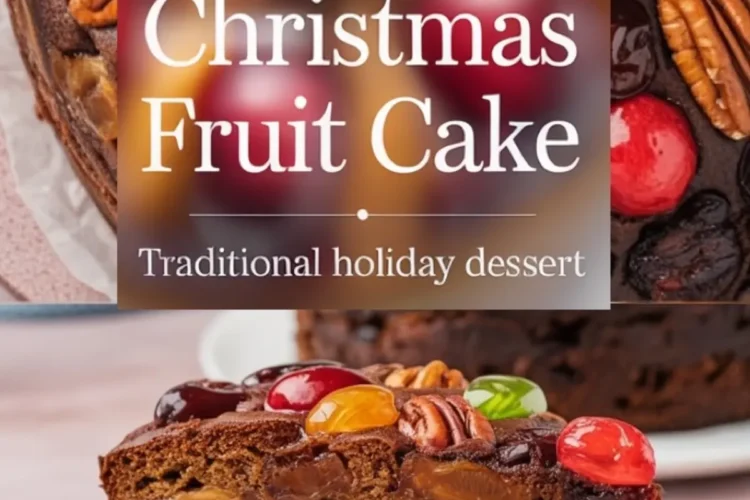
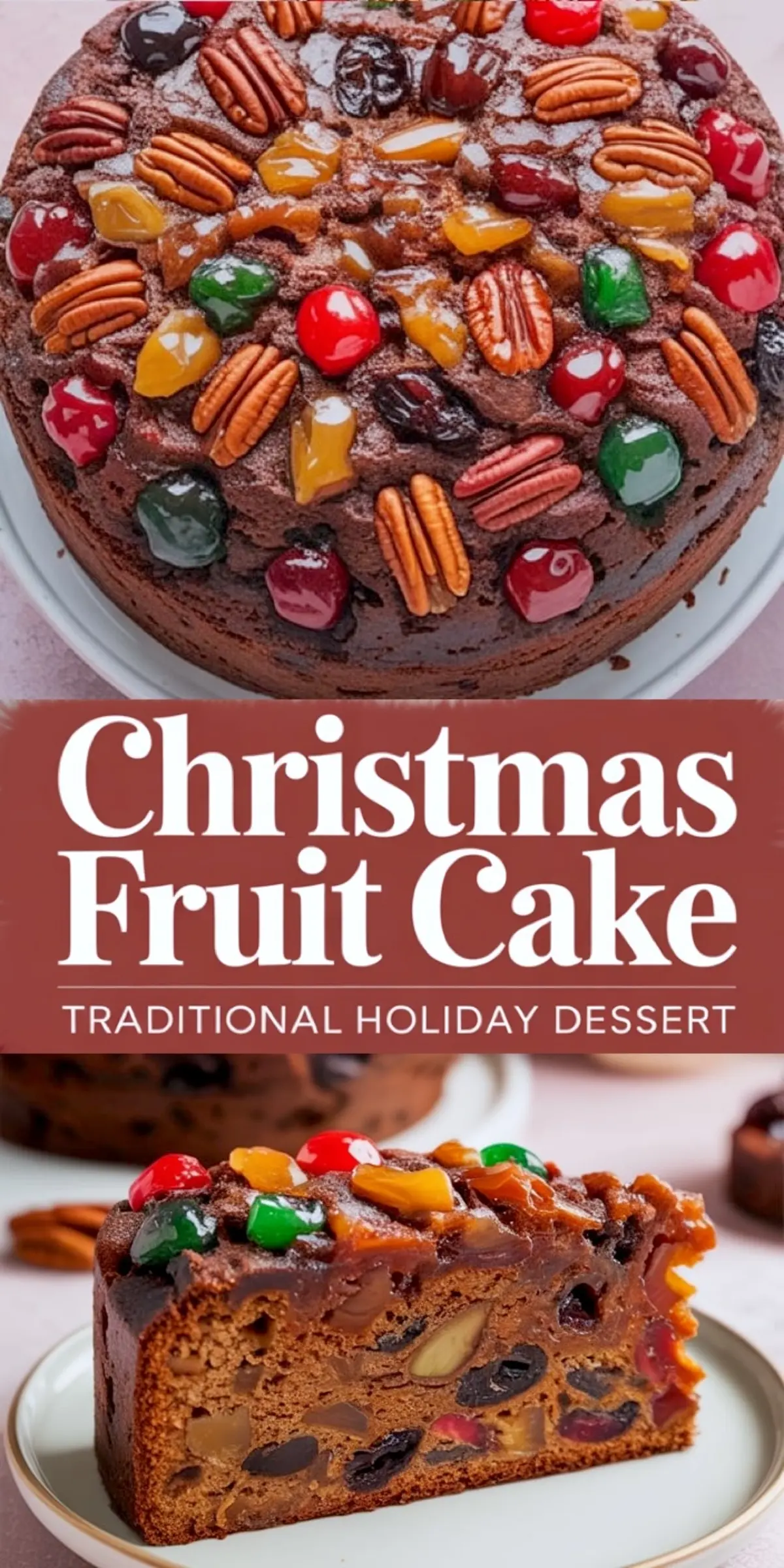
There’s a kind of Christmas cake that doesn’t shout. It doesn’t sparkle or rise in swirls. It waits. It sits, wrapped in paper and tied with string, gaining strength with each day. This fruit cake recipe has done just that in my kitchen for nearly forty years. It is a quiet, steady Christmas fruit cake. Moist, dense, spiced in a way that stays with you. You’ll find it listed in many Christmas cake recipes, but this one carries the weight of time.
Fruitcake recipes often get passed over, and I understand why. Too dry, too bitter, too much candied peel. But this one rests on the balance of soaked fruit, dark sugars, and spices that warm the hands holding the knife. The dried fruit mix includes golden and dark raisins, apricots, dates, figs, and pineapple. Each piece softens in brandy or orange juice overnight. Some years I soak it for a day. Other times, a whole week. Both ways work. The longer soak deepens the color and lets the cake settle into itself.
You’ll find more fruit cake recipe Christmas ideas that dress up with icing or marzipan. Mine keeps things simpler. I sometimes press a few whole pecans and cherries on top before baking, but the flavor does the decorating on its own.
About That Soaking Bowl on the Counter
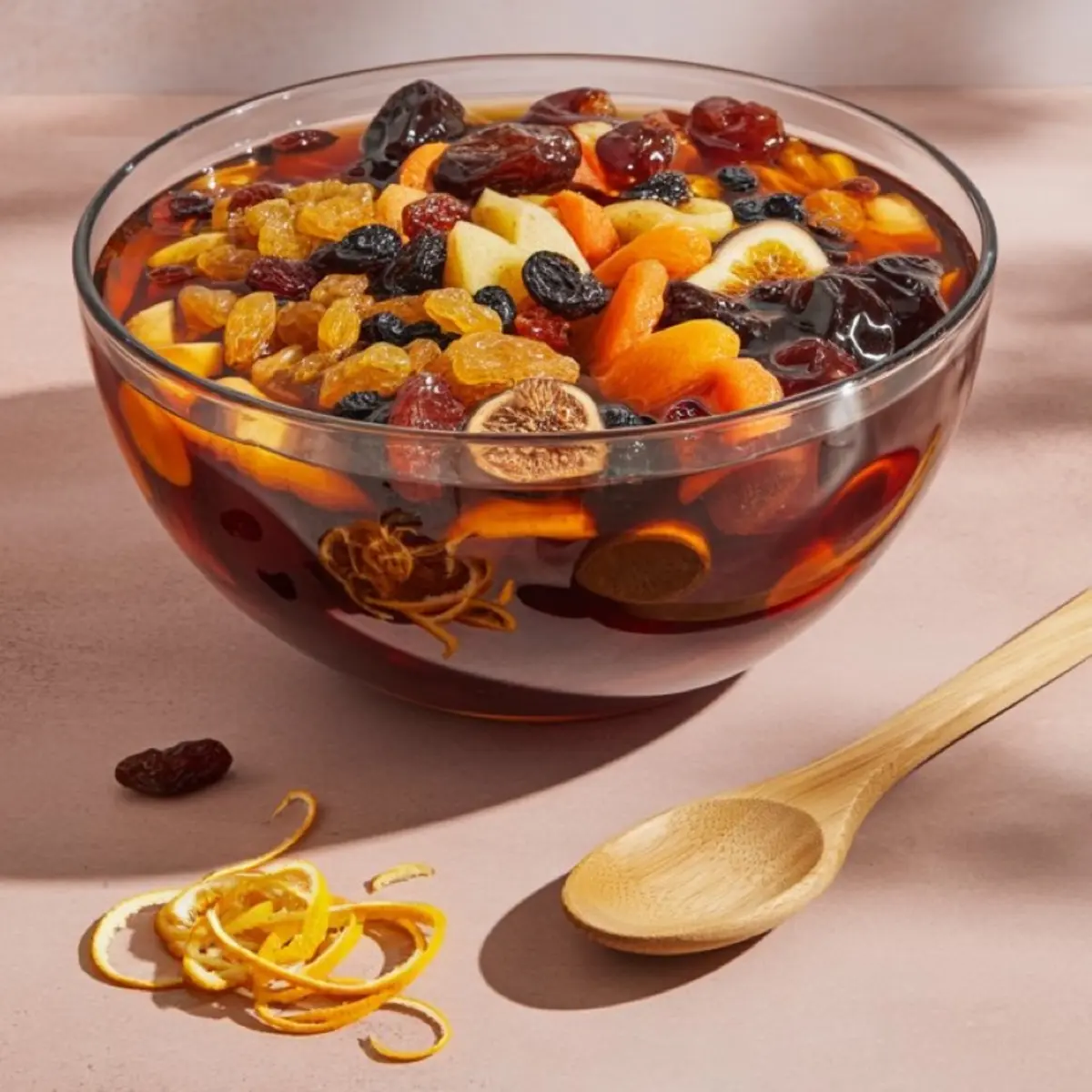
The dried fruit mixture needs time. It’s the one part I never rush. I use a wide ceramic bowl and stir it every evening with the same wooden spoon. Orange zest and lemon zest go in with the fruit, and even from the first stir, it already smells like Christmas.
In my handwritten recipe card, there’s a note in the margin: “Don’t skip the lemon.” It brightens the whole thing. Without it, the sweetness leans too far. I sometimes use dark rum. Other years I use orange juice if children will eat it. Either choice gives good results. In truth, the fruit mix tells you when it’s ready. It softens under the spoon, and the liquid disappears into the pieces. That’s when it’s time to begin the batter.
Soft Butter and Dark Sugar, the Base of the Batter
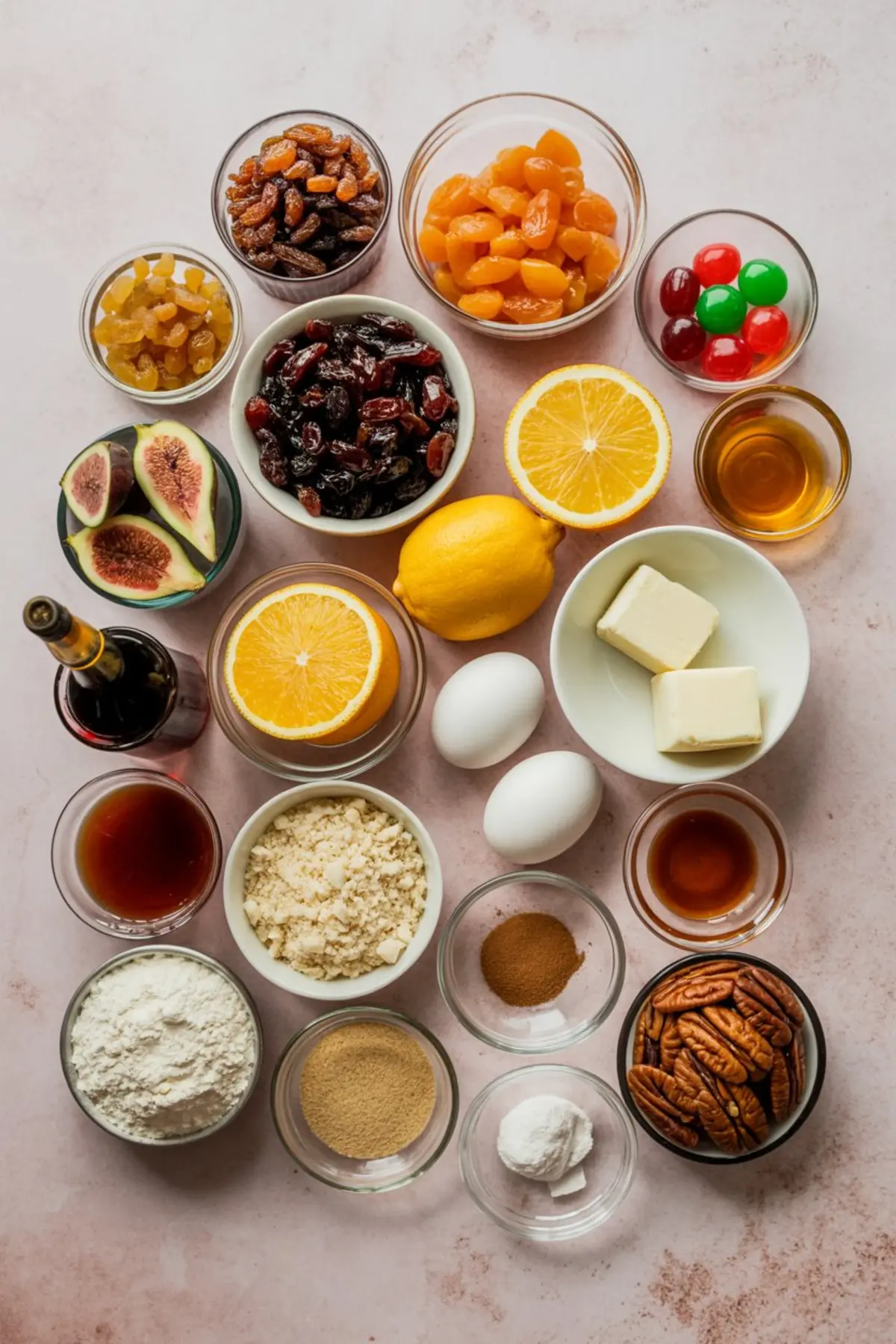
This cake starts with butter and dark brown sugar. I leave the butter on the counter the night before. Cold butter makes the batter too stiff. Once the sugar blends in, the mixture should turn light and fluffy, like whipped cinnamon.
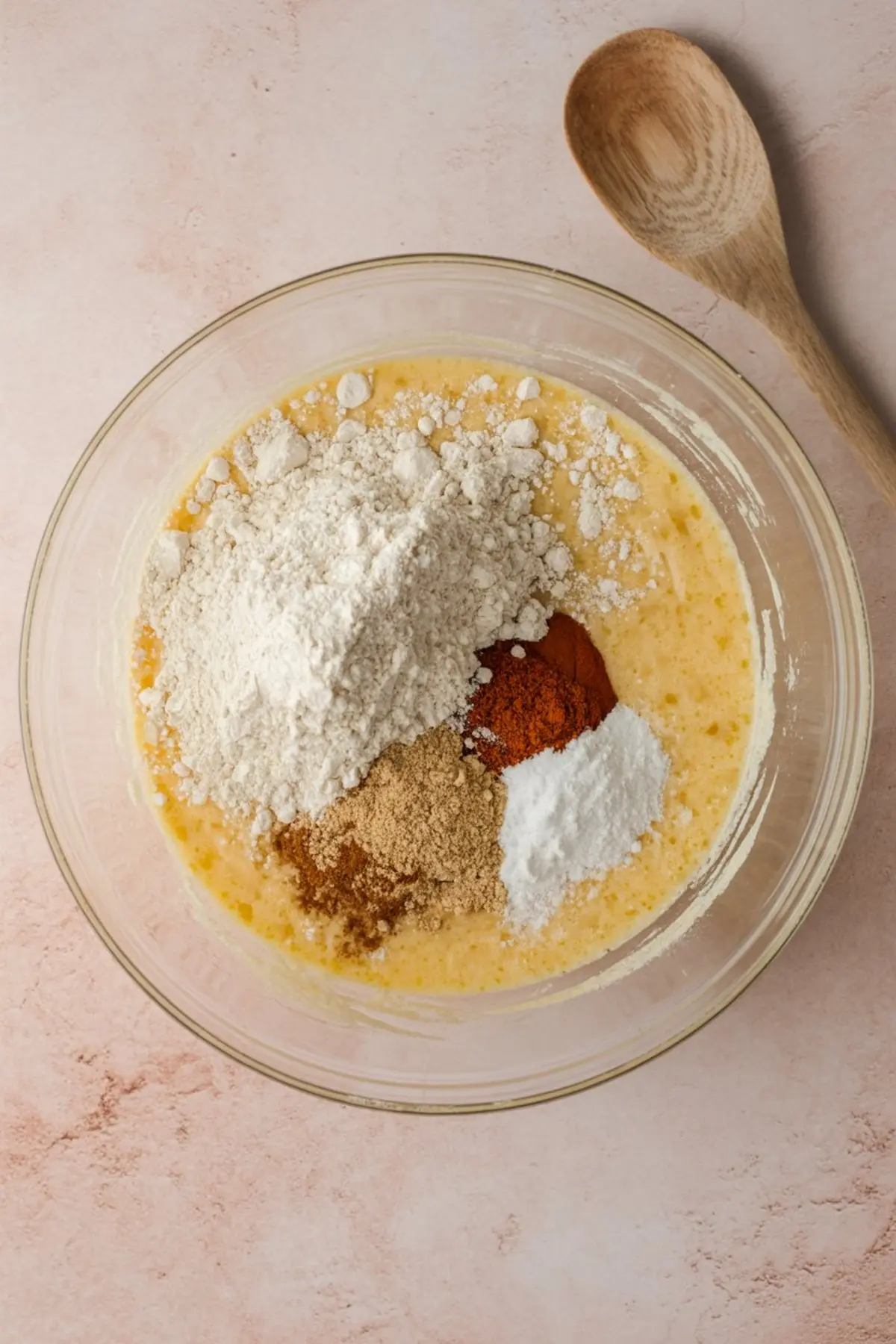
Molasses adds depth. I’ve made this cake with and without almond flour. If you have it, use it. It gives the crumb a softer texture, especially after a week or two of storage. If not, just use all-purpose flour. The cake holds its own either way.
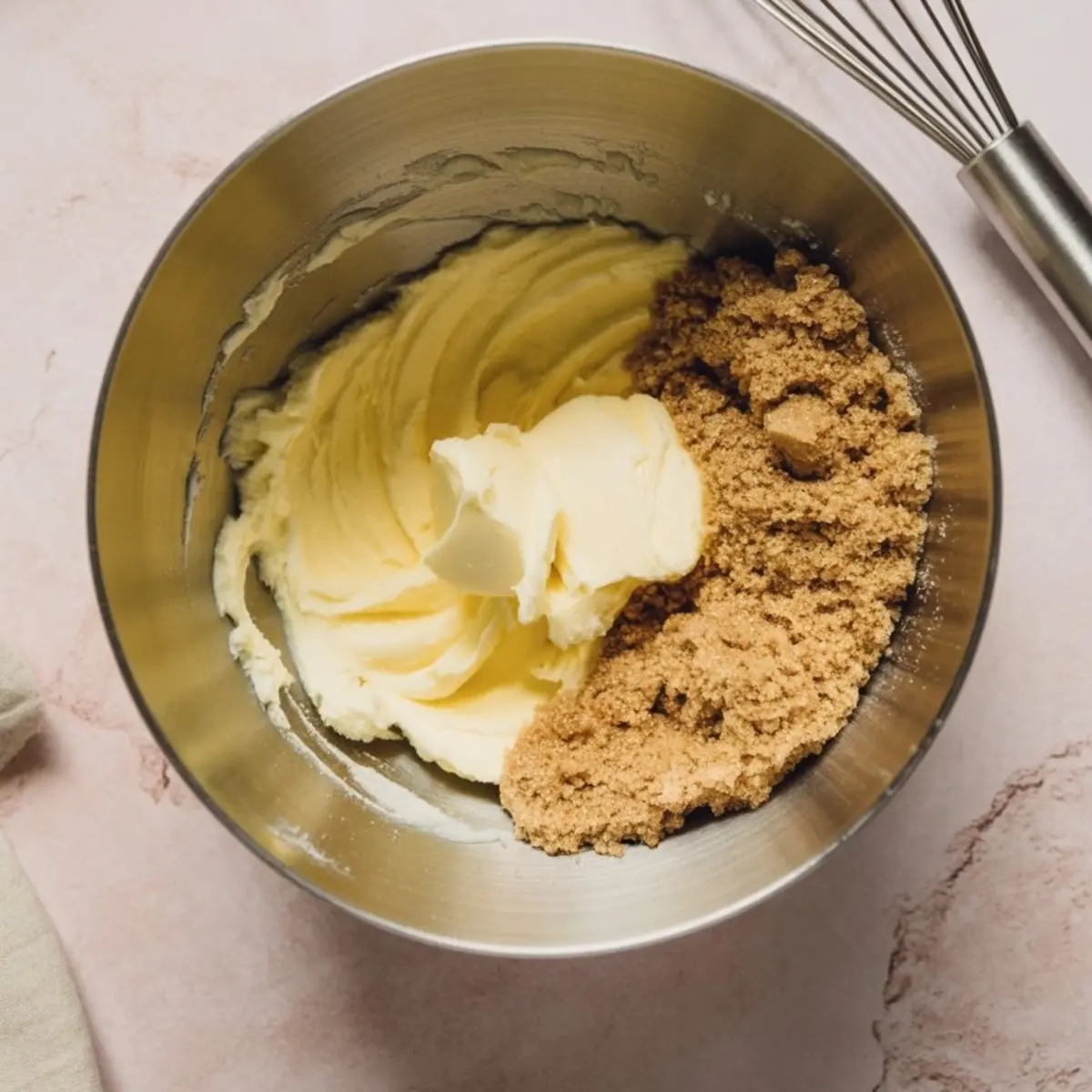
This is where I pause and compare. I’ve baked this with light brown sugar during one December when dark sugar ran low. The flavor came through, but the color stayed pale, and it didn’t age quite as well. If you have access to dark brown sugar, use it. It carries the spices better.
Folding in the Fruit Mix, Then Waiting Again
Once the dry ingredients meet the wet, the mixture looks almost too thick. That changes the moment you fold in the fruit. The moisture comes back with it. The bowl becomes heavy, and it should. This is a cake that feeds slowly. The nuts go in last, and I always use pecans. Walnuts work too, though they sometimes go bitter with age.
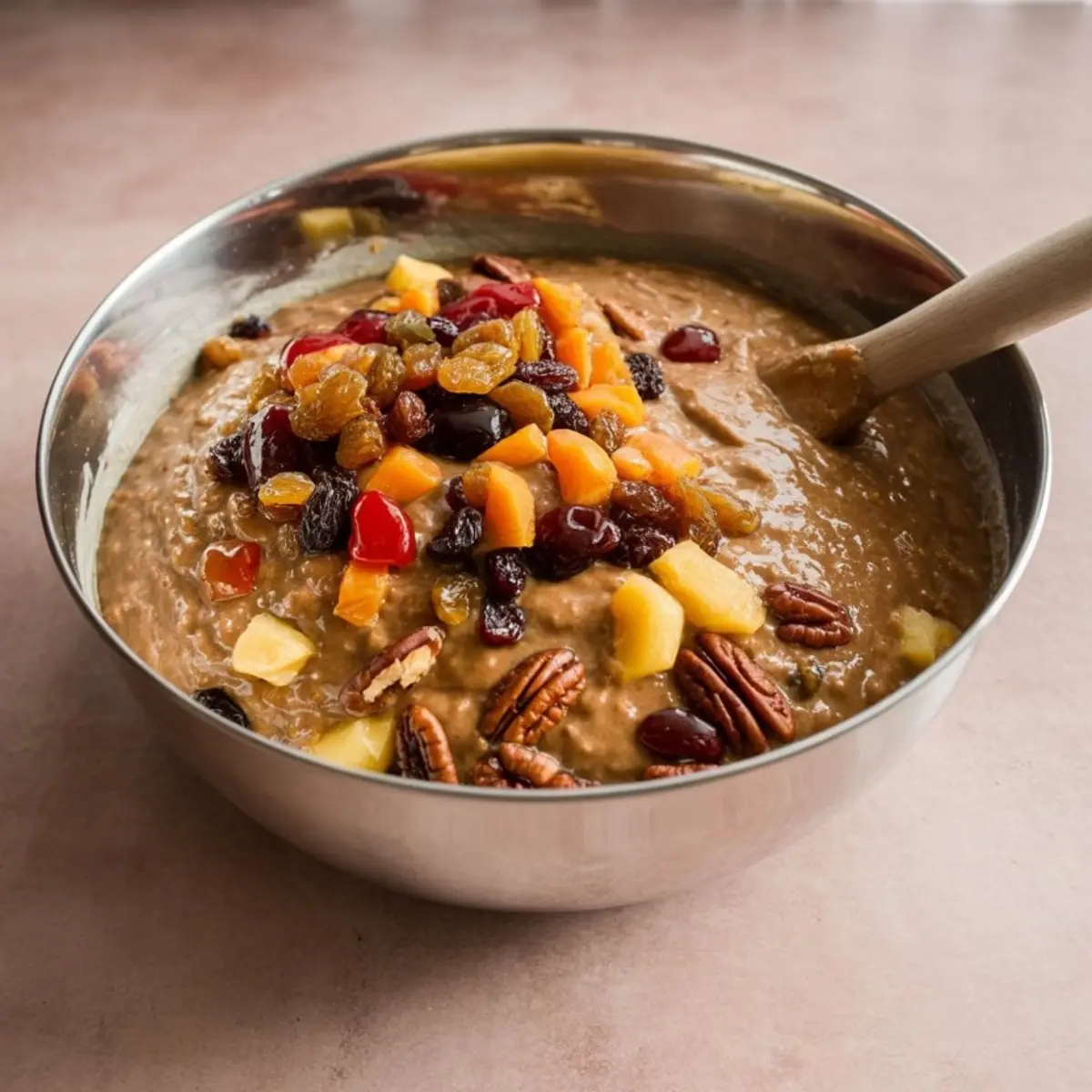
If you decorate the top with cherries or candied fruits, press them in gently. They rise slightly as the cake bakes. And if they shift or sink a little, don’t worry. If it cracks, don’t worry. The wrapping hides any fault, and the flavor stays whole.
A Gentle Oven and a Slow Bake
I bake this cake at 300°F, never higher. I wrap the outside of the pan with brown paper before it goes in. That part helps. Without it, the edges dry out. I’ve made that mistake before. Start checking at the 90-minute mark, but trust your eyes and your nose. When the top turns deep brown and the center feels steady, it’s ready.
Once it cools, wrap it well. I use plastic first, then foil. Sometimes I write the date on the foil with a wax pencil, just like my mother did. If you brush it with brandy every few days, it grows more tender. But even if you skip that part, the cake holds its strength for weeks.
A Slice With Tea and a Bit of Silence
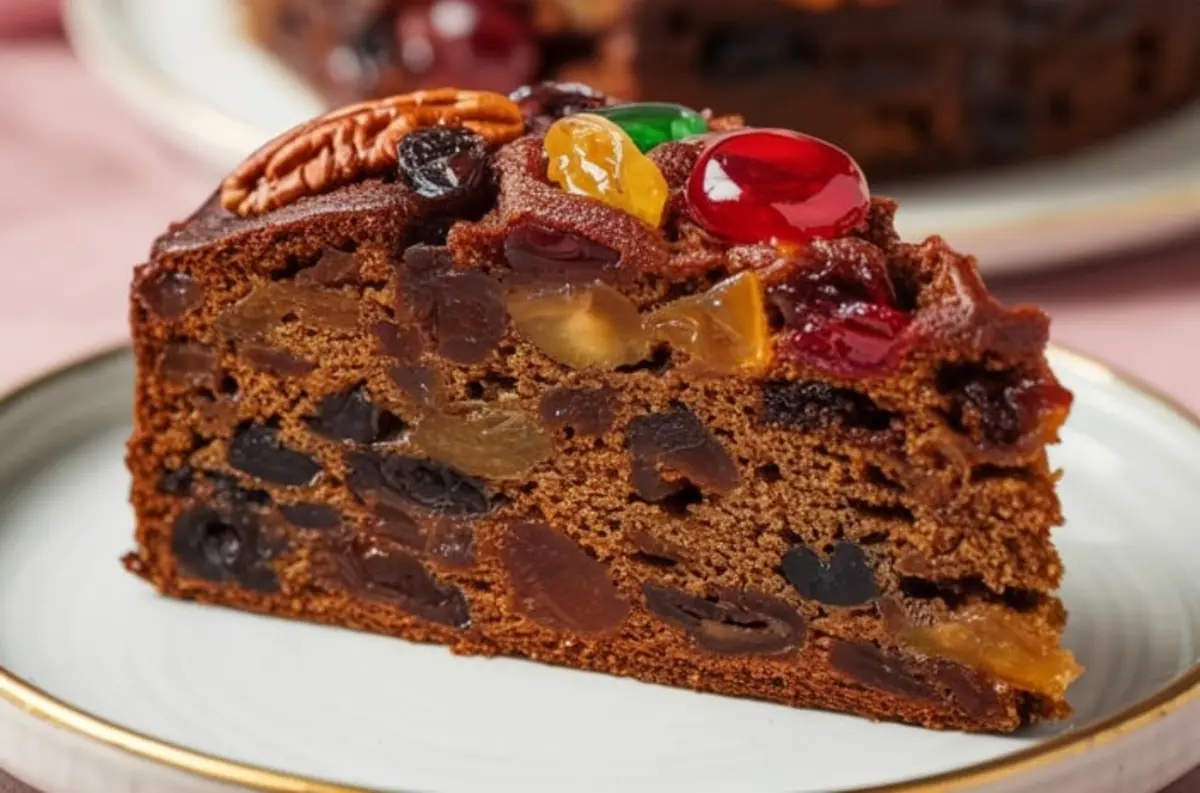
I store mine in the pantry behind the tins. There’s always a moment in December when the house is quiet and tea is warm, and I slice into it. It tastes of orange peel and shadowed spices. I think of Chloe then. She made this with me once when she was younger. Her hands were careful, and she kept asking if it was done. I told her what I’ll tell you: This cake tells you when it’s ready. You just have to pay attention.
Other Cakes I Make Each December
If you’re looking for smaller gifts or treats, I often turn to Mini Christmas Cakes or make a batch of Christmas Tree Cake Pops for the children. And on days when time runs thin, a slice of Christmas Fudge never goes unwelcomed.
For those who prefer something wrapped in pastry, Christmas Pie is another one from my notebook.
Leave Me a Note, or Just Say Hello
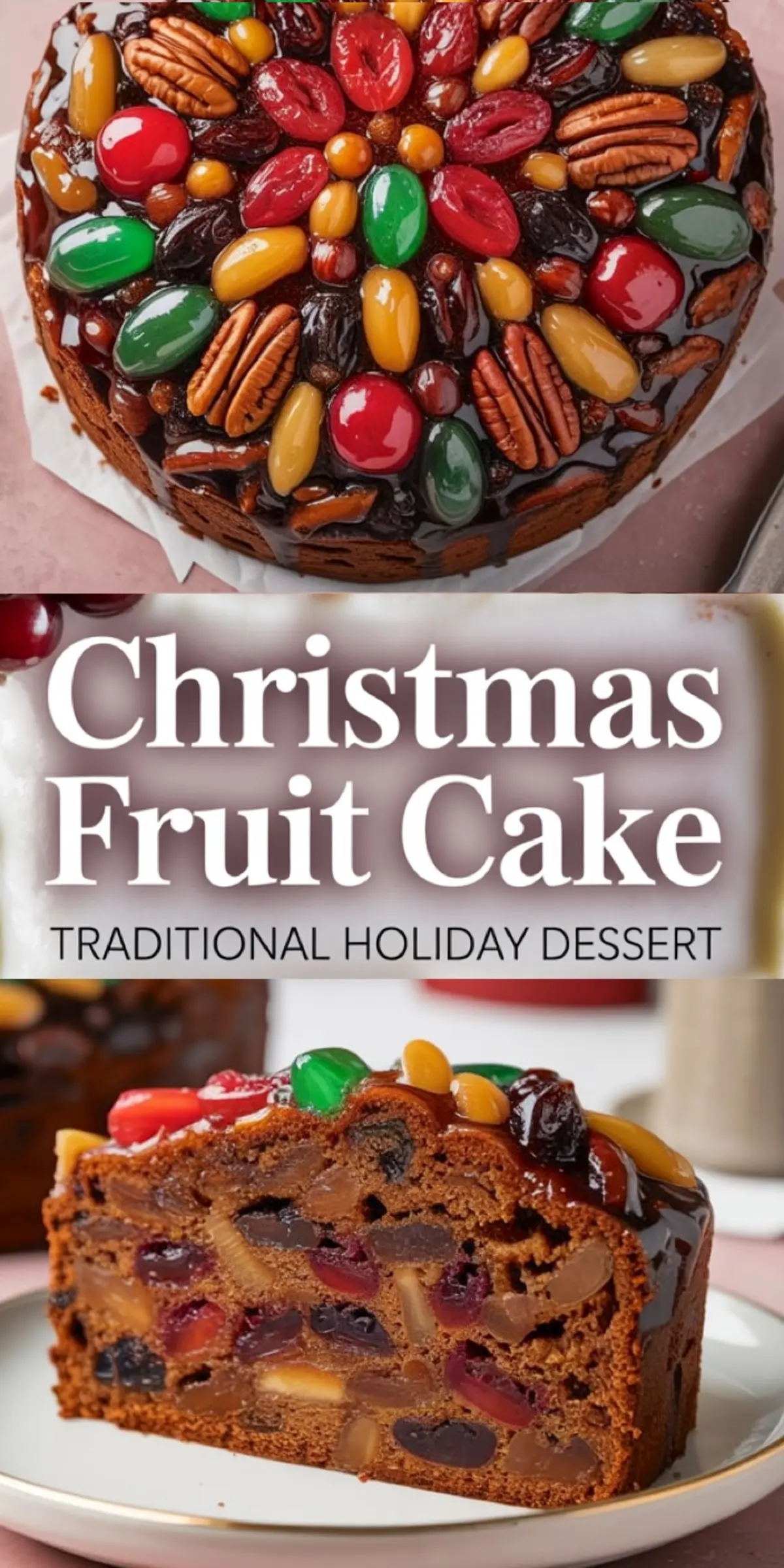
If you bake this Christmas fruit cake and wrap it the way I do, tell me how it turned out. Or ask if something feels uncertain. I’ll answer when I can. Save this recipe to your board so you can find it again when the season calls.
And remember: If it cracks, don’t worry. It’s still whole inside.
Christmas Fruit Cake Recipe
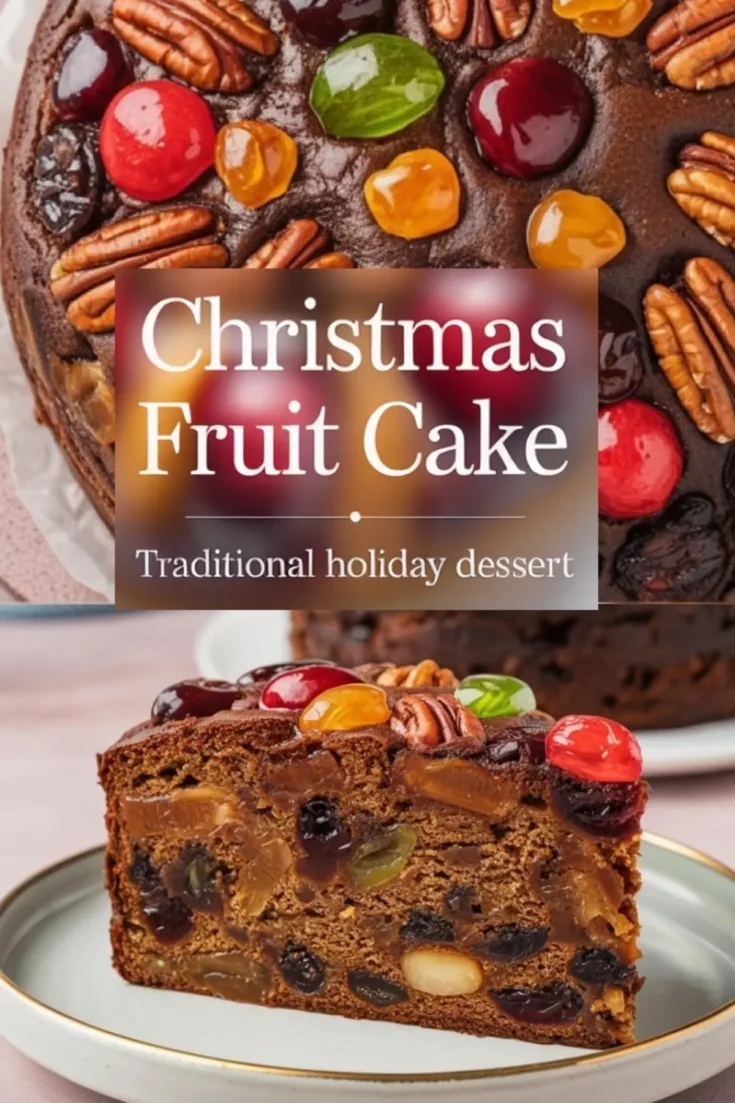
Christmas fruit cake is a traditional holiday bake filled with a rich dried fruit mix and warm spices. I soak the fruit in advance so every slice is dense, moist, and full of flavor. This fruit cake Christmas recipe follows a classic method with simple ingredients that keep well and taste even better as the days go by. If you’ve looked for fruitcake recipes that strike the right balance of sweet, tender, and spiced, this is it. I usually wrap mine in parchment and store it for gifting or for those long December days when a slice with tea feels just right. A must for your Christmas cake recipes list.
Ingredients
- FOR THE FRUIT MIXTURE
- 1 ½ cups golden raisins
- 1 ½ cups dark raisins
- 1 cup chopped dried apricots
- ¾ cup chopped dates
- ½ cup chopped glace cherries (red and green)
- ½ cup chopped candied pineapple
- ½ cup chopped dried figs
- 1 cup dark rum or brandy (or orange juice)
- Zest of 1 orange
- Zest of 1 lemon
- FOR THE CAKE BATTER
- 1 cup unsalted butter, softened
- 1 cup dark brown sugar, packed
- 4 large eggs, room temperature
- 1 ½ cups all-purpose flour
- ½ cup almond flour (optional)
- 1 ½ tsp ground cinnamon
- 1 tsp ground nutmeg
- ½ tsp ground cloves
- 1 tsp baking powder
- ½ tsp salt
- 1 tsp vanilla extract
- ¼ cup molasses or dark treacle
- 1 cup chopped pecans or walnuts
- FOR THE DECORATION (OPTIONAL)
- Whole glace cherries
- Whole pecans
- Candied fruits
Instructions
- PREPARE THE FRUIT MIXTURE: In a large bowl, combine all dried fruits, orange zest, lemon zest, and the soaking liquid. Stir to mix evenly. Cover the bowl tightly with plastic wrap and let it sit at room temperature for at least 24 hours, stirring occasionally. For best results, soak up to 1 week in advance.
- PREHEAT AND PREPARE THE PAN: Preheat oven to 300°F (150°C). Line a 9-inch round or 8-inch square cake pan with parchment paper on the bottom and sides. Wrap the outside of the pan with a layer of brown paper or foil to protect the cake from over-browning during baking.
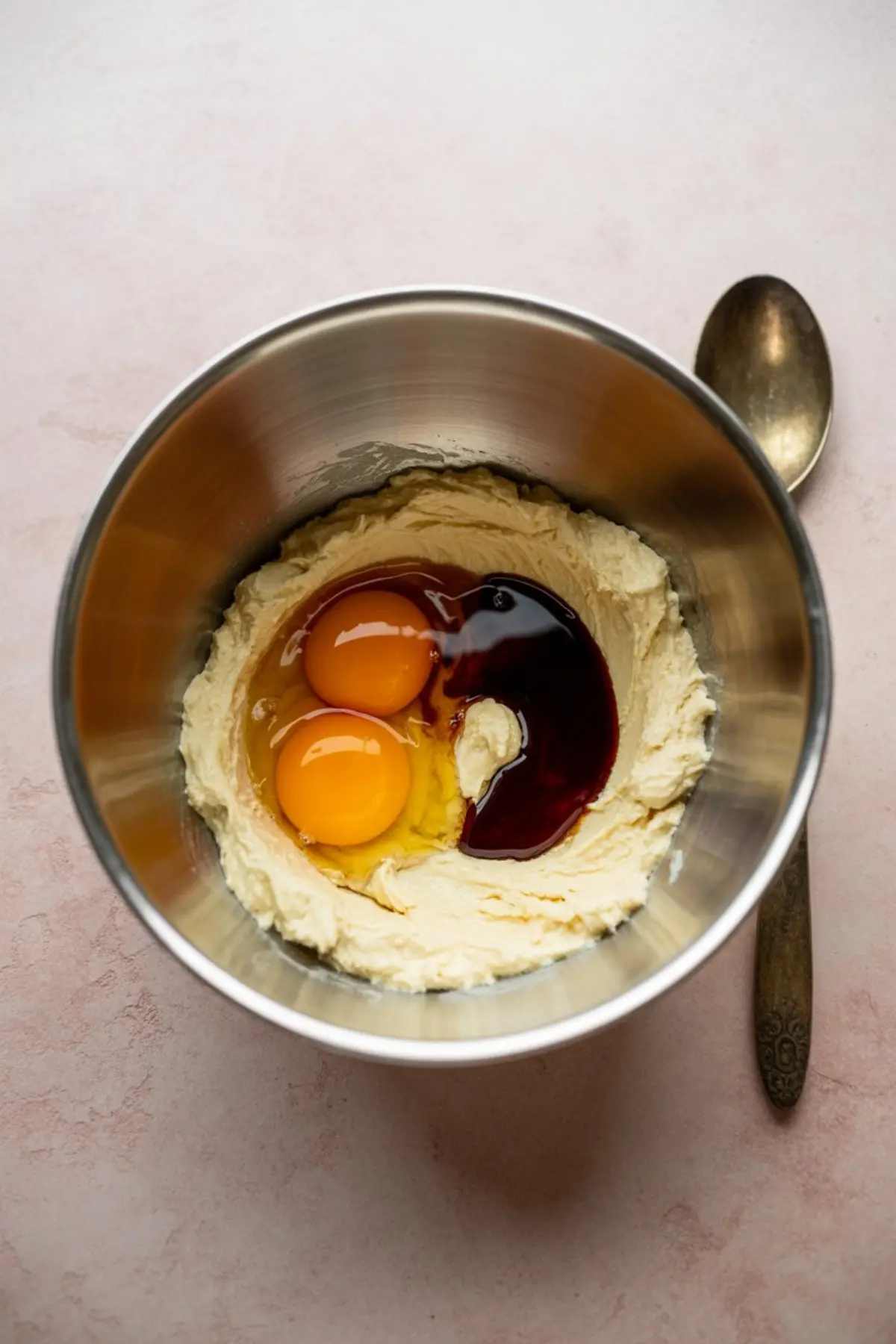
- MAKE THE BATTER: In a large mixing bowl, cream the softened butter and dark brown sugar until light and fluffy, about 3 to 4 minutes. Add the eggs one at a time, beating well after each addition. Mix in the vanilla extract and molasses until combined. In a separate bowl, whisk together the all-purpose flour, almond flour (if using), cinnamon, nutmeg, cloves, baking powder, and salt. Gradually add the dry mixture to the wet mixture, mixing until just combined.
- COMBINE AND POUR: Fold the soaked fruit mixture, including any remaining soaking liquid, into the batter. Stir in the chopped nuts until evenly distributed. Pour the batter into the prepared pan and smooth the surface. If decorating, gently press whole glace cherries, pecans, or other candied fruits onto the top.
- BAKE: Bake in the center of the oven for 2 to 2 ½ hours, or until a toothpick inserted in the center comes out mostly clean. Begin checking at 90 minutes. If the top begins to brown too quickly, loosely tent the cake with foil and continue baking.
- COOL AND STORE: Allow the cake to cool completely in the pan. Once cooled, remove it from the pan and discard the parchment. Wrap the cake tightly in plastic wrap, then in foil. For best flavor, store it in a cool, dark place and let it age for at least 1 week. Optionally, brush the cake with a small amount of brandy every few days during aging to keep it moist and flavorful.
Notes
Soaking the fruit ahead of time ensures a moist and flavorful cake. You may substitute any dried fruits based on preference. The cake can be made up to 6 weeks in advance and stored well-wrapped at room temperature or in the refrigerator. Avoid skipping the lining and wrapping steps, as they help maintain even baking and prevent the cake from drying out.
