

Dandelion bread is a soft spring loaf made with yeast, honey, warm milk, butter, eggs, and fresh dandelion petals. It looks a little whimsical, but it bakes like a practical homemade bread with a tender crumb and a gentle floral note that sits quietly in the background.
This dandelion bread recipe with yeast is different from a quick bread because the dough has time to rise and develop a lighter texture. The honey gives it warmth, the petals add color, and the finished loaf works for toast, breakfast slices, or a simple snack with butter and extra honey.

The best part is that the bread tastes familiar first. It is not bitter or aggressively herbal when the petals are cleaned properly. Instead, it lands closer to a lightly sweet enriched loaf with tiny yellow flecks through the crumb, which makes it useful for readers looking for dandelion recipes that still feel easy to serve.
Why This Yeast Bread Works
The yeast dough gives this loaf its soft structure. Warm milk wakes up the yeast, honey feeds the dough and adds flavor, and eggs plus butter make the crumb richer than a lean sandwich bread. That balance keeps the loaf tender without turning it into cake.
Cleaning Dandelion Petals Without Bitterness
Fresh dandelion petals are the ingredient that makes the recipe special, but they need a little care. Use flowers from untreated areas away from roadsides, sprayed lawns, and places where pets roam. Pull away the green parts before mixing the petals into the dough because those green bits can make dandelion bread taste bitter.
What The Bread Should Taste Like
A good loaf should taste lightly sweet, soft, and a little floral, not grassy. Think of the petals as a spring accent rather than the whole flavor of the bread. The honey matters because it rounds out the petals and makes the bread easier to pair with butter, jam, soft cheese, or a small drizzle of extra honey at the table.
The Ingredients That Matter Most
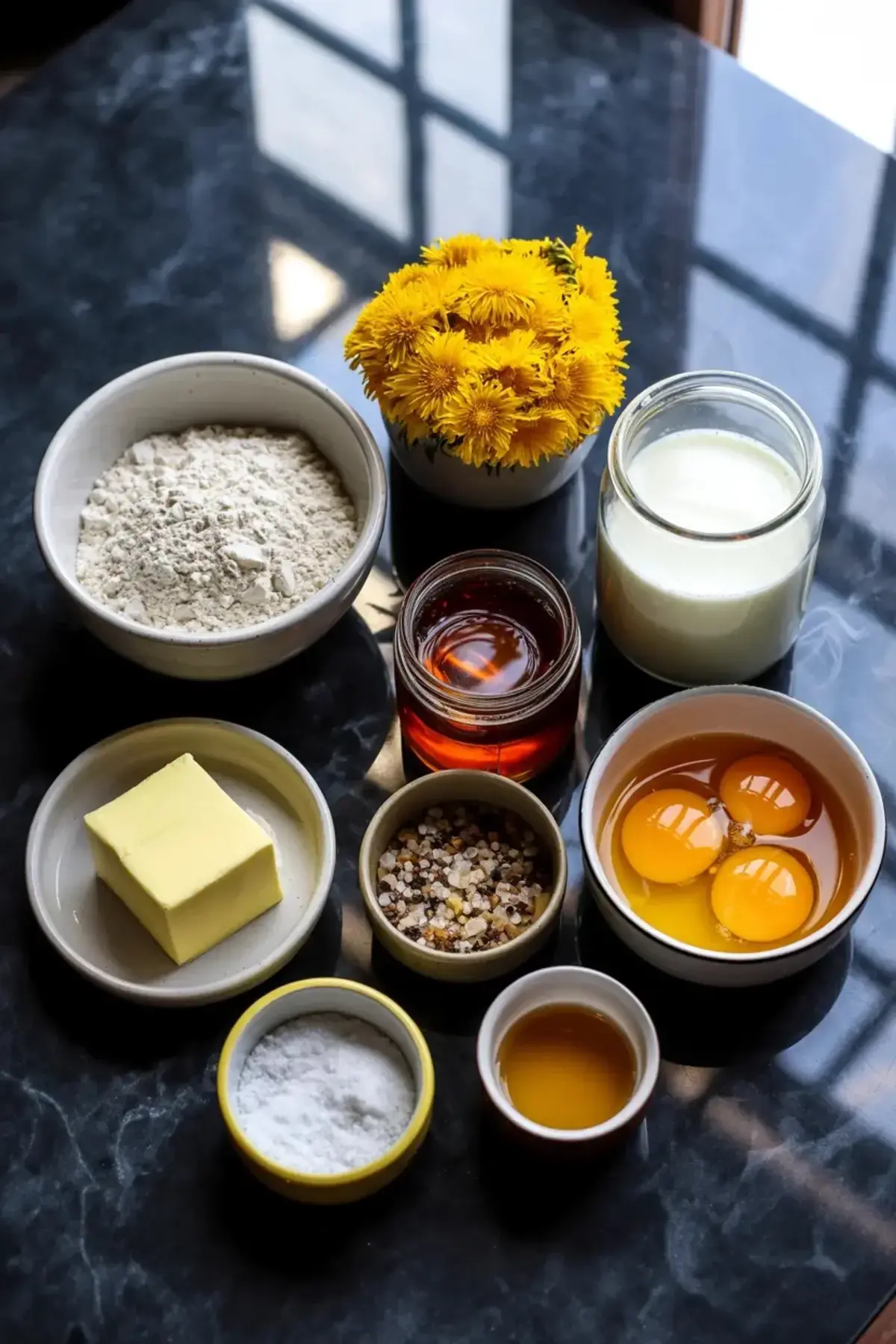
All-purpose flour keeps the loaf soft and approachable. Active dry yeast gives it lift. Warm milk should feel gently warm, not hot, so it helps the yeast foam instead of damaging it. Honey brings sweetness and moisture, while melted butter and eggs make the dough smoother and easier to slice after baking.
Mixing And Kneading The Dough
To make the dough, start by letting the milk, honey, and yeast sit until foamy. That foam is your first sign that the yeast is alive. After the butter, eggs, salt, and optional vanilla go in, add the flour gradually so the dough can come together soft rather than stiff. Fold in the petals once the dough has formed so they spread through the loaf instead of clumping.
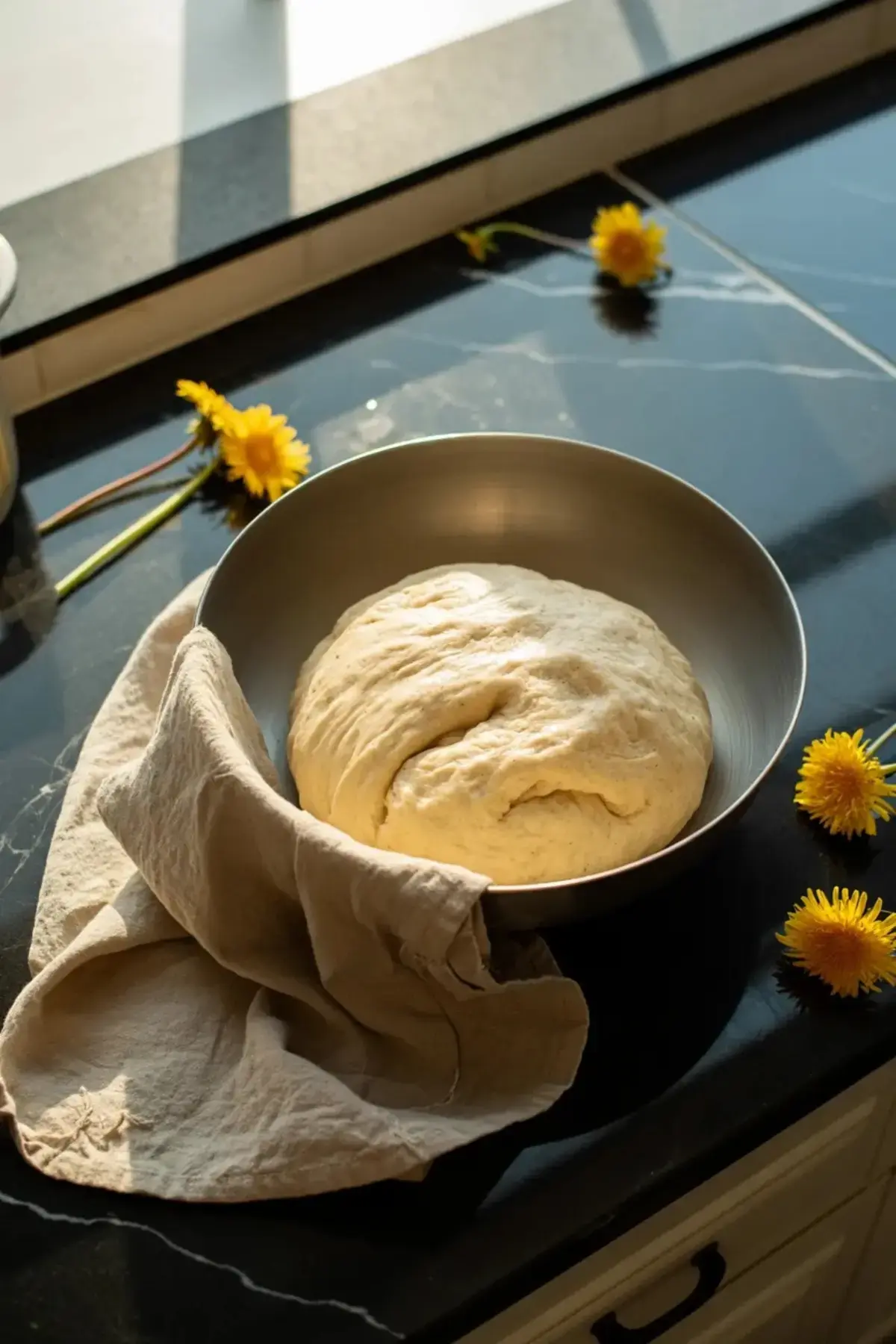
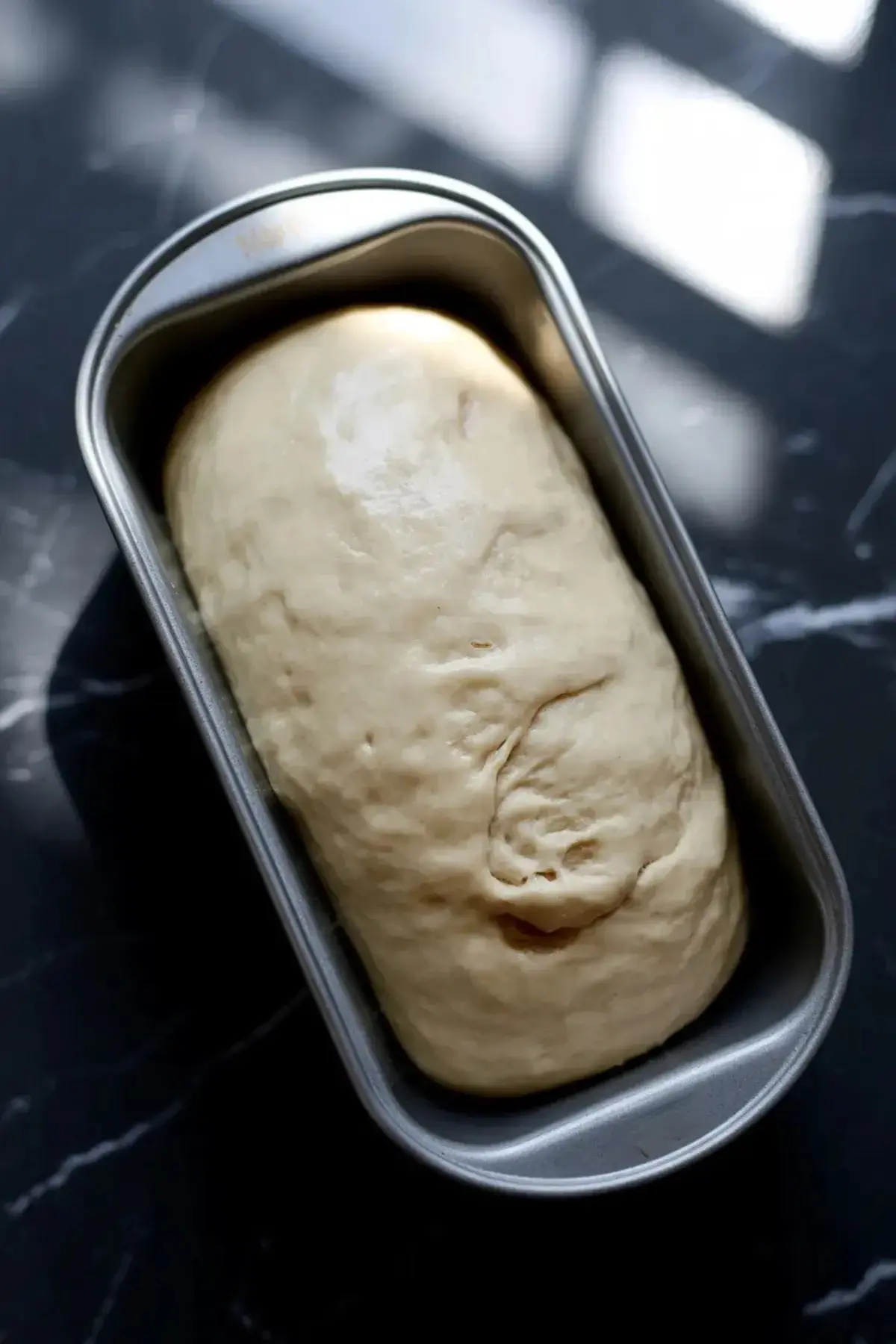
Kneading matters here because a soft floral bread still needs enough gluten to rise well. Work the dough until it feels smooth and elastic, then let it rise until doubled. After the first rise, shape it gently into a loaf, set it in the pan, and give it a shorter second rise until the dough sits slightly above the rim.
How To Tell When It Is Done
The loaf is ready when the crust looks deep golden and the bread sounds hollow when tapped. If the top browns too fast before the center finishes, tent it loosely with foil near the end of baking. Let the bread cool for at least 20 minutes before slicing so the crumb can settle instead of turning gummy.
Troubleshooting Dandelion Bread
If your dough rises slowly, the room may be too cool or the milk may not have been warm enough to activate the yeast well. If the bread tastes bitter, the petals probably kept too much green base attached. If the loaf feels dense, it may need more kneading, a fuller first rise, or a little less flour next time.
Easy Ways To Change The Loaf
You can keep this as a simple dandelion bread recipe with honey, or you can make small changes without losing the loaf. Add lemon zest for a brighter spring flavor, swap a spoonful of the honey for maple syrup, or brush the warm crust with melted butter after baking. Avoid loading the dough with too many extras because the petals are subtle and can disappear fast.
Serving Ideas For A Spring Loaf
This bread is especially good with salted butter, honey butter, soft cheese, or a thin swipe of jam. It also fits beside spring soups and simple brunch plates when you want a homemade loaf that feels more seasonal than plain white bread. If you like cozy loaf-style bakes, Gingerbread Loaf is a warmer spiced option, while Orange Muffins give you another bright breakfast-friendly bake.
Storage And Freezing
Store dandelion bread tightly wrapped at room temperature for a couple of days, or refrigerate it if your kitchen is warm. For longer storage, slice the cooled loaf and freeze the pieces for up to 2 months. Toast frozen slices straight from the freezer or thaw them first if you want a softer texture.
Save This Recipe
Save this dandelion bread recipe with honey for spring baking, cottage-style brunches, and days when you want to turn fresh edible flowers into something simple and useful. If you make it, leave a comment and say whether you served it with butter, honey, soft cheese, or jam.

Dandelion Bread

This dandelion bread is a soft yeast loaf made with fresh dandelion petals, warm milk, honey, butter, and eggs for a lightly sweet spring bread. The petals give the loaf a gentle floral note without making it taste grassy, while the honey keeps the crumb tender and warm. Slice it for toast, serve it with butter or extra honey, or use it as a simple homemade bread when you want a seasonal recipe with a cottage-style feel.
Ingredients
- 3 cups all-purpose flour
- 2¼ teaspoons active dry yeast
- ¾ cup warm milk
- ¼ cup honey
- 4 tablespoons unsalted butter, melted
- 2 large eggs
- 1 teaspoon salt
- 1 cup fresh dandelion petals, green parts removed
- 1 teaspoon vanilla extract (optional)
Instructions
ACTIVATE THE YEAST: Combine the warm milk, honey, and active dry yeast in a large mixing bowl. Let the mixture rest for 5-10 minutes until the top becomes foamy. The foam indicates the yeast is active and ready for baking.
MIX THE DOUGH: Add the melted butter, eggs, salt, and vanilla extract if using. Stir until combined. Add the flour gradually, one cup at a time, mixing until a soft dough forms. Fold the dandelion petals into the dough until evenly distributed.
KNEAD THE DOUGH: Transfer the dough to a lightly floured surface. Knead for about 8 minutes until the dough becomes smooth and elastic. Lightly flour your hands if the dough feels sticky, but avoid adding too much extra flour to keep the bread soft.
LET THE DOUGH RISE: Place the dough into a lightly greased bowl and cover with a clean kitchen towel. Let the dough rise in a warm area for about 1 hour or until doubled in size.
SHAPE THE LOAF: Gently punch down the risen dough to release excess air. Shape the dough into a loaf and place it into a greased 9x5-inch loaf pan. Cover loosely and let the dough rise again for about 30 minutes, or until the dough rises slightly above the rim of the pan.
BAKE THE BREAD: Preheat the oven to 350°F. Bake the bread for 35-40 minutes until the crust becomes deep golden brown and the loaf sounds hollow when tapped on the bottom.
COOL AND SERVE: Remove the bread from the pan and let it cool on a wire rack for at least 20 minutes before slicing. Serve warm with butter, honey, soft cheese, or alongside soup.
Notes
Use dandelion flowers picked from untreated areas away from roadsides or sprayed lawns. Remove all green parts from the blossoms to prevent bitterness in the bread.
The bread freezes well. Wrap cooled slices tightly and freeze for up to 2 months.
Warm milk should feel slightly warm to the touch, not hot, to help the yeast rise properly.
