
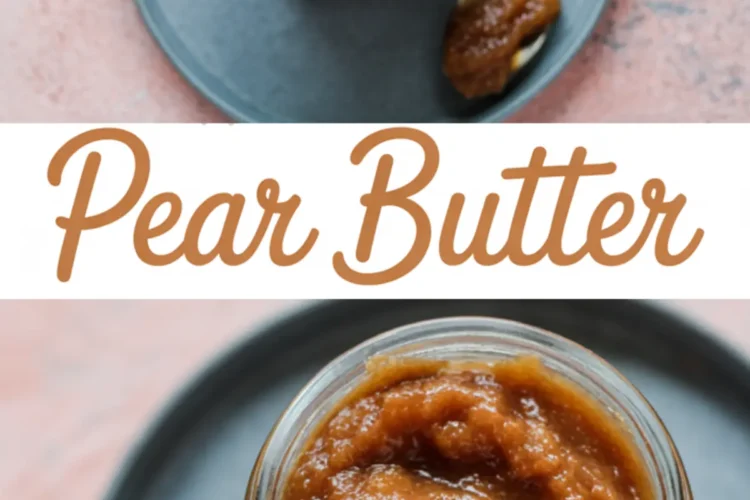
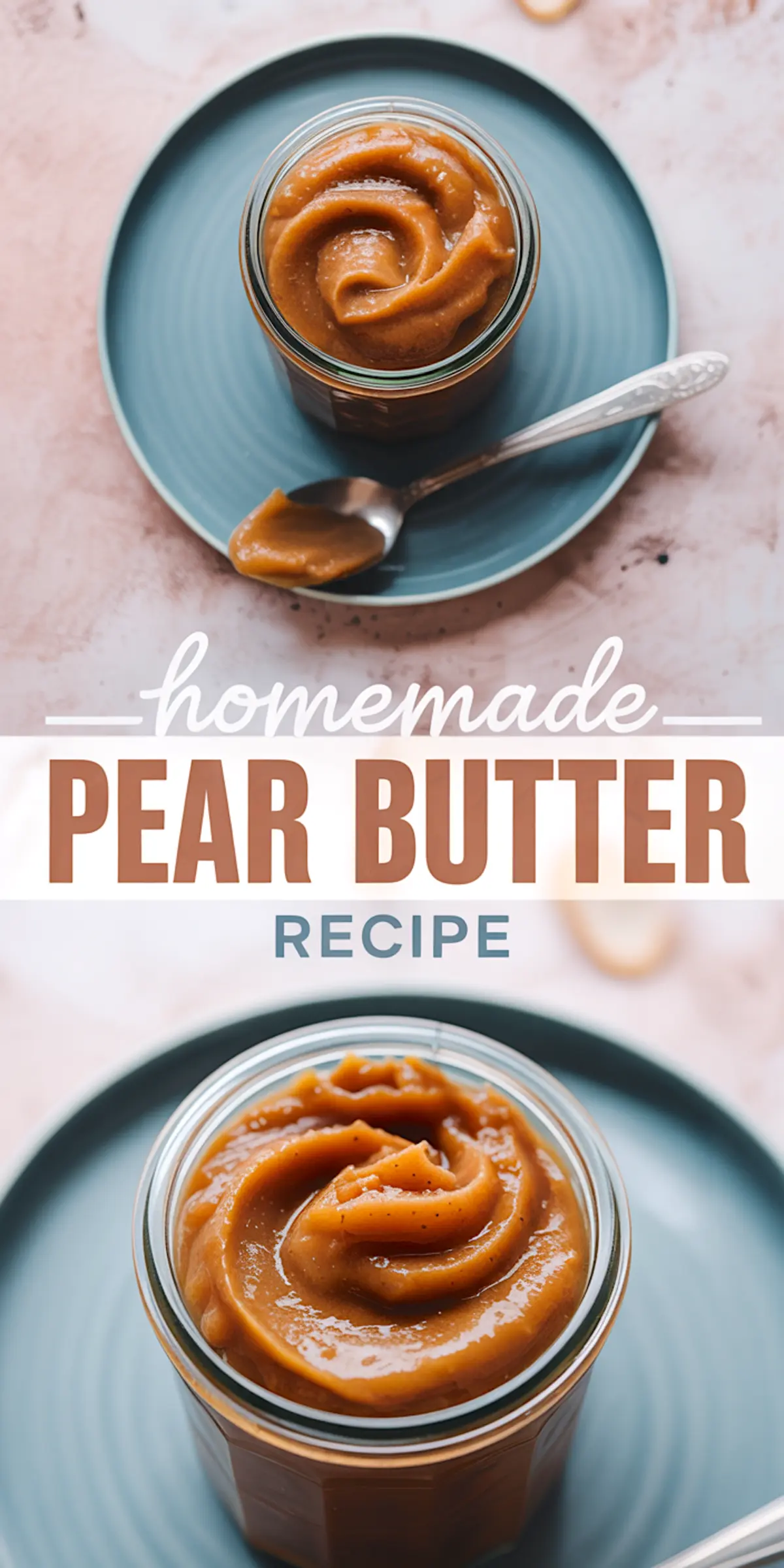
Pear butter doesn’t ask much from you.
It only asks for time, gentle heat, and a few pears that feel heavy in your hand. It’s one of those recipes I’ve kept on a folded card in my old metal tin, stained a little with cinnamon and time.
This recipe turns fresh fruit into something soft and steady. The kind of thing you spread thickly on toast while the kettle sings. The kind of thing you don’t rush.
You’ll learn how to make it from start to finish, using methods I’ve relied on for years. I’ll show you what helps the flavor deepen and what helps it hold.
There’s also a quiet little trick I add near the end. Something you might not expect in a fruit butter. I’ll tell you what it is after we’ve gone through the steps, so keep reading with me.
Preparing Pears for Butter: What Ripeness Tells You

A good pear will bruise easily but still slice clean. I always reach for Bartletts when I want a smoother spread, though Bosc pears make a lovely, mild version too. If you’ve ever made Pear Cake, you’ll know that the riper the pear, the more deeply it flavors the dish. The same idea holds here.
I peel them all first, then core and slice until my board smells sweet and woodsy. I stir them gently with a splash of lemon juice and a little water right in the pot. That keeps their color from fading before the heat starts working.
Simmering Slowly Until They Soften
Once the pot warms over medium heat, the pears begin to fall apart. I let them simmer slowly for about half an hour. No rushing, just a steady bubbling and the quiet stir of a wooden spoon now and then.
They break down gently, and when they do, I bring out my immersion blender. You could use a countertop one, but I like to keep everything in one pot. It saves me cleanup and keeps the heat even.
The pears become smooth, like warm applesauce, but lighter. That’s when it’s time to build the flavor.
Choosing Spices and Sugar for Warmth
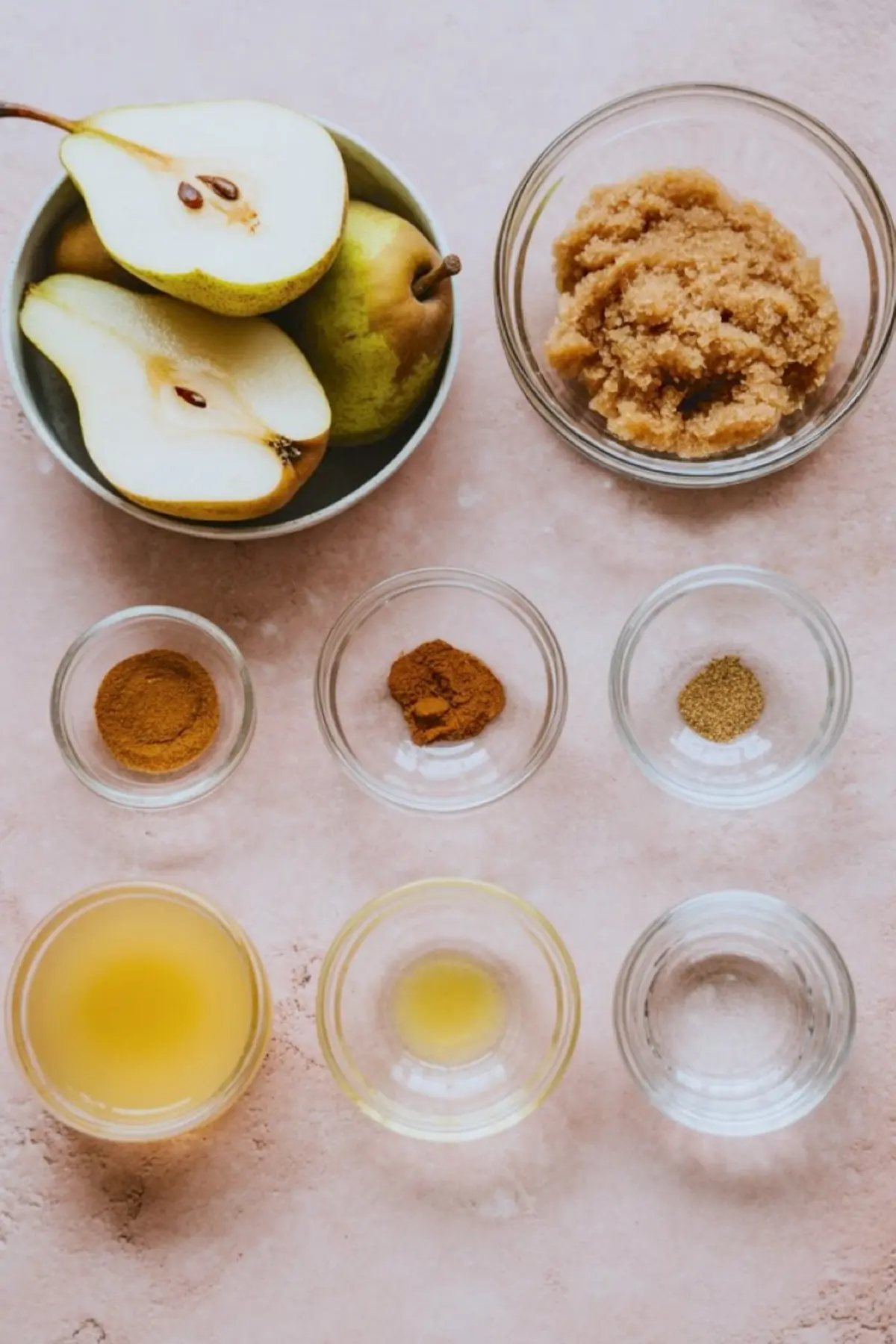
I’ve made this with both white sugar and brown sugar. In my handwritten notes, I’ve marked a star next to brown. It gives a softness and depth that white sugar doesn’t quite match.
The spices—cinnamon, nutmeg, and cloves—remind me of the ones I use in Pumpkin Butter. Just enough to warm the back of the mouth, never too much. You don’t want the spices to lead. The pears should stay at the front.
Stir those in after the purée has formed. You’ll feel the mixture thicken under your spoon almost right away.
Simmering Low Until It Thickens Just Right
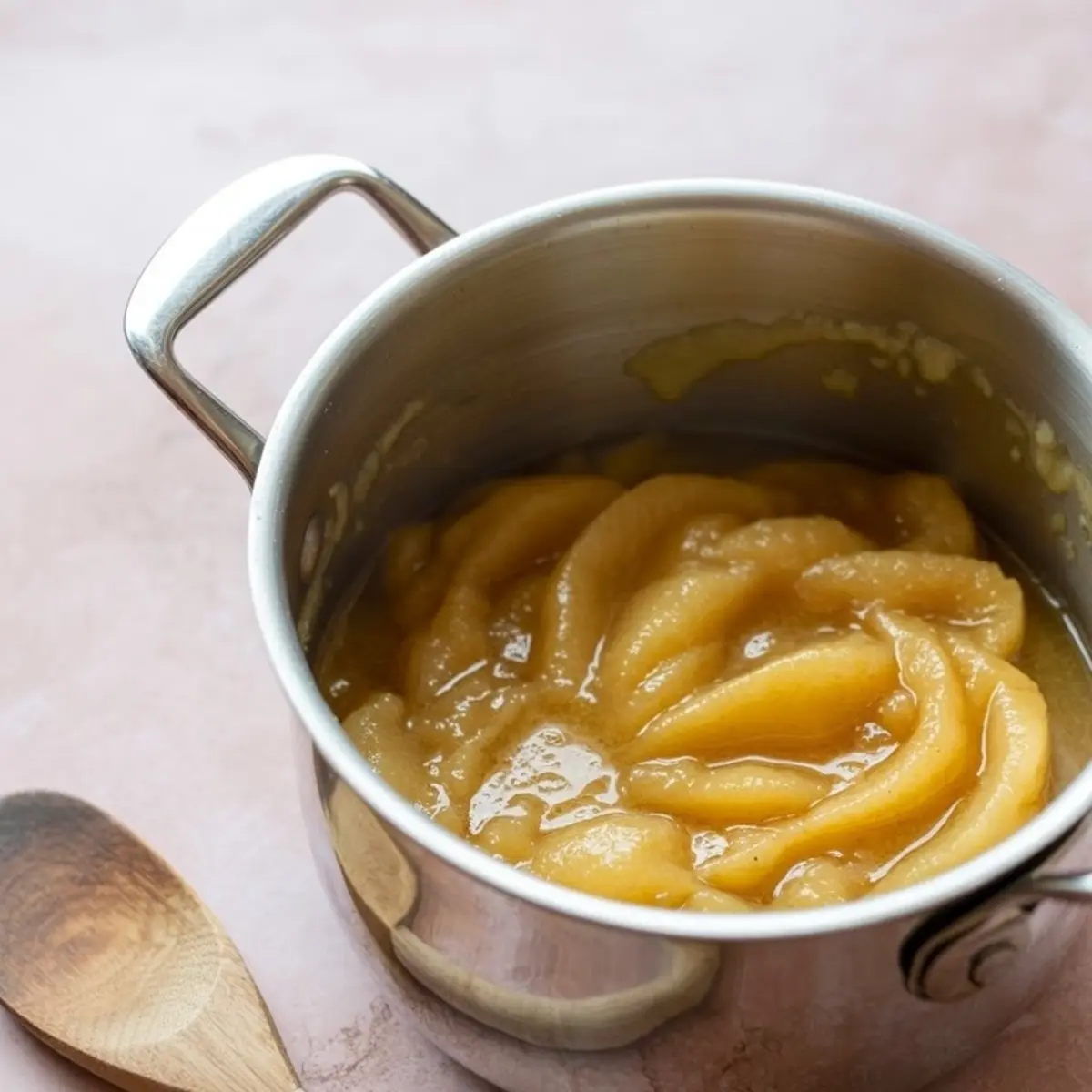
Now comes the long part.
Once the sugar and spices are in, I lower the heat and let it cook uncovered for about 90 minutes. I check it now and again, stir it with care, and wait until the mixture darkens and becomes thick enough to hold its shape on a spoon.
This is where I add my quiet trick. A few tablespoons of browned butter stirred in right near the end.
It’s not something I started with. I only began doing it a few years ago after trying a version of Maple Butter that used it. The nuttiness adds something steady underneath all that fruit. It turns the flavor from sweet to full.
If you’re worried it might change too much, don’t be. I’ve tried it both ways, and both work well. But that browned butter? It brings a calm to the sharpness of lemon and balances the sugar’s sweetness.
Canning or Storing Your Pear Butter
I always store mine in clean jars. I spoon it in while it’s still warm, seal the lids, and cool them slowly on the counter.
You can refrigerate the jars for a few weeks, or you can process them using proper canning steps if you’d like them to last longer.
Some readers ask how it compares to apple butter recipes, and I’d say this: pear butter has less tang, more grace. It spreads with ease and doesn’t shout.
I’ve used it on toast, folded it into oatmeal, and once, I spread it over a shortbread crust and baked it like a tart. That worked better than I expected.
If your pear butter comes out thinner than you’d hoped, don’t fret. Just simmer it longer. And if it thickens too much, stir in a spoon of warm water. It’s a kind thing to cook—patient and forgiving.
As I always remind Chloe when she bakes something new: if it cracks, don’t worry. Flavor doesn’t mind a little imperfection.
Keep This Close and Share What You Make

If you’ve never made a fruit butter before, start here.
Save this recipe to your Pinterest board so it doesn’t slip away when the pears are in season again. Try it just as written, or make it your own over time. I’d love to hear how you make it yours.
Leave a comment if you try it. Or if you have questions. That’s how we keep these old recipes alive—by using them, talking about them, passing them along.
Pear Butter Recipe

Sweet pears simmer slowly with warm spices to create a smooth, flavorful spread that’s perfect for toast, oatmeal, or baking. This recipe brings out the natural sweetness of pears with just enough spice for balance.
Ingredients
- 5 pounds ripe pears (Bartlett or Bosc), peeled, cored, and sliced
- 2 tablespoons lemon juice
- 1/4 cup water
- 1 cup light brown sugar, packed
- 2 teaspoons ground cinnamon
- 1/4 teaspoon ground nutmeg
- 1/8 teaspoon ground cloves
Instructions
PREPARE THE PEARS: Peel, core, and slice the pears. Place them in a large, heavy pot with the water and lemon juice. Stir to coat the pears and prevent browning.
COOK THE PEARS: Set the pot over medium heat and bring the pears to a gentle simmer. Cook for about 30 minutes, stirring occasionally, until the pears are very soft and begin to break down.
PUREE THE MIXTURE: Use an immersion blender to puree the pears directly in the pot until completely smooth. If using a countertop blender, work in batches and return the puree to the pot afterward.
ADD SWEETENER AND SPICES: Stir in the brown sugar, cinnamon, nutmeg, and cloves until fully incorporated. Reduce the heat to low.
SIMMER UNTIL THICKENED: Continue cooking the mixture on low heat, stirring occasionally, for 60 to 90 minutes, until the pear butter is thick and darkened. It should hold its shape on a spoon without liquid pooling around the edges.
STORE THE PEAR BUTTER: Spoon the hot pear butter into clean jars. Seal and refrigerate for up to 3 weeks. For long-term storage, process jars in a boiling water bath according to safe canning guidelines.
Notes
Adjust the sugar to taste depending on the sweetness of your pears. Cooking time may vary based on pear variety and ripeness.
Nutrition Information:
Yield:
4Serving Size:
1Amount Per Serving: Calories: 502Total Fat: 1gSaturated Fat: 0gTrans Fat: 0gUnsaturated Fat: 1gCholesterol: 0mgSodium: 21mgCarbohydrates: 133gFiber: 18gSugar: 100gProtein: 2g
