
Oat milk holds a calm kind of place in my notebook. Among the many milk recipes I’ve tried through the years—almond, cashew, even hempth, is one always feels the most straightforward. No soaking. No fuss. Just a few pantry staples, a good rinse, and a quiet morning rhythm.
This homemade oat milk recipe is a staple for anyone leaning into plant based milk, whether you’re avoiding dairy milk or simply want something smooth and neutral for your coffee or baking. If you’re wondering how to make oat milk homemade, I hope what I’ve learned through trial and error gives you a steadier starting point.
I once wrote on the edge of the card, “Don’t rush the rinse. That’s where the magic is.” And it’s true. There’s a softness to this recipe if you let it be.

Why This Oat Milk Works Every Time
This diy oat milk uses cold water, a short blend, and a slow strain to avoid the gummy texture that turns many first-timers away. The method is simple, but each step matters.
I’ve made versions with dates and vanilla extract, and I’ve made it plain. Sometimes I add a few drops of sunflower oil, which gives it a touch of creaminess without altering the flavor. If you’ve never made your own oat milk, this is a kind and forgiving place to begin.
You’ll find this recipe budget-friendly, too. A single cup of rolled oats becomes a quart of smooth, non-dairy milk. No additives. No preservatives. Just oats and water, with a quiet pinch of salt.
My Notes on Optional Ingredients
In my handwritten card, I keep a short comparison between maple syrup and Medjool dates. I’ve used both to sweeten the batch, and each has its charm.
Maple syrup blends quickly, especially in cold drinks. It’s what I use if I’m planning to pour the oat milk over cereal or stir it into coffee. Medjool dates, on the other hand, create a rounder sweetness that suits baking or sipping on its own.
Both work well. Use what you have, and remember, if the milk separates in the fridge, a quick shake is all it needs.
If It’s Slimy, Don’t Worry

You’re not alone. Many people write and ask why their oat milk turned out a bit slimy. The answer is usually the water temperature or the blend time.
I always use cold filtered water. Never warm. And I keep the blend short—no longer than 30 seconds. Over-blending releases too much starch. That starch is what makes it feel thick in the wrong way.
If that happens, don’t toss the batch. Use it in baked goods instead. I’ve stirred thick oat milk into oatmeal cream pie cookies, and the results have been soft and chewy with a lovely crumb.
Oat Milk for More Than Sipping
You can do so much with this milk once you have the basics down.

I pour it into batters, like the one I use for oat pancakes, or stir it into peanut butter overnight oats when I want something quiet and cool for breakfast.
It also makes a good base for smoothies and a gentle swap for dairy in almost any custard or pudding. The flavor stays soft. The texture doesn’t interfere.
You’ll find that once you start keeping a jar in your fridge, it becomes part of your week without much thought.
A Steady Way to Store and Use It

After you strain the oat milk, store it in a clean jar with a lid. It lasts about five days in the fridge.
Separation is normal. Just shake it before each use. If you forget and the bottom gathers starch, give it a firm stir. It forgives you.
This is a good place to mention that if your nut milk bag is too fine, the milk might take longer to strain. I sometimes use a clean dish towel instead. It strains a little faster and washes out well.
And if you find yourself with extra oats and a craving for something sweet, roll them into peanut butter oat balls with some honey and flax. That’s another card in my notebook, right next to this one.
One Last Thought Before You Begin
If your milk turns out thinner than you expected, don’t worry. You can always add a spoonful of blended oats back in. Or simply enjoy it as it is.
What matters most is that you tried. That you made something from scratch. And if your straining is a little messy or your jar looks cloudy, I’ll tell you what I’ve told Chloe when she brings me her jars to sample—if it settles unevenly, it still counts.
This recipe isn’t about precision. It’s about having something you can rely on.
Save and Share This Oat Milk Recipe

If you’ve made this before, I’d love to hear how you use it. Do you sweeten it? Blend it plain? Do your children notice the difference?
Leave a comment below or share your version with someone who’s thinking of making a change in their milk recipes. And if you keep a kitchen notebook like I do, copy this down by hand. It’s one worth keeping close.
Save it on Pinterest so you have it ready for your next quiet morning.
Homemade Oat Milk Recipe

Oat milk recipe is one of the easiest plant based milk options to make at home. I blend oats with water, strain, and end up with a creamy, dairy-free milk that’s perfect for coffee, baking, or everyday drinking. Some call it DIY oat milk, others homemade oat milk recipe or simply make your own oat milk, but each version is simple and budget-friendly. Among milk recipes, oat milk stands out as a non-dairy milk that tastes smooth and neutral while being fully plant based. I’ve tried almond milk and other dairy milk alternatives, but oat milk is always the one I come back to. If you’ve ever wondered how to make oat milk homemade, this recipe keeps it quick and reliable.
Ingredients
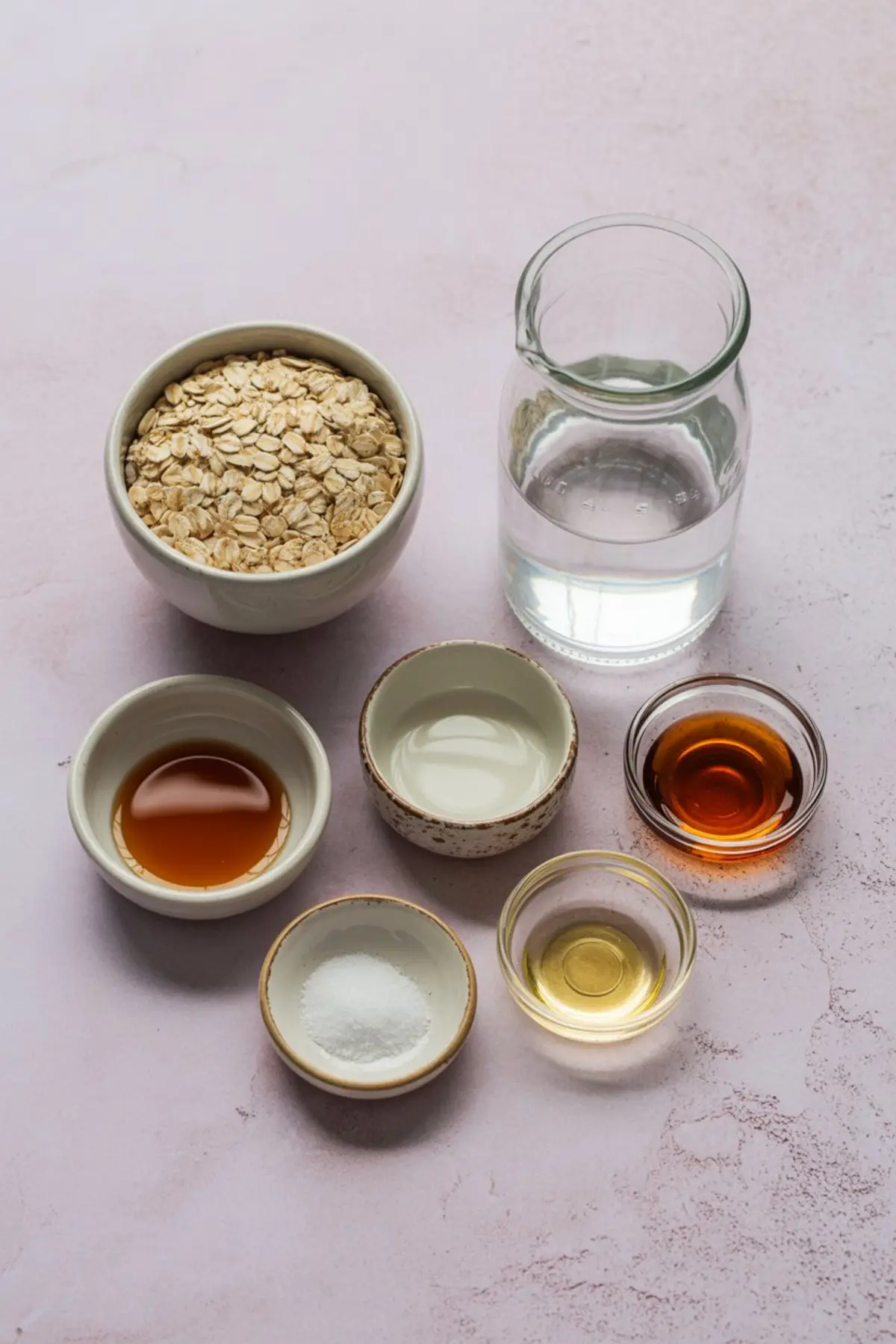
- 1 cup rolled oats
- 4 cups cold filtered water
- 1/4 teaspoon fine sea salt
- 1 to 2 teaspoons maple syrup or 1 pitted Medjool date (optional)
- 1/2 teaspoon vanilla extract (optional)
- 1 teaspoon neutral oil, such as sunflower or avocado (optional)
Instructions
- RINSE THE OATS: Place the oats in a fine-mesh strainer and rinse thoroughly under cold water until the water runs clear. This removes excess starch and prevents sliminess in the milk.
- COMBINE INGREDIENTS IN BLENDER: Add the rinsed oats, cold filtered water, salt, and any optional sweeteners or vanilla extract to a blender. Do not use warm water, as it can cause the mixture to become gummy.
- BLEND BRIEFLY: Blend the mixture on high speed for about 30 seconds. Avoid over-blending, which can release too much starch and result in an undesirable texture.
- STRAIN THE MILK: Pour the blended oat mixture through a nut milk bag or clean thin dish towel set over a large bowl. Gently squeeze to extract the liquid, being careful not to wring too hard to avoid pushing starches into the milk.
- STORE PROPERLY: Transfer the strained oat milk to a clean jar or bottle. Seal and refrigerate. Shake well before each use, as separation is natural.
Notes
Nutrition Information:
Yield:
4Serving Size:
1Amount Per Serving: Calories: 194Total Fat: 10gSaturated Fat: 1gTrans Fat: 0gUnsaturated Fat: 8gCholesterol: 0mgSodium: 147mgCarbohydrates: 25gFiber: 6gSugar: 7gProtein: 4g
