

There’s a kind of cake that doesn’t care if you’re out of eggs, milk, or butter. It doesn’t blink if your pantry looks like it’s been raided by teenage raccoons. And it still turns out with a deep, cocoa-rich crumb that feels like it had help from a professional.
That cake is Wacky Cake—also called Depression Cake—and it’s the one I trust on the hardest days and the hungriest nights.
You’ll learn here how to make it with pantry basics, how it works without dairy or eggs, and the one thing I add to give it a little wink of surprise.
But first, let me say this: If you’ve ever thought a cake needed fancy ingredients to be rich or moist, this one will change your mind. You don’t even need a mixer. Just a bowl, a spoon, and maybe a curious cat watching from the counter.
And yes, I’ll tell you later what the secret dash of magic is that I always stir in with my Golden Spoon.

How to Make Egg-Free Chocolate Wacky Cake That Still Feels Homemade
Start by preparing the pan. You can use an 8-inch square or round one. I grease it well but skip the parchment—this cake releases easily once cooled, and the crust edges caramelize in a way I love.
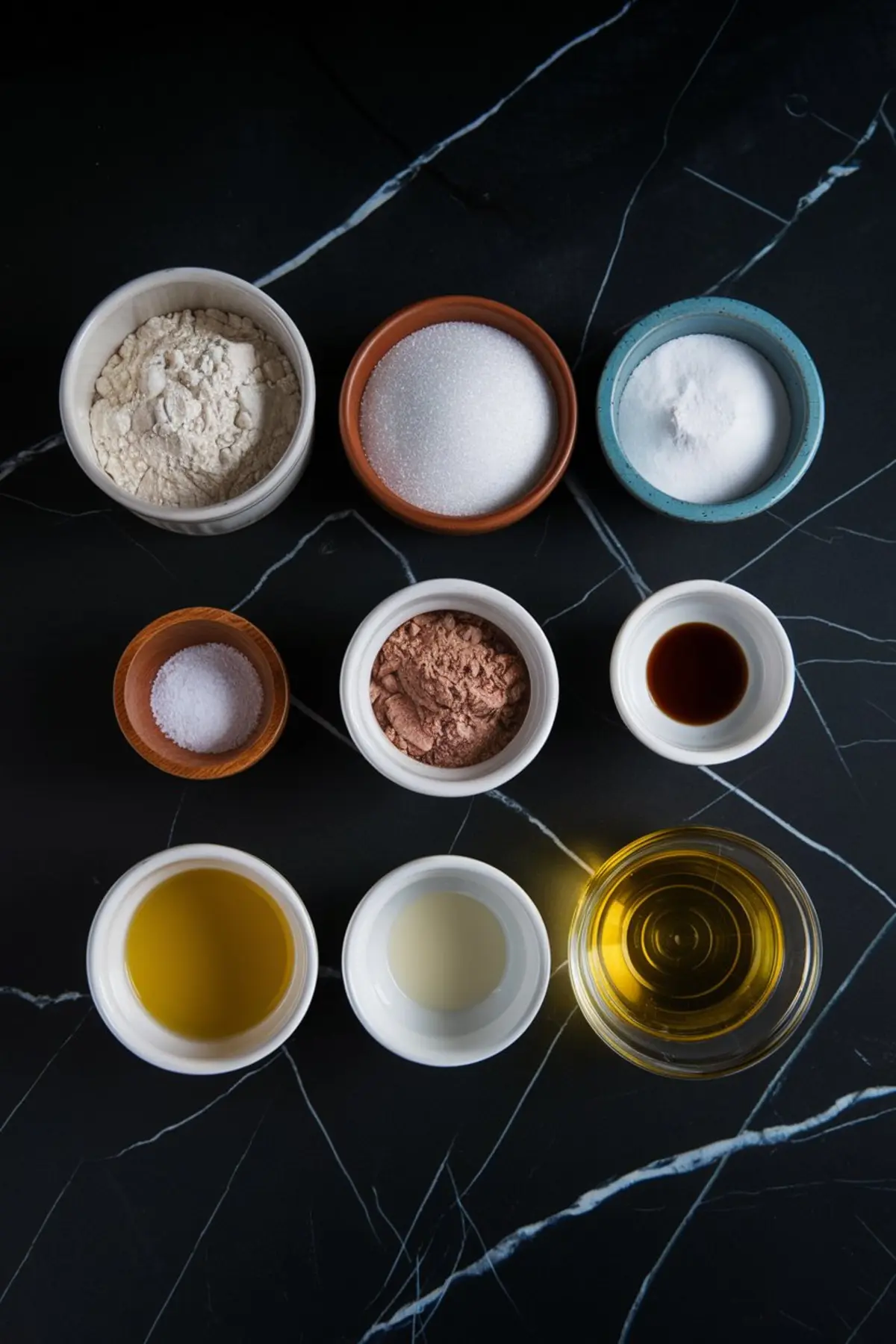
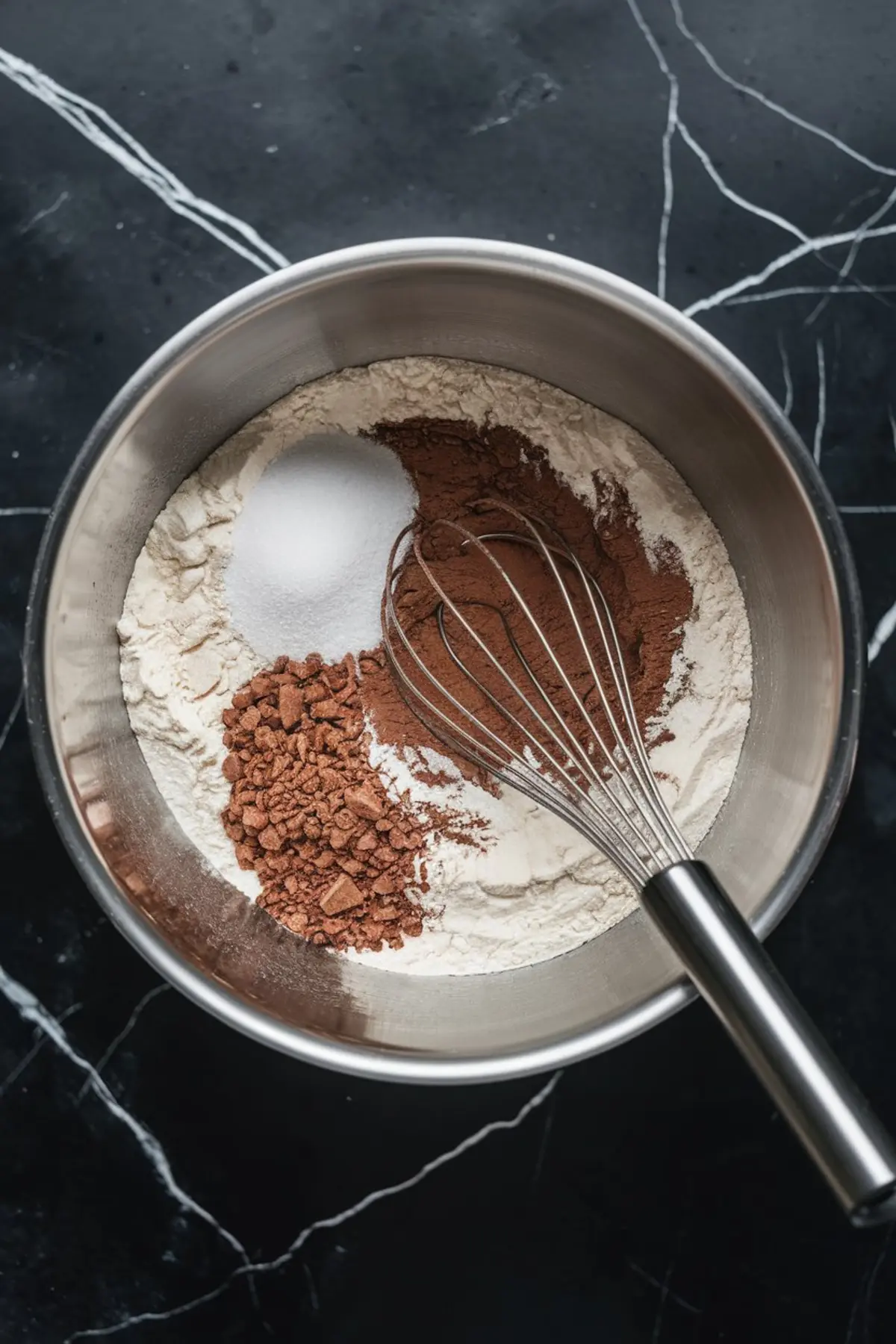
In a large mixing bowl, stir together the flour, sugar, cocoa powder, baking soda, and salt. Don’t worry about sifting, just whisk it well enough that you don’t see any streaks. I do this part slowly, often while talking to Whiskers, who always seems to show up as soon as I open the cocoa.
Now here’s the fun part—make three little wells in your dry mix. Pour the vanilla in one, vinegar in the second, and oil in the third. Then pour cold water over everything. It might look strange at first, but it’s exactly what this cake wants.
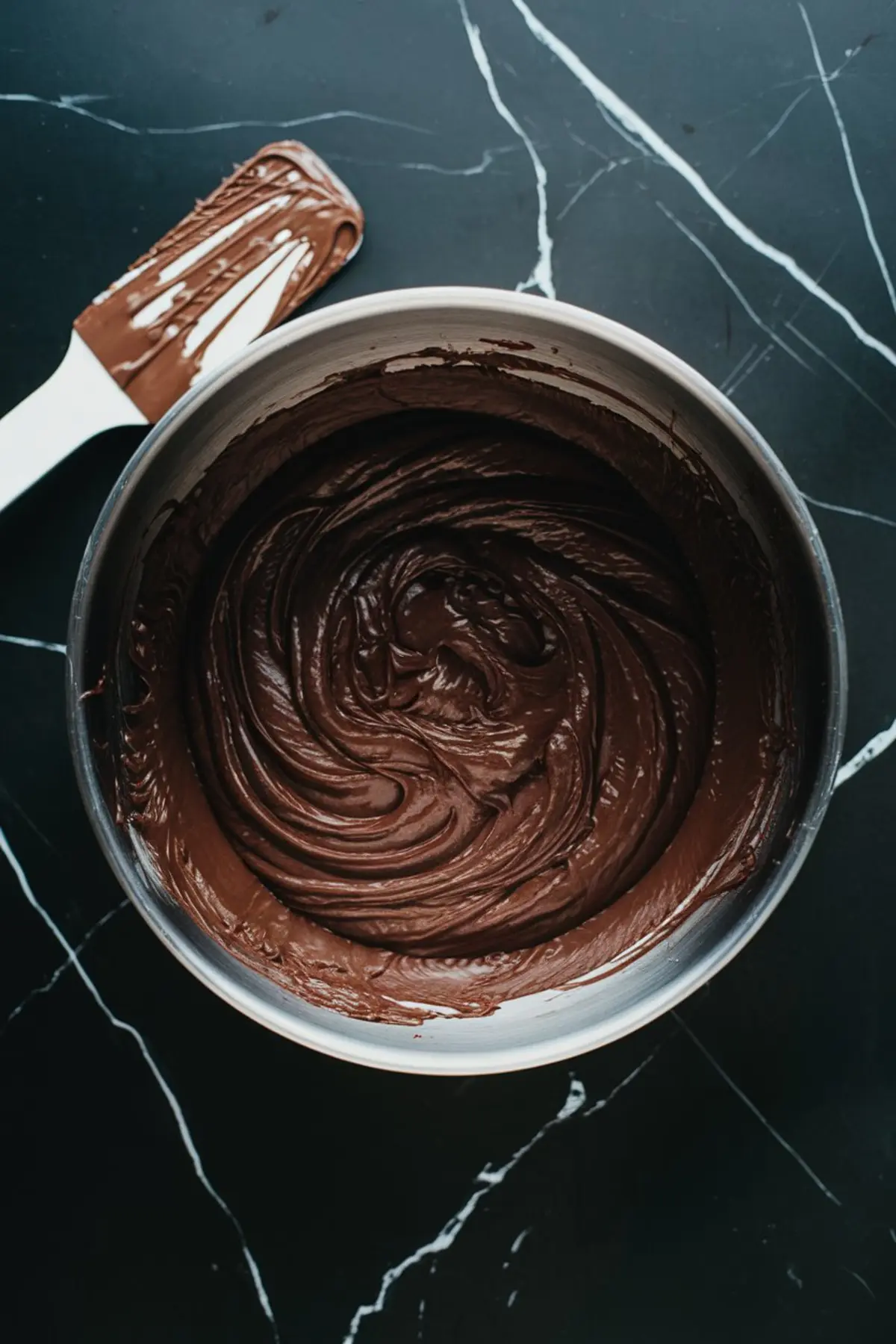
Mix it just until smooth. You’ll see bubbles from the vinegar reacting with the baking soda—that’s your lift. That’s your cake rising right in the bowl. Don’t overmix or you’ll lose that lightness.
Pour it into the prepared pan and bake at 350°F (175°C) for about 35 minutes. The top will puff up and spring back when touched. The middle stays just barely fudgy, the edges more structured.
Vinegar and Baking Soda Replace Eggs in This Chocolate Cake
The reason this cake works without eggs is chemical. Vinegar and baking soda do the leavening job here, and quite beautifully. They give the cake structure and air, no yolk required.
I’ve tested this side-by-side with egg-based cakes. Wacky Cake doesn’t taste like a substitute. It tastes like it meant to be this way all along.
And while many skip frosting altogether, I sometimes pair this with my German Chocolate Cake Frosting for an extra layer of indulgence.
Want something more traditional? Try my Chocolate Sheet Cake if you do have eggs and butter on hand. But this wacky version—this is the one I return to again and again.
Pantry Ingredients That Don’t Sacrifice Flavor
You need only basic ingredients. Flour, sugar, cocoa, baking soda, salt. Add vanilla, oil, vinegar, and cold water.
Both natural and Dutch-process cocoa work. Natural gives a slightly brighter tang. Dutch brings deeper notes. I’ve used both—use what you have.
Now let’s talk oil. I’ve tested this with canola, sunflower, and olive oil. All give different finishes. Olive oil adds a savory hint, but for neutral flavor, I always go with sunflower.
And if you’re wondering whether to use apple cider vinegar or white vinegar—I’ve done both. Cider vinegar adds a faint apple depth that doesn’t overpower. White vinegar keeps things clean and classic.

If you love a richer variation, try topping it with Chocolate Date Tart filling as a layer. It’s a deeper kind of sweet, and pairs beautifully with this simple base.
Cold Water vs. Warm in Wacky Cake: What Actually Works Better?
I’ve tested warm and cold water. Cold water wins every time. It keeps the batter stable while the vinegar reacts with the baking soda. Warm water speeds things up too fast, and the cake loses its even lift. In my Pin Notebook, I’ve underlined this note three times: always cold.
This is also where I stir with my Golden Spoon. Not because I think it changes the chemistry, but because it’s tradition in my kitchen. And I believe little rituals like that make things taste just a bit better.
Sometimes Whiskers tries to paw at the spoon’s handle as I mix, which never ends well for either of us.
The Secret Ingredient I Add That Brings It All Together
Now for that little something I promised earlier.
A pinch of espresso powder.
Not enough to make it taste like coffee. Just enough to wake up the cocoa and make the cake taste fuller, deeper. I stir it right into the dry mix. It’s the quiet difference between “good” and “make again.”
And if you want to go further with that flavor idea, you can layer this cake with White Chocolate Cake crumbs for contrast. One bite chocolate-rich, one bite smooth and mellow.
Make It Once, and You’ll Remember It on Every Rainy Afternoon
Wacky Cake doesn’t ask for much. That’s its gift. It shows up when nothing else in the kitchen wants to cooperate, and still delivers.
I keep a handwritten copy in the back of my Pin Notebook, smudged with cocoa. It’s been with me through breakups, snowstorms, and late nights when all I wanted was something warm and sweet with a spoon.
Bake this once, and it will be your fallback, too.
If you try this and love it—or if you have questions—drop them in the comments below. I check them often and love hearing how your cakes turn out.
And don’t forget to Pin this recipe to your dessert board so it’s there the next time your fridge looks a little too empty, and your chocolate cravings a little too loud.
Wacky Cake (Depression Cake) Recipe

A deeply simple chocolate cake that rises without eggs or dairy. This 1940s classic relies on pantry basics and a vinegar-baking soda reaction to create a moist, dark crumb. No stand mixer needed—just a bowl, a spoon, and a hot oven.
Ingredients
- 1 ½ cups (180g) all-purpose flour
- 1 cup (200g) granulated sugar
- ¼ cup (25g) unsweetened cocoa powder
- 1 tsp baking soda
- ½ tsp salt
- 1 tsp vanilla extract
- 1 tbsp white vinegar
- 6 tbsp (90ml) vegetable oil
- 1 cup (240ml) cold water
Instructions
- PREHEAT THE OVEN: Set your oven to 350°F (175°C). Grease an 8-inch round or square cake pan thoroughly; no parchment needed if the pan is well-greased.
- MIX THE DRY INGREDIENTS: In a large mixing bowl, whisk together the all-purpose flour, granulated sugar, unsweetened cocoa powder, baking soda, and salt until evenly combined.
- ADD THE WET INGREDIENTS: Make three small wells in the dry mixture. Pour the vanilla extract into one well, white vinegar into the second, and vegetable oil into the third. Then pour the cold water over the entire mixture.
- STIR TO COMBINE: Stir the batter just until smooth. You will see some fizzing—this is the vinegar reacting with the baking soda, and it’s what helps the cake rise. Do not overmix.
- BAKE THE CAKE: Immediately pour the batter into the prepared cake pan and place it in the oven. Bake for 30 to 35 minutes, or until the top springs back lightly when touched and a toothpick inserted into the center comes out clean or with a few moist crumbs.
- COOL COMPLETELY: Let the cake cool in the pan on a wire rack. Wait until it’s fully cooled before adding any frosting.
- OPTIONAL FROSTING: For a rich finish, top with a dark cocoa buttercream once the cake is completely cool.
Notes
Use natural or Dutch-processed cocoa powder; both work. Apple cider vinegar can be substituted for white vinegar. For the best texture, avoid overmixing. Cake stores well at room temperature, covered, for up to three days.
Nutrition Information:
Yield:
8Serving Size:
1Amount Per Serving: Calories: 183Total Fat: 11gSaturated Fat: 1gTrans Fat: 0gUnsaturated Fat: 9gCholesterol: 0mgSodium: 304mgCarbohydrates: 19gFiber: 1gSugar: 1gProtein: 2g
