
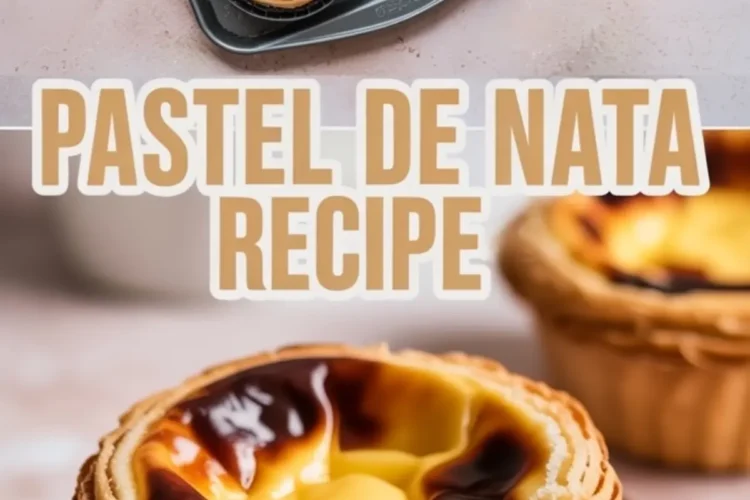
There’s a quiet comfort in egg custard. The kind that doesn’t announce itself, but settles in softly. I’ve kept this egg custard pie recipe near the front of my handwritten card box for decades, though next to it sits something just as well-worn this pastel de nata recipe.
Portuguese custard tarts have a caramelized top, a flaky shell, and a filling that holds its warmth longer than you’d expect. The crust shatters. The center stays soft. If you’ve tried the versions from Lisbon pastry shops, you know the kind of magic I mean. The ones baked hot, close to the broiler, until the top freckles with color.
This recipe keeps that same spirit but in a quiet kitchen, with time to rest your hands on the counter and take in the scent of lemon peel and cinnamon syrup. If you’ve made the no bake eggnog pie recipe before, you already know how egg yolks and cream can turn into something far richer than they seem. This recipe takes it one step further.
You’ll begin by pressing puff pastry into a tin. But the real secret comes later. A syrup cooked with cinnamon and citrus is slowly whisked into the custard. That one step turns a simple tart into something much deeper.

How I Keep the Pastry Flaky and Light
Use all-butter puff pastry if you can find it. I’ve tested with both the store-brand and the European-style blocks, and the flavor difference is gentle but clear. Buttered pastry bakes crisper. It browns more evenly. And when the custard sets, the shell holds its shape without softening underneath.
The key here is temperature. Keep the pastry cold while you work. If your kitchen runs warm, shape it quickly, then return the tin to the fridge. Letting it sit for even five minutes makes a difference. The heat of the oven will do the rest.
The Custard Filling and That Hidden Detail
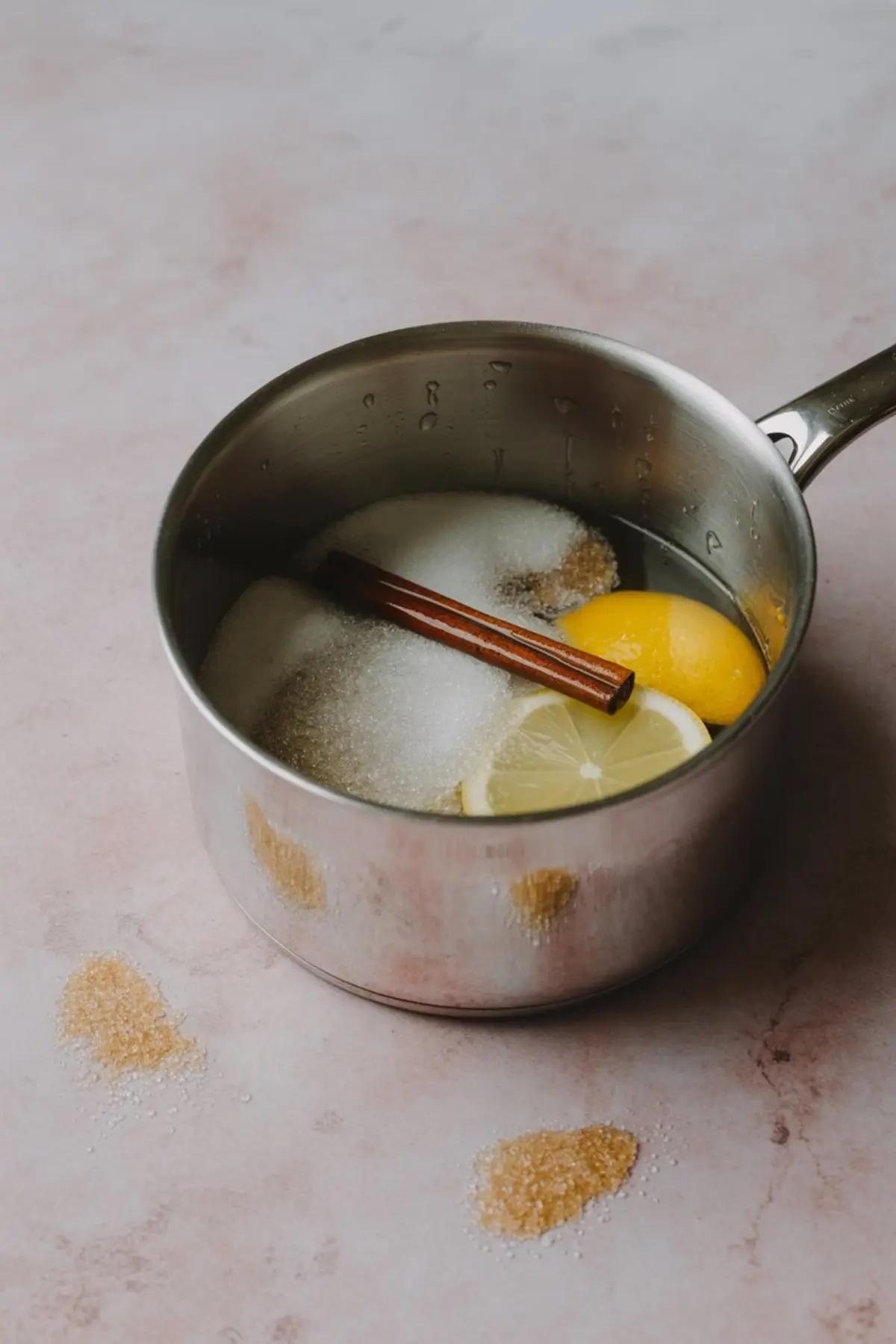
You’ll cook a sugar syrup first, just water, sugar, a cinnamon stick, and lemon peel. Let it boil. Then let it rest. Don’t rush this part. The heat should be enough to draw out the lemon oils without turning bitter.
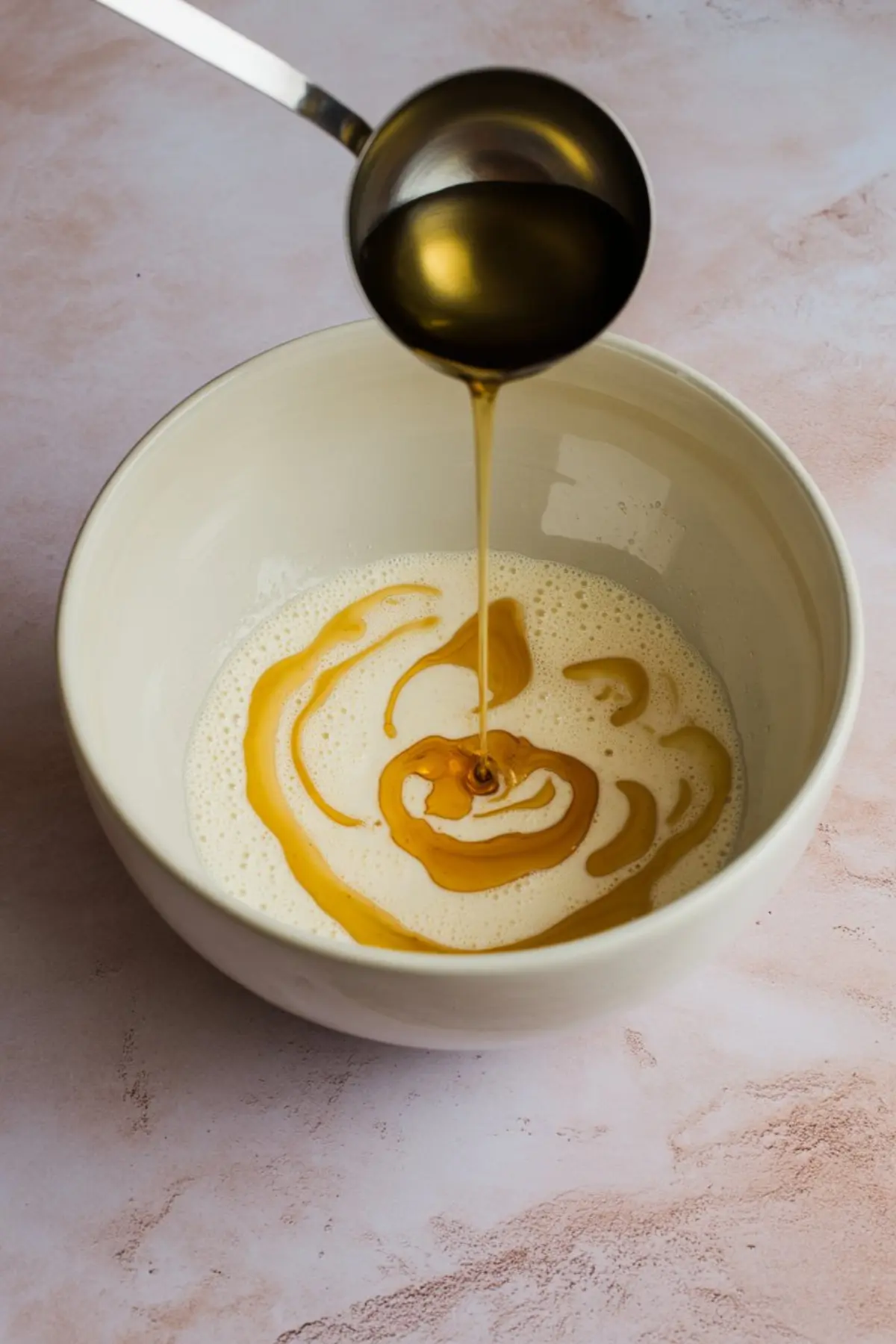
Next comes the custard. Egg yolks, cornstarch, whole milk, and cream. Simple ingredients. Stir them together slowly, always whisking. The warm syrup gets poured in little by little, so the eggs temper without scrambling.
Now here’s the moment I always smile at: when the custard coats the back of the spoon and you lift it to the light, you’ll see a golden sheen. That’s when you know it’s ready. I’ve written this in my notes with a small star beside it — “wait for the spoon to glisten.”
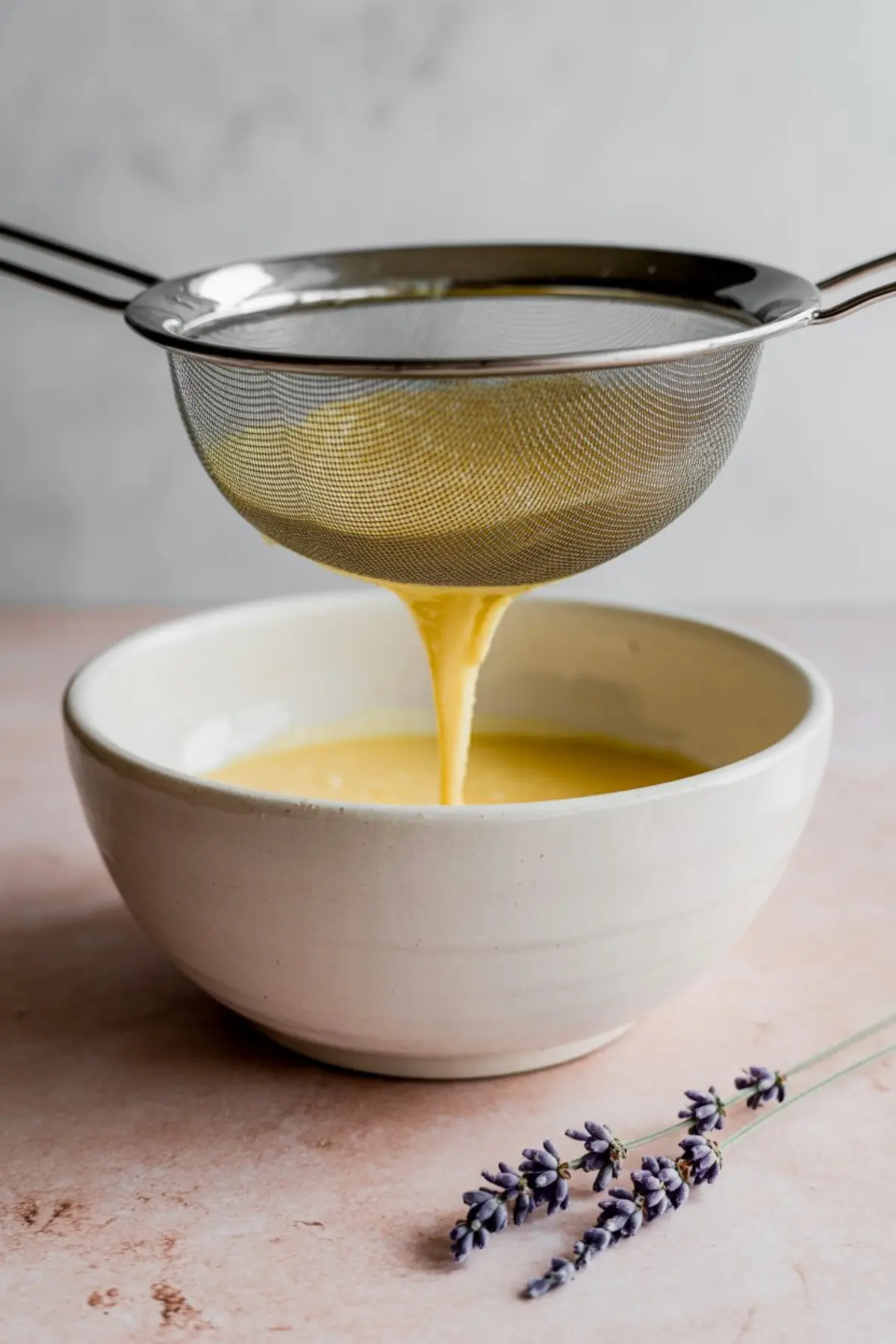
If it thickens too fast or curdles slightly, don’t worry. Strain it. That step smooths out any tiny bits and brings back the texture. If it bubbles, lower the heat. You want warmth, not a boil. Patience keeps it silky.
Bake Hot, Watch Closely
Bake these tarts near the top of the oven. The heat needs to touch the tops directly. Mine bake in just over ten minutes, then finish under the broiler. That’s where the freckled caramel forms. It might look uneven — and that’s exactly what you want.
If it cracks or domes, don’t worry. They settle as they cool. My handwritten card has this note beside the broil step: “If it bubbles, breathe.” The filling won’t be stiff like pie. It stays soft, just barely set, and continues to firm as it rests.
Chloe once made a batch of these for her book club. She called to say one cracked but still tasted like a bakery window in Lisbon. I told her what I tell you now. Let them cool in the tin, and serve with warmth. Not heat. Not cold. Just warmth.
A Note on Lemon Peel vs. Zest
I’ve used both whole peel and grated zest in this recipe. Whole peel infuses more gently, especially when simmered in syrup. Zest gives a sharper citrus note but can turn bitter if left in too long. In my older notes, I wrote, “peel curls, zest sings.” But I reach for the peel now. It softens the custard, lets the cinnamon speak.
If you’re out of fresh lemons, use orange peel. It’s sweeter, softer, and still holds the tart’s shape. Just adjust the steeping time slightly. A minute more is enough.
Related Recipes That Share That Custard Glow
If you love this custard base, you might enjoy the creamy texture in these pistachio brigadeiro as well. They hold the same richness, though in a more compact, truffle-like bite. The custard tarts are about warmth and flake. The brigadeiros are about smoothness and chew.
For something with less structure and more spoon, this egg custard pie recipe offers the same filling but settles into a soft shell. And during the colder months, the no bake eggnog pie recipe leans into the season’s spice and richness without ever touching the oven.
A Closing Thought from My Notes

I’ve baked these on gray days and bright ones. The recipe card has cinnamon stains along one edge and a small grease mark near the corner. Chloe added a heart in pencil when she was younger. That mark has stayed, though it fades a little each year.
Bake these when you need something warm but light. The custard will catch the heat. The pastry will hold the shape. And even if they crack, even if the tops darken more than you meant them to, they’ll carry the flavor just as well.
You’re always welcome to write me a note if you try them. Or save this recipe to your Pinterest board for later. It helps others find their way to it to.
Pastel de nata (Portuguese custard tarts)
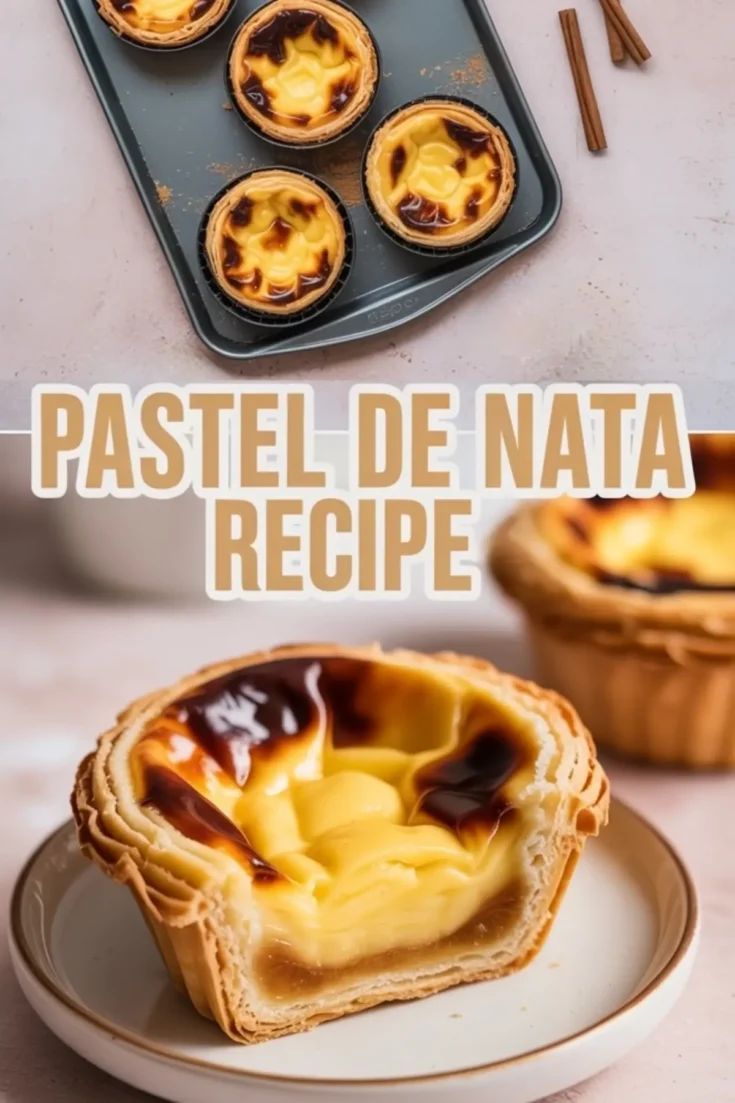
Pastel de nata are classic Portuguese custard tarts with crisp pastry shells and a creamy custard filling topped with a caramelized surface. I bake them at home using a natas recipe that mirrors the pastel de nata Lisbon bakeries are famous for. Some call them Portuguese custard tarts pastel de nata, others Portuguese egg tart or Portuguese tarts, but each version delivers the same rich flavor. If you’ve wondered how to make Portuguese custard tarts, this Portuguese custard tart recipe is easier than you’d think. Among Portuguese desserts, pastel de nata stands out as the most iconic, a must-try custard tart recipe for any baker.
Ingredients
- 1 sheet good-quality store-bought puff pastry, thawed
- 1 cup granulated sugar
- 1/3 cup water
- 1 cinnamon stick
- 1 wide strip lemon peel
- 6 large egg yolks
- 1/4 cup cornstarch
- 1 cup whole milk
- 1/2 cup heavy cream
Instructions
- Preheat the oven to 500°F (260°C) and place a rack near the top. If your oven has a broil setting, you’ll use it at the end of baking.
- Roll the puff pastry into a tight log and cut into 12 even rounds. Press each round into a lightly greased muffin tin, starting from the center and working up the sides. Chill the tin while preparing the filling.
- In a saucepan, combine the sugar, water, cinnamon stick, and lemon peel. Bring to a boil and let it cook for 3 minutes. Remove from heat, discard the cinnamon stick and lemon peel, and let the syrup cool slightly.
- In a separate bowl, whisk together the egg yolks, cornstarch, milk, and heavy cream until smooth.
- Slowly pour the warm sugar syrup into the egg mixture, whisking constantly to prevent curdling.
- Strain the mixture back into the saucepan and cook over medium-low heat, stirring constantly, until it thickens just enough to coat the back of a spoon. Do not let it boil. Remove from heat and let cool for 10 minutes.
- Pour the custard into the chilled pastry shells, filling just below the rim.
- Bake for 10–12 minutes, until the pastry is golden and the custard is mostly set. Switch to broil for 1–2 minutes to caramelize the tops. Watch carefully to avoid burning.
- Let the tarts cool in the tin for at least 10 minutes before removing. Serve warm or at room temperature.
Notes
Use all-butter puff pastry if available for the best flavor and flakiness.
Keep the puff pastry cold while working with it; if it softens too much, refrigerate it briefly before shaping.
The sugar syrup should be hot enough to dissolve the sugar but not so hot that it scrambles the eggs—aim for just slightly cooler than boiling.
Straining the custard ensures a smooth texture and removes any cooked egg bits.
Nutrition Information:
Yield:
12Serving Size:
1Amount Per Serving: Calories: 175Total Fat: 8gSaturated Fat: 4gTrans Fat: 0gUnsaturated Fat: 4gCholesterol: 122mgSodium: 54mgCarbohydrates: 22gFiber: 0gSugar: 18gProtein: 4g
