
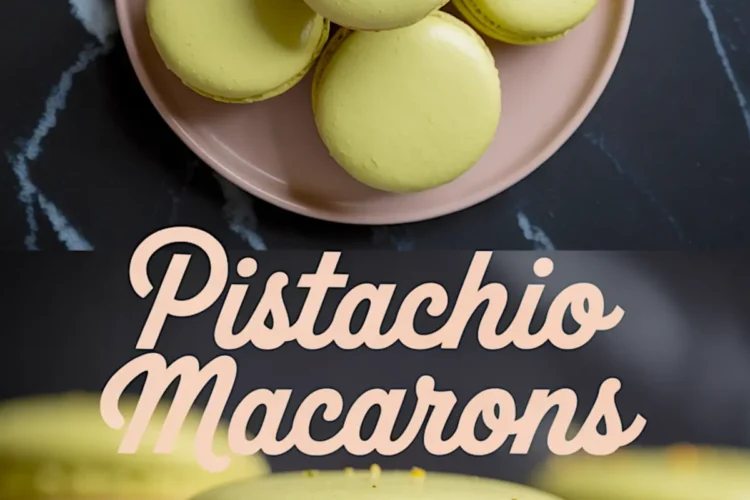
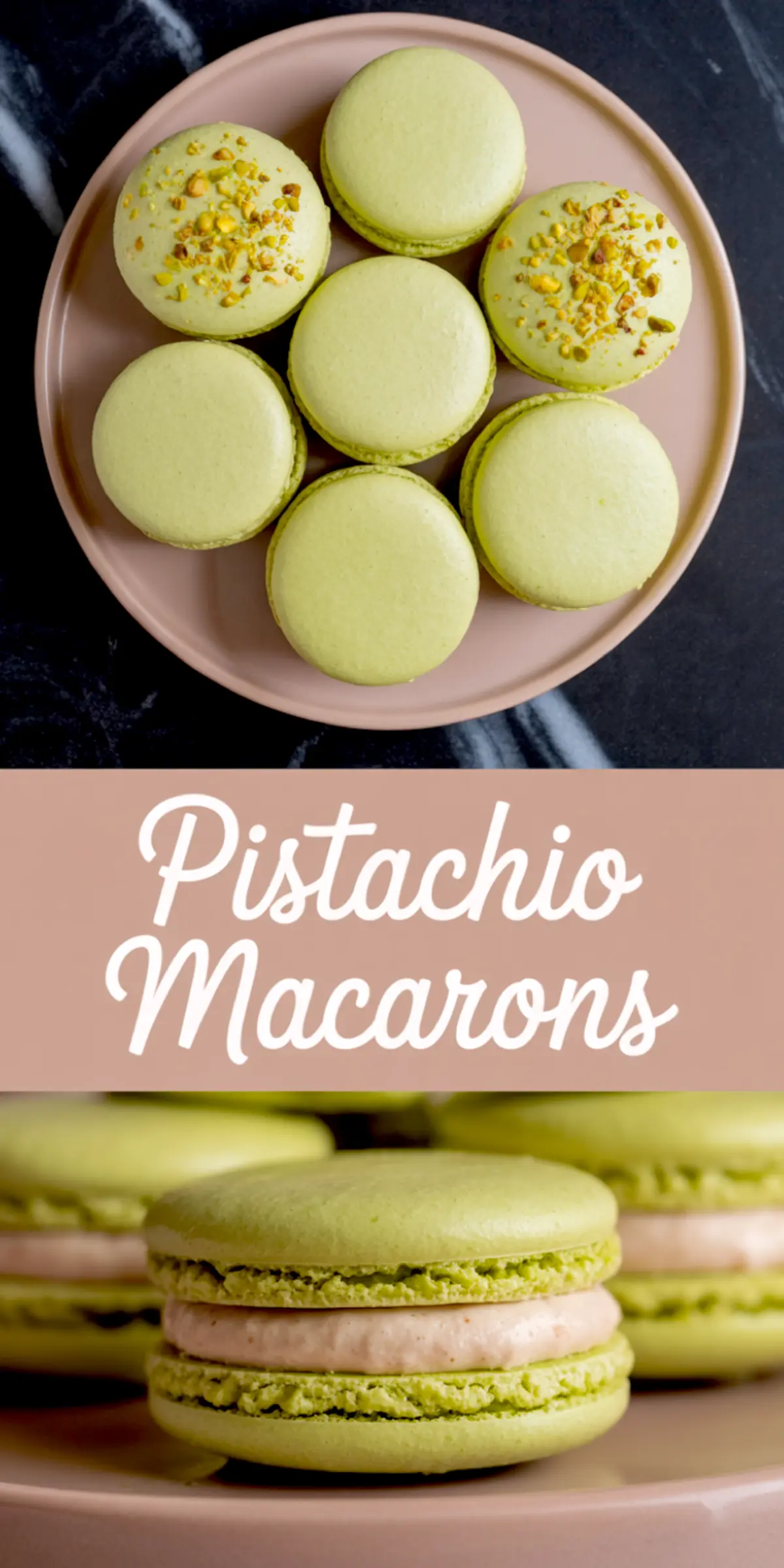
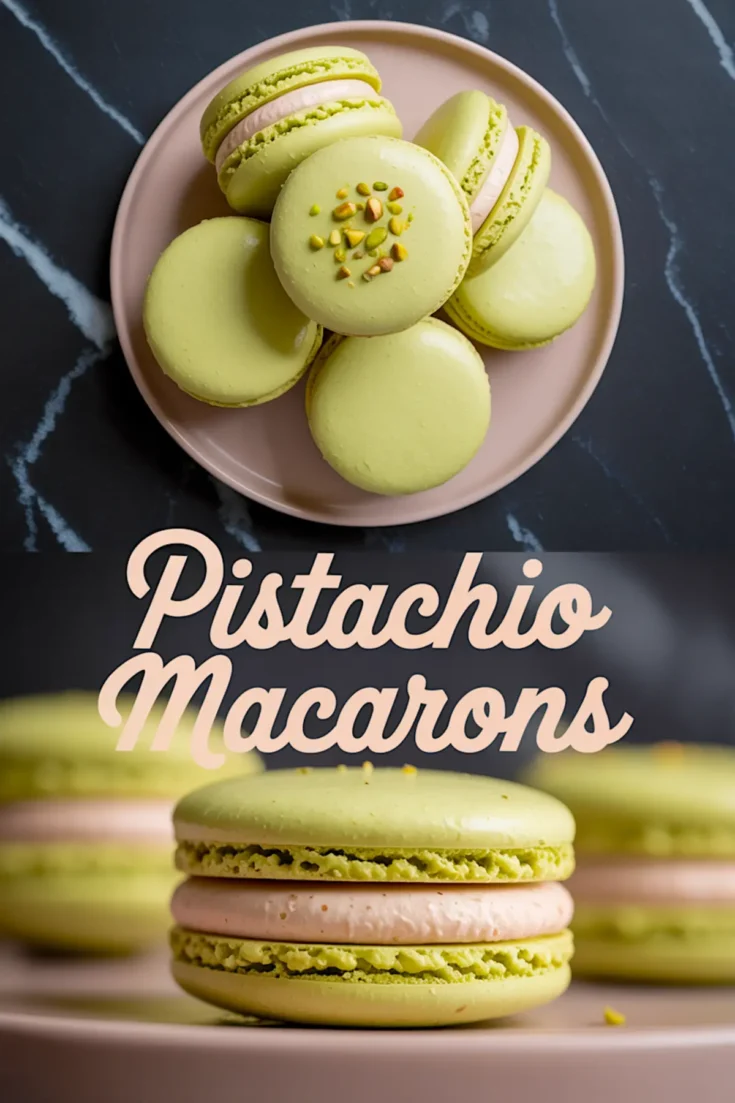
There’s something bold about holding back. Most pistachio macaron recipes lean into green—bright, loud, sometimes electric. Mine doesn’t. These shells stay barely tinted, if at all. The ganache inside? Creamy, natural, and just a whisper of green. The real surprise lies in how much flavor can hide in such softness.
In this post, you’ll learn how to make pistachio macarons with a silky white chocolate pistachio ganache, how to master the shell texture, and why aging your egg whites matters more than people admit. I’ll also share a trick I keep in my Pin Notebook—the little step that gives this filling its smooth depth and prevents grainy results.
These aren’t your typical bakery-style macarons. They don’t shout. They don’t need to.
Let’s walk through what makes them different.

Almond Shells Without the Fuss: Mastering the Texture
Macaron shells rely on almond flour, powdered sugar, and egg whites, all handled with more patience than pressure. Aging the egg whites is the first quiet move that makes a big difference. I always separate mine a day or two ahead and let them come to room temperature slowly.
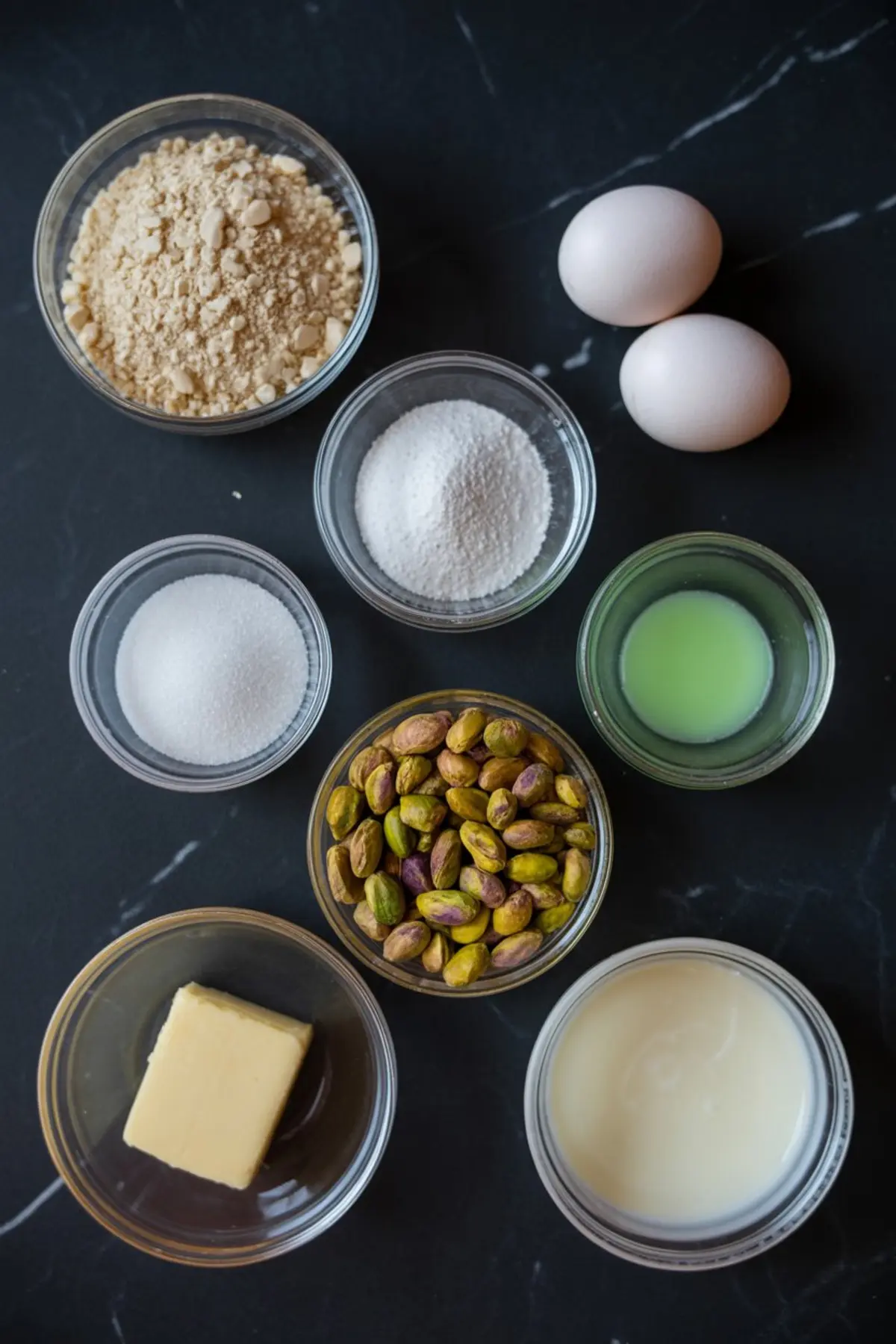
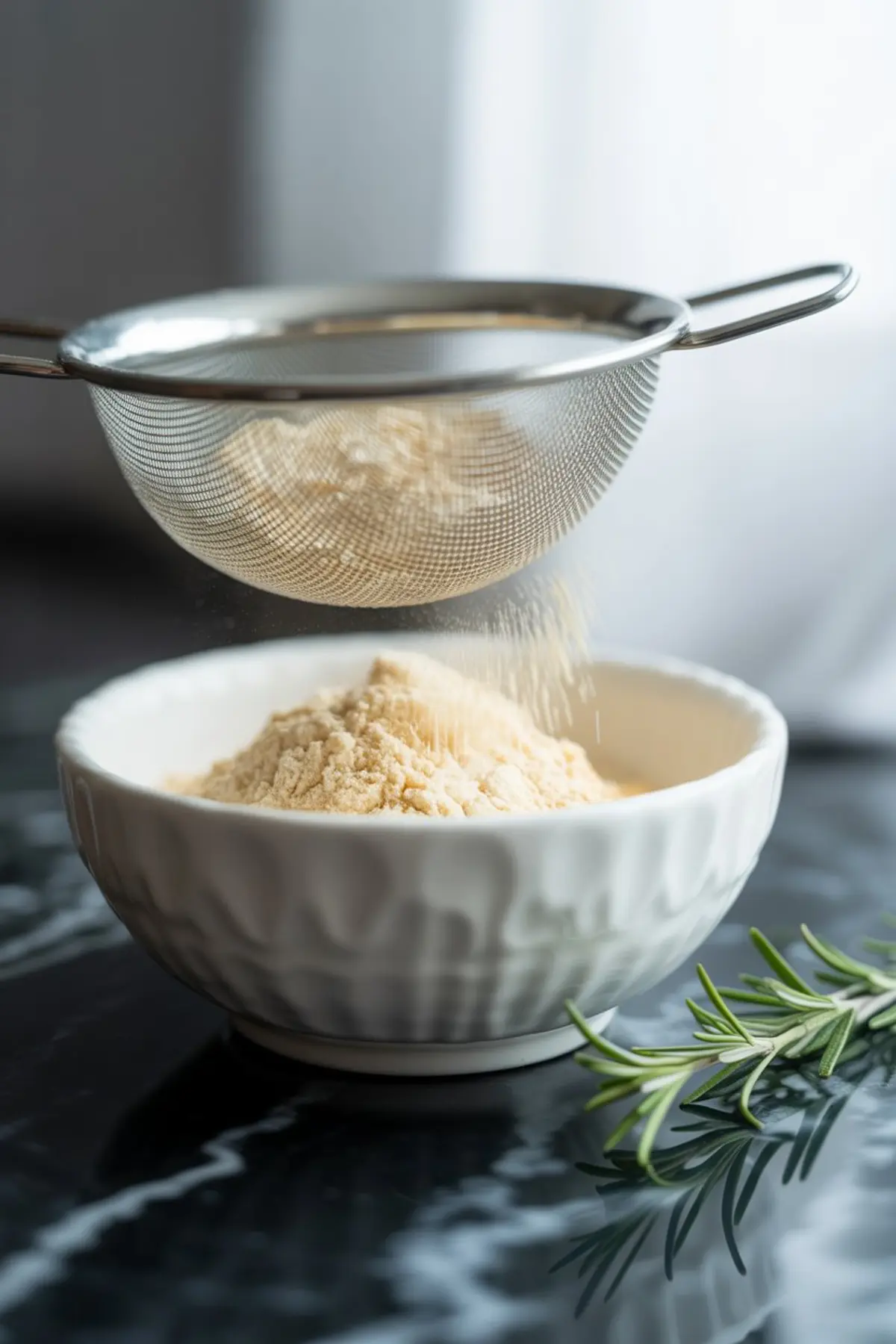
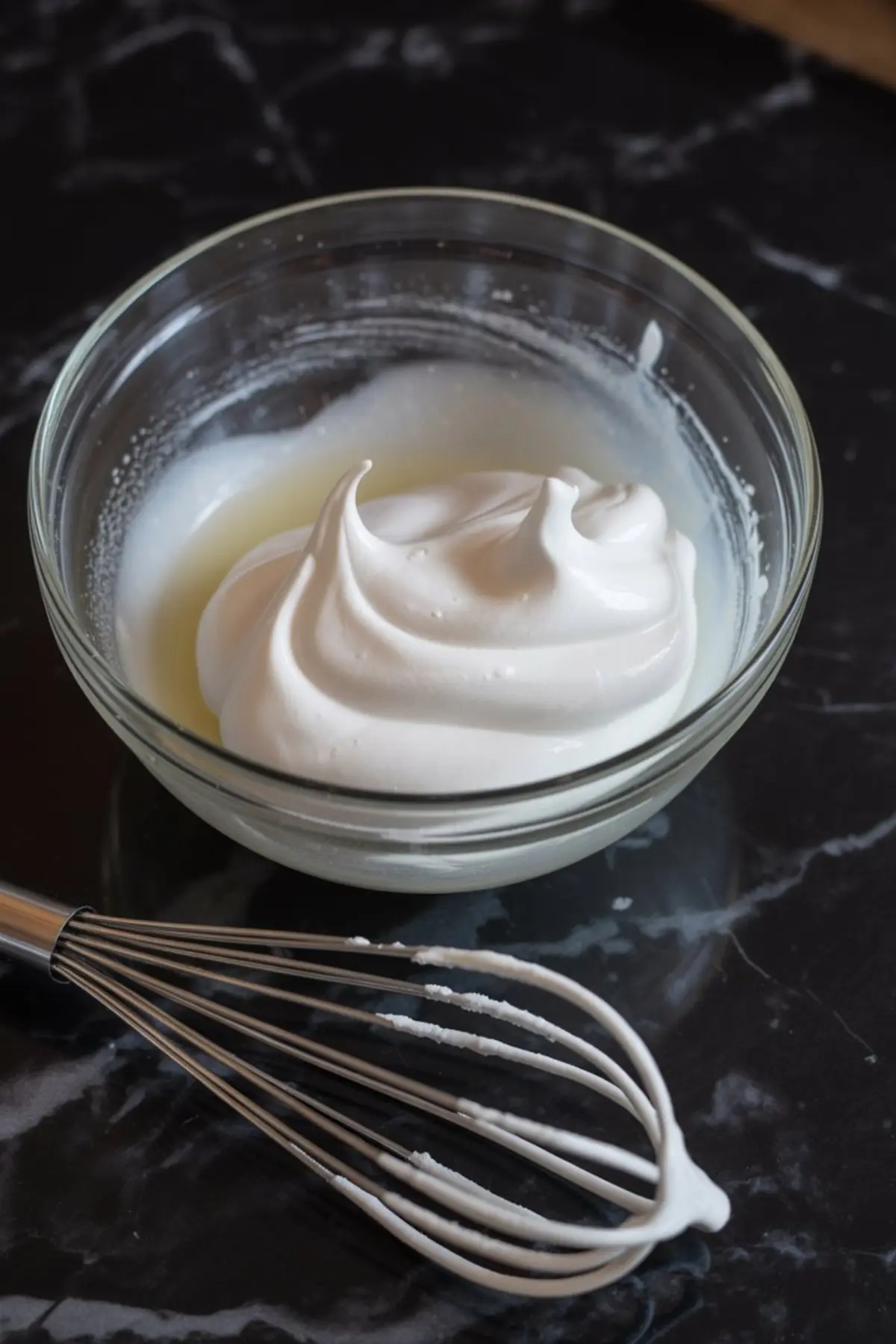
Once the almond flour and powdered sugar are sifted—three times, always—your meringue can take the spotlight. It should reach stiff, glossy peaks without drying out. Add sugar gradually, keeping the mixer on medium until the peaks stand tall. If you like a touch of green, use the barest hint. I skip it more often than not.
Folding comes next. That’s where most home bakers lose their nerve. In my notes, I’ve found that using a broad rubber spatula and counting folds works better than watching videos. You want ribbons that settle in slowly. Too stiff and the tops crack. Too loose and the shells spread. You’ll feel it when it’s right. Trust your hands, not the timer.
This technique works equally well whether you’re making these pistachio macarons or exploring other pistachio desserts like these chewy-soft Green Pistachio Cookies.
Shell Resting and Oven Timing
After piping the shells onto parchment, you’ll need to wait. The tops must dry completely. I check by gently tapping one with my pinky. If it sticks, it’s not ready. The rest can take anywhere from 30 to 45 minutes, depending on the humidity.
I bake mine at 300°F on the center rack, one tray at a time. They need their space and steady heat. Good feet, smooth tops, no browning—that’s the goal. Let them cool on the tray. If you try to lift them early, they’ll tear.
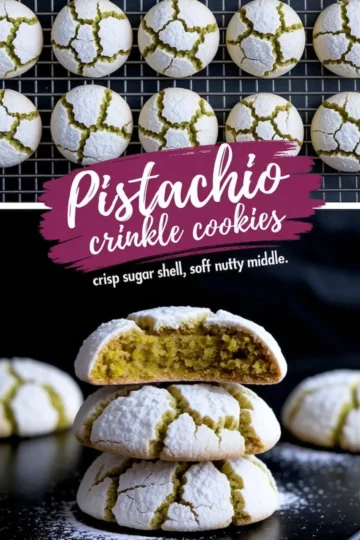
These techniques don’t just apply to macarons. If you’re exploring other cookie-style bakes that require rest and timing, try these Pistachio Crinkle Cookies for a soft chew and delicate texture contrast.
Pistachio Ganache with Natural Creaminess
Now to the part I teased earlier.
The filling isn’t pistachio buttercream, and it doesn’t rely on food coloring. It’s a white chocolate ganache mixed with pure pistachio paste and a pinch of salt. That combination melts into something soft, smooth, and nutty without being overly sweet. I always use good-quality white chocolate—the kind that melts cleanly without clumping. Skip the chips.
Heat the cream just to a simmer and pour it over the chopped chocolate. Let it sit for a full minute before stirring. Don’t rush. Then add the pistachio paste and salt. Stir slowly, until everything blends into a single, glossy mixture. At this point, I chill mine for about twenty minutes. Room temperature works too, but a short chill makes it easier to pipe.
Between ganache and buttercream, I’ve tried both. Ganache wins every time. It sets softer, tastes richer, and doesn’t need powdered sugar to hold its shape. Buttercream tends to overpower the pistachio. Ganache lets it speak clearly.
You’ll see a similar flavor balance in my Pistachio Coconut Macarons, where coconut brings a completely different tone to the same nut base.
Assembly and Maturation: The Macaron Patience Test
Once the shells have cooled and the ganache has thickened, you can start matching up your shells. I always line them up first before piping. That way, you’re not mid-squeeze and hunting for a partner.
Pipe a small circle of ganache in the center. Press gently, never twist. Then—and this is the hardest part—let them rest in the fridge for 24 hours. That wait changes everything.
Macarons fresh out of assembly taste flat. But after resting, they soften, deepen, and mellow. The shell draws in moisture from the filling. The textures marry. It’s not just tradition. It’s chemistry.
You’ll find the same principle in my White Chocolate Pistachio Biscotti, which always tastes better after a day of rest. Patience pays off.
Why I Stopped Using Food Coloring in Macarons
I used to color every macaron shell to match its filling—green for pistachio, pink for strawberry, soft yellow for lemon. Then one afternoon, out of green gel and in a hurry, I made this batch without it.
The result was quieter. Better.
No one missed the color. The pale shell and creamy filling signaled something more refined. More honest. Now I let the flavor do the talking. A faint pastel hue might show up if the pistachio paste carries a tinge, but I never add anything extra.
That shift taught me that macarons can feel luxurious without being loud. These sit beautifully next to matcha macarons or other soft-toned macarons flavors without competing. They’re understated, but never boring.
In my Pin Notebook, right next to this recipe, I’ve written three words: “Leave it pale.”
Save and Share: Keep This Macaron Recipe Close
If you’ve ever tried pistachio truffles and found them a bit heavy, these macarons strike a lighter note. They carry the same nutty richness but deliver it with delicate texture.
Save this Pistachio Macaron Recipe to your favorite board so you can find it later. These fit beautifully with macarons flavors you may already love, from macaron pistache to Italian macarons in softer tones.
And I’d love to hear from you in the comments. Did you chill the ganache? Skip the coloring? Try your own twist on the pistachio macaron filling? Share your version and let’s learn from each other.
Pistachio Macarons Recipe
Made it? Tap the stars to rate it.
These pistachio macarons feature delicate almond meringue shells filled with a naturally tinted pistachio-white chocolate ganache. The ganache uses pistachio paste and white chocolate to create a smooth, pale filling without artificial coloring. The recipe balances precision and simplicity for consistent results.
Ingredients
- FOR THE SHELLS:
- 100g almond flour
- 100g powdered sugar
- 75g egg whites (aged, room temperature)
- 75g granulated sugar
- A few drops of green gel food coloring (optional)
- FOR THE GANACHE FILLING:
- 100g good-quality white chocolate, finely chopped
- 40g heavy cream
- 30g pistachio paste (unsweetened, smooth)
- Pinch of salt
Instructions
- AGE THE EGG WHITES: Separate egg whites at least one day in advance and refrigerate. Before using, bring them to room temperature.
- PREPARE THE DRY MIXTURE: Sift the almond flour and powdered sugar together three times to ensure a fine, lump-free texture. Set aside.
- MAKE THE MERINGUE: Whip the egg whites on medium speed until soft peaks form. Gradually add the granulated sugar while continuing to whip. Increase to high speed and whip until stiff, glossy peaks form. If using food coloring, add it during the final seconds of mixing.
- MACARONAGE (FOLDING): Add the sifted almond flour mixture to the meringue. Use a spatula to fold gently but deliberately, deflating some air. The batter should flow slowly and form thick ribbons that disappear back into the batter within 10 seconds.
- PIPE THE SHELLS: Transfer the batter to a piping bag fitted with a round tip. Pipe even rounds onto parchment-lined baking sheets, spaced about 1 inch apart. Tap the trays firmly on the counter several times to release air bubbles.
- REST THE SHELLS: Let the piped shells rest at room temperature for 30 to 45 minutes, or until the surface is dry to the touch and no batter sticks to your finger.
- BAKE: Preheat the oven to 300°F (150°C). Bake one tray at a time on the center rack for 15 to 17 minutes. The shells should develop feet and not brown. Allow to cool completely on the tray before removing.
- MAKE THE GANACHE: In a small saucepan or microwave, heat the heavy cream until just simmering. Pour over the chopped white chocolate and let sit for 1 minute. Stir gently with a spatula until fully melted and smooth.
- ADD PISTACHIO PASTE: Mix in the pistachio paste and a pinch of salt. Stir until the ganache is completely blended and uniform in texture. Let cool at room temperature for 1–2 hours or chill in the refrigerator for about 20 minutes until thick enough to pipe.
- ASSEMBLE: Match up similar-sized macaron shells. Pipe a small mound of ganache onto the flat side of half the shells, then gently sandwich with the remaining halves.
- MATURE: Place assembled macarons in an airtight container and refrigerate for 24 hours to allow the flavors and textures to develop fully.
Notes
Macarons taste best after maturing and can be stored in the refrigerator for up to 5 days. Freeze assembled macarons in an airtight container for longer storage, defrosting in the fridge overnight.
Nutrition Information:
Yield:
24Serving Size:
1Amount Per Serving: Calories: 89Total Fat: 5gSaturated Fat: 1gTrans Fat: 0gUnsaturated Fat: 3gCholesterol: 3mgSodium: 20mgCarbohydrates: 11gFiber: 1gSugar: 10gProtein: 2g
Read next


★ Made it? Tap the stars to rate it