
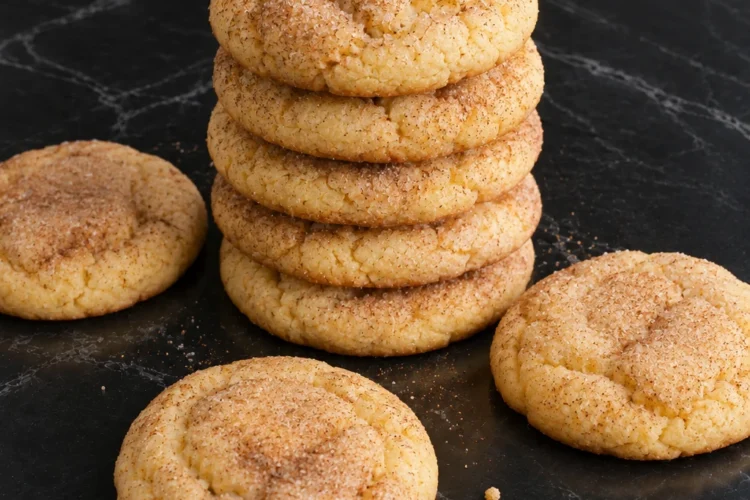
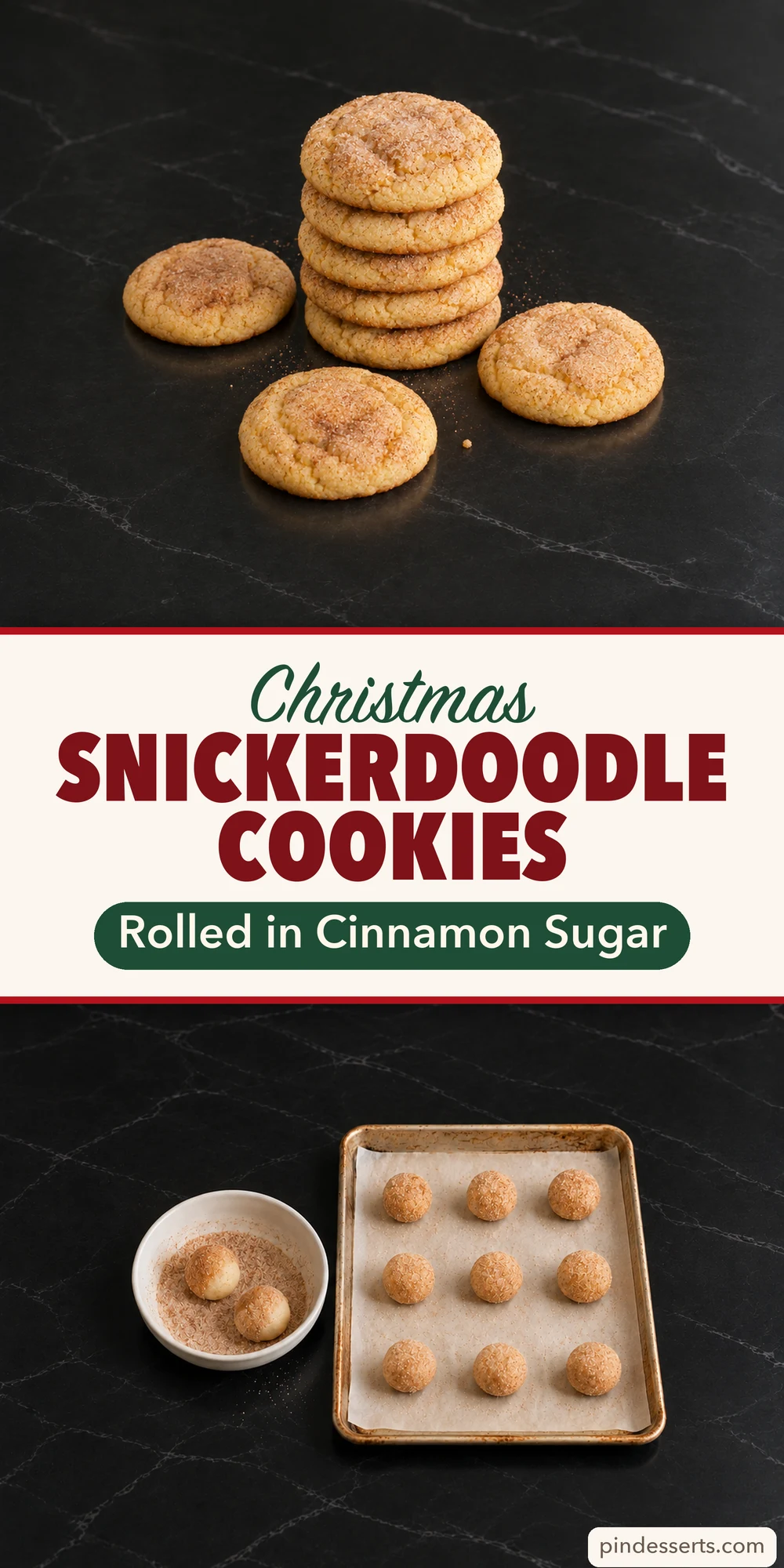
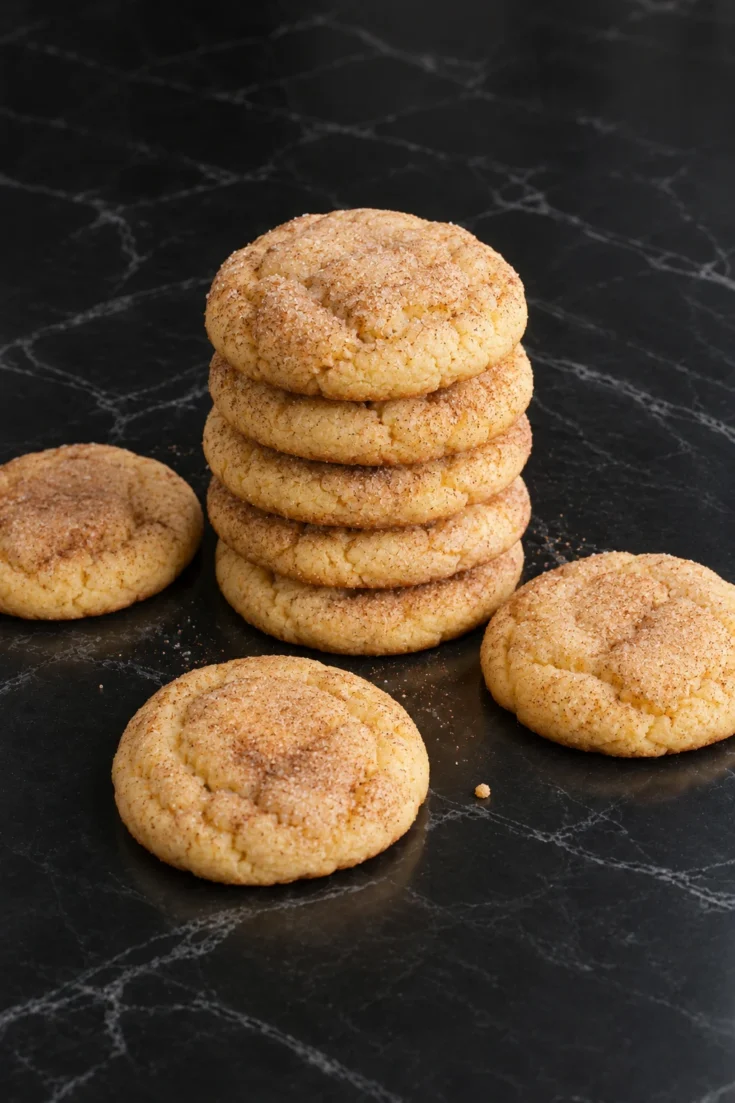
Snickerdoodle cookies are soft, thick sugar cookies with a crackly cinnamon-sugar shell and a faint tang that no plain sugar cookie has. That tang comes from 2 teaspoons of cream of tartar, which also makes the cookies puff in the oven and then settle into the cracked, crinkly tops people expect.
The other number that matters is time. Bake the dough balls at 375°F (190°C) for 9 to 10 minutes and take them out while the centers still look underdone; they finish setting on the hot pan and stay soft for days. Plan on 20 minutes to mix, a 30-minute chill and about 35 minutes to roll and bake three sheets, which puts a full Christmas cookie tin within reach of a weeknight.
At a Glance
- Yield: about 30 cookies from 1 1/2-tablespoon (35 g) dough balls
- Equipment: mixer, 2 baking sheets, parchment, a small bowl for the cinnamon sugar
- Time: about 85 minutes, including a 30-minute chill
- Difficulty: easy; no rolling pin, no cutters
- Key technique: pull them at 9 to 10 minutes, while the middles still look puffy
What Cream of Tartar Does Here
Cream of tartar is an acid, and it is the reason a snickerdoodle tastes like a snickerdoodle. Paired with 1 teaspoon of baking soda, it acts like a fast baking powder: the cookies rise quickly, then sink a little as they cool, which cracks the sugar crust into that crinkled pattern.
It also keeps the sugar in the dough from crystallizing, so the texture stays soft and slightly chewy instead of crisp. Without it, you get a flatter, sweeter cinnamon sugar cookie. Two teaspoons for 2 3/4 cups of flour is the classic ratio, and it is enough tang to notice without tasting sour.
Butter carries the rest. A full cup (226 g) of softened butter against 1 1/2 cups (300 g) of sugar gives rich, buttery edges, and the 30-minute chill firms it just enough that the cookies spread to about 3 inches (7.5 cm) instead of running into thin wafers.
Snickerdoodle Ingredients
Everything here is a pantry staple except, for some kitchens, the cream of tartar, which sits in the spice aisle in a small jar:
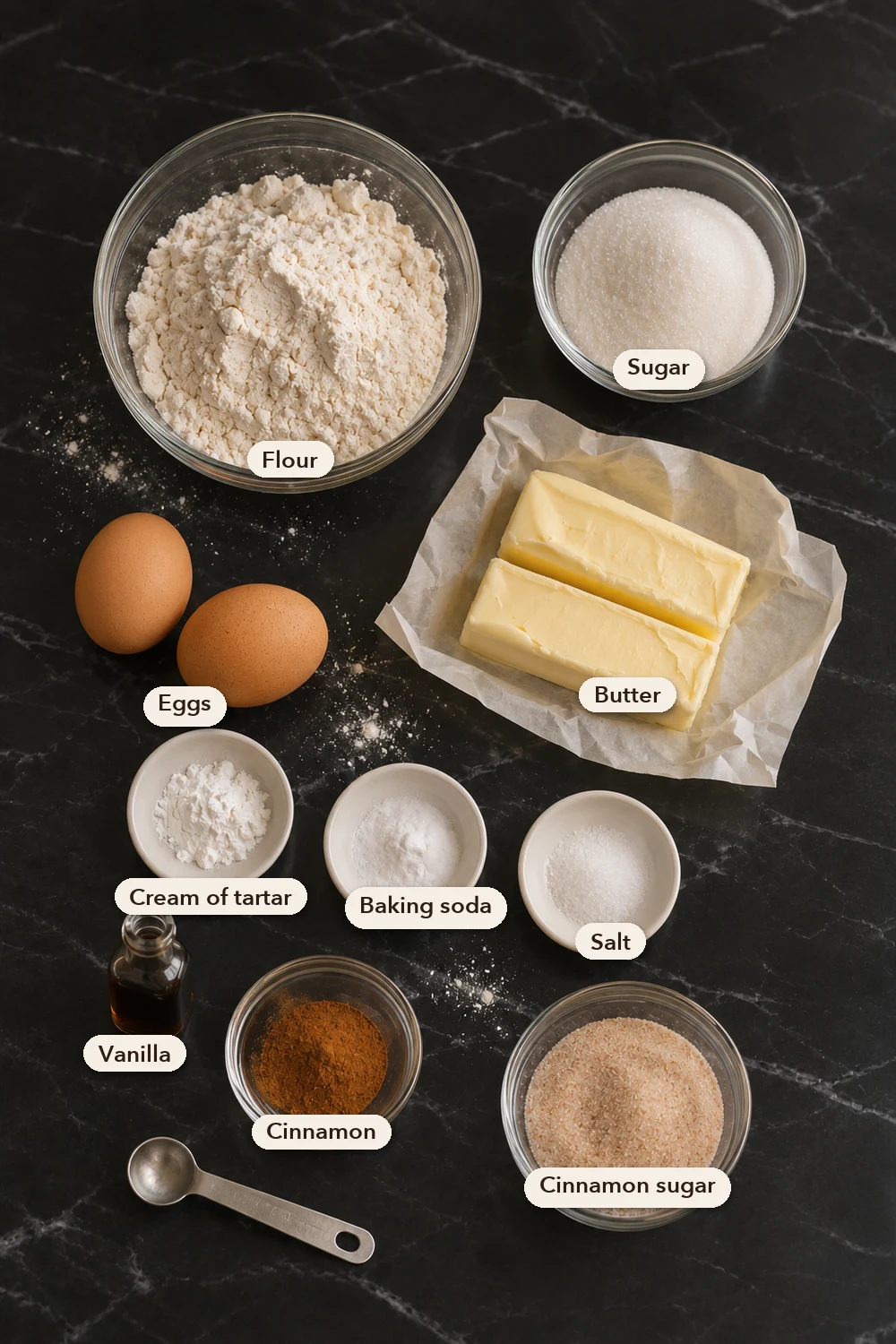
- All-purpose flour: 2 3/4 cups (345 g), spooned and leveled. Too much flour gives tall, dry cookies that do not crack.
- Unsalted butter: 1 cup (226 g), softened to about 65°F (18°C). Melted butter makes greasy, flat cookies.
- Granulated sugar: 1 1/2 cups (300 g) for the dough, plus 1/4 cup (50 g) for rolling.
- Eggs: 2 large, at room temperature, so they blend into the butter without curdling it.
- Cream of tartar: 2 teaspoons. There is no true swap; see the substitutions below.
- Baking soda (1 teaspoon), salt (1/2 teaspoon) and vanilla extract (2 teaspoons).
- Ground cinnamon: 1 tablespoon, mixed into the rolling sugar. Fresh cinnamon smells sweet and strong when you open the jar; dull cinnamon gives a pale, flat coating.
Mixing the Dough
Beat the butter and sugar on medium speed for 2 to 3 minutes, until the mixture looks paler and fluffy. This step traps air that helps the puff, so do not cut it short. Add the eggs one at a time, then the vanilla, and scrape the bowl.
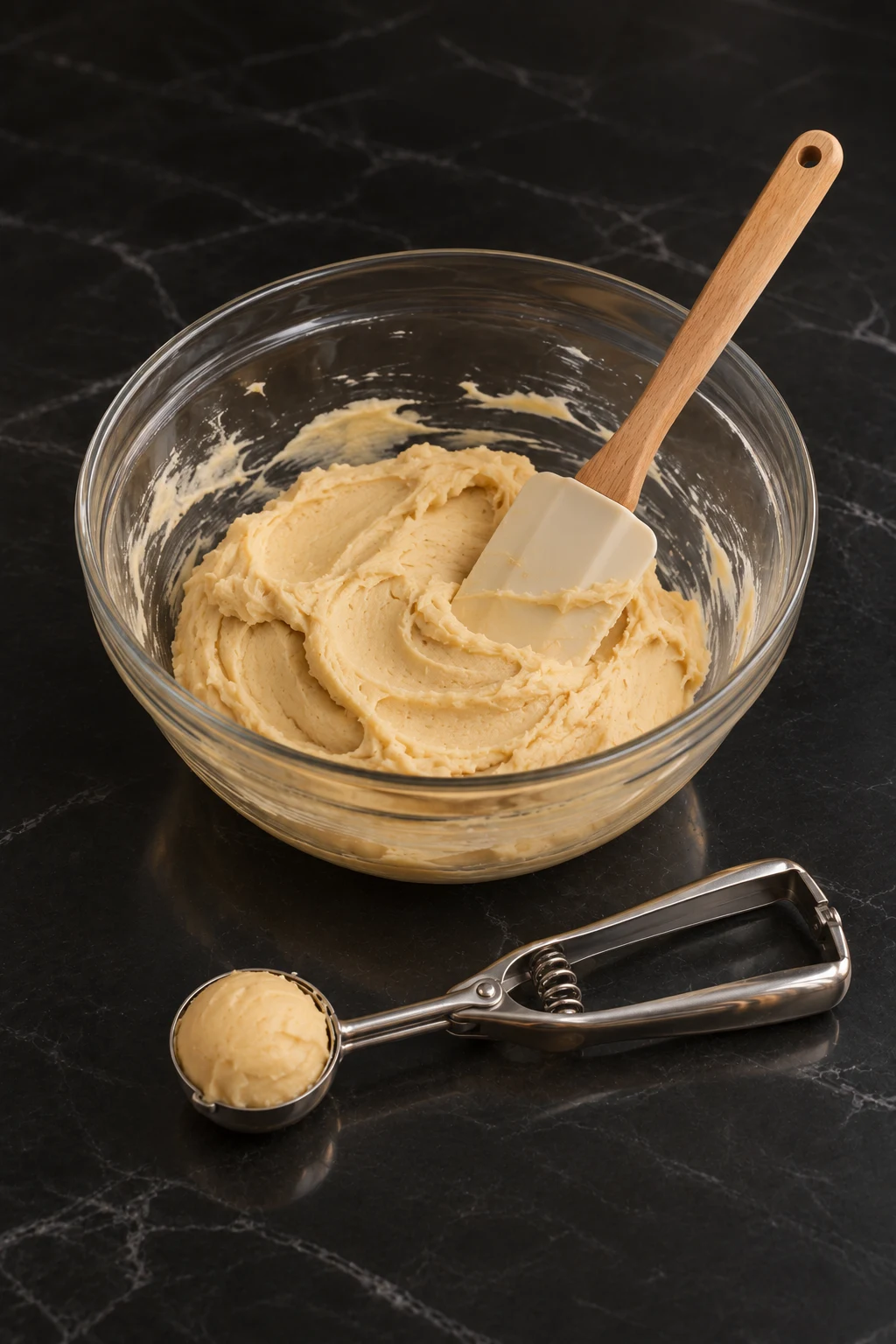
Whisk the flour, cream of tartar, baking soda and salt in a separate bowl so the leaveners are spread evenly, then add them on low speed just until no dry flour shows. The dough should be soft and thick, like stiff frosting. Cover the bowl and chill it for 30 minutes; it can also wait in the fridge for up to 2 days, and cold dough simply needs 1 extra minute in the oven.
Rolling in Cinnamon Sugar
Stir 1/4 cup (50 g) of sugar with 1 tablespoon of cinnamon in a shallow bowl. Scoop the dough into 1 1/2-tablespoon (35 g) balls, roll each between your palms until smooth, then roll it in the cinnamon sugar until fully coated.
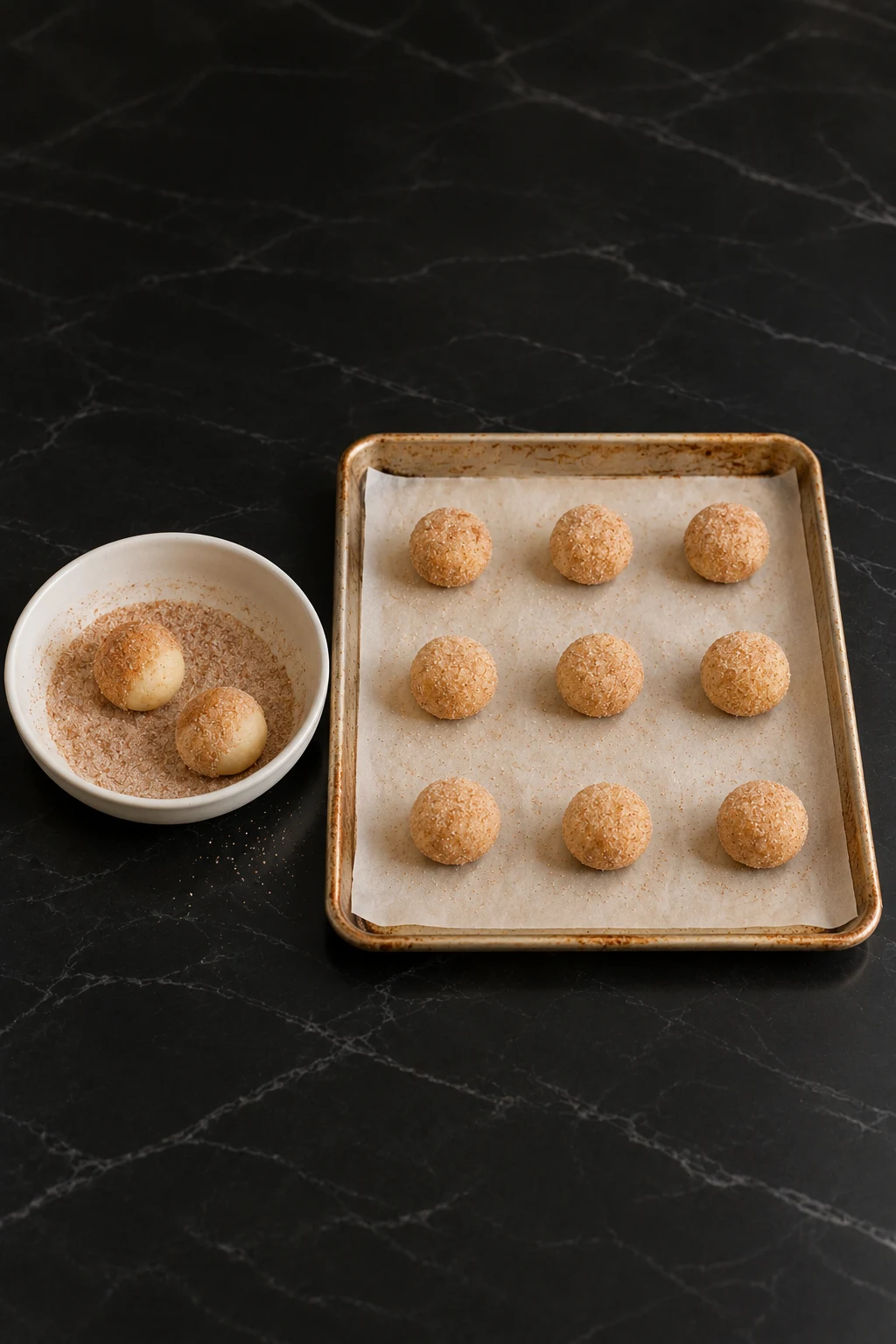
Set the balls 2 inches (5 cm) apart on parchment-lined sheets, about 12 per sheet. A thick, even coat matters: the sugar shell is what cracks, so a thin dusting gives smooth, plain-looking tops. If the dough warms up and gets sticky while you work, put the bowl back in the fridge for 10 minutes.
When to Pull Them From the Oven
Snickerdoodles are done before they look done. At 9 to 10 minutes in a 375°F (190°C) oven, the edges are set and barely golden on the bottom, while the centers look puffy, pale and a little wet between the cracks. That is the moment to take them out.
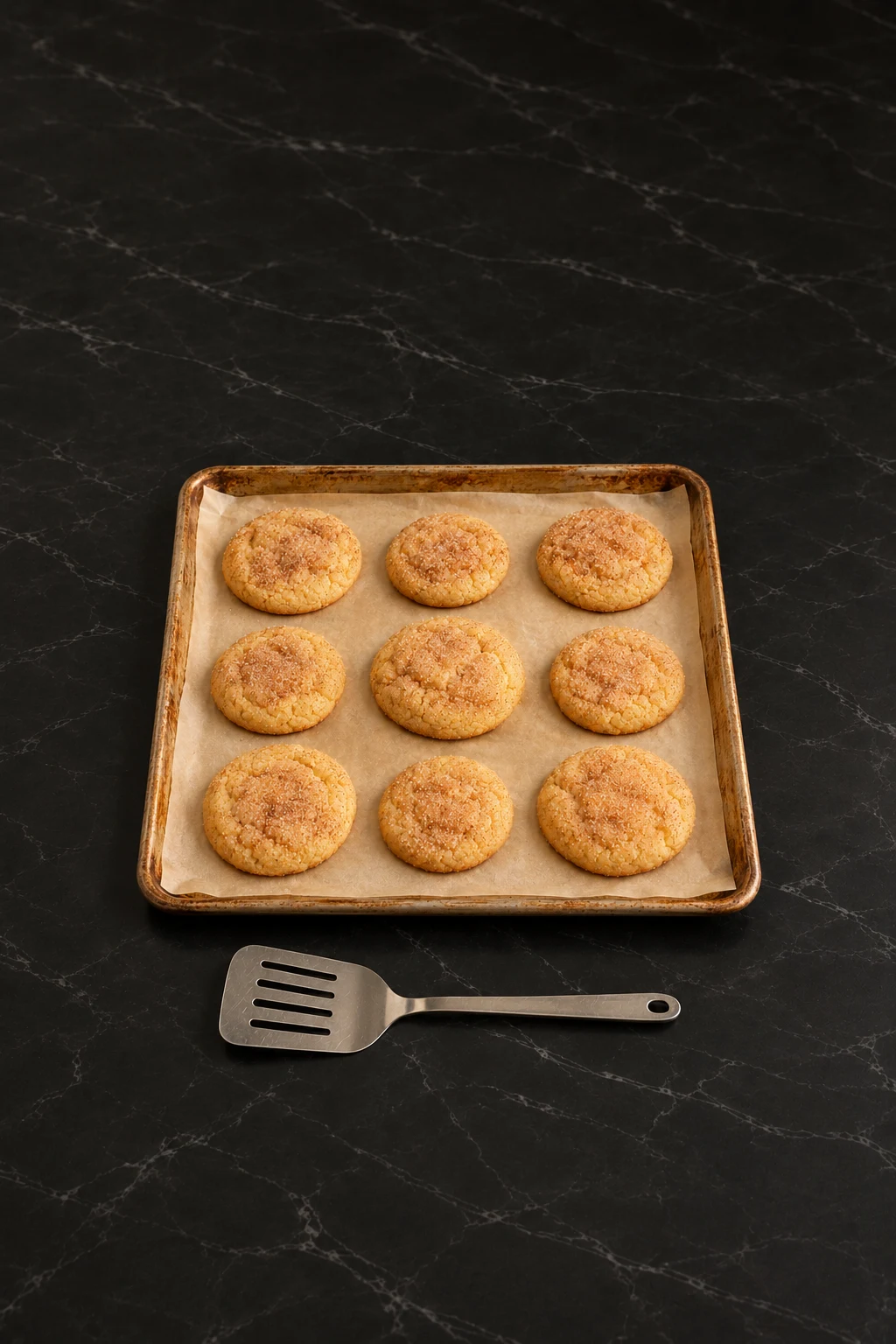
Leave them on the hot sheet for 5 minutes. The puffed tops sink and wrinkle as they cool, and the centers finish cooking from the pan heat. Then move them to a rack. A cookie baked until the middle looks dry, usually at 12 minutes, cools into a crisp, hard snickerdoodle.
Fixing Flat, Puffy or Hard Snickerdoodles
| Problem | Cause | Fix |
|---|---|---|
| Flat, spread-out cookies | Butter too soft or dough not chilled | Chill 30 minutes; bake on a cool sheet |
| Tall domes with no cracks | Too much flour or a thin sugar coat | Spoon and level the flour; roll the balls twice |
| Hard, crunchy cookies | Baked past 10 minutes | Pull them while the centers look puffy |
| No tang, tastes like sugar cookies | Cream of tartar left out or old | Use 2 teaspoons of fresh cream of tartar |
| Pale, patchy coating | Old cinnamon or dough too dry to hold sugar | Fresh cinnamon; roll while the dough is cool but tacky |
Swaps and Variations
- No cream of tartar: replace it and the baking soda with 2 teaspoons of baking powder. The cookies bake up softer but lose the tang and most of the crackle.
- Brown butter: brown the butter, chill it until soft-solid (about 1 hour) and use it as is. The cookies taste nuttier and spread a little more.
- Chai spice: add 1/2 teaspoon each of cardamom and ginger to the rolling sugar.
- Bigger cookies: use 3-tablespoon (70 g) balls and bake 12 to 13 minutes; you get about 15.
- Holiday twist: our eggnog snickerdoodles add eggnog and nutmeg to the same idea.
For the same flavor in a pan, snickerdoodle bars with a cinnamon-sugar crust skip the rolling entirely, and cheesecake swirl snickerdoodle bars add a tangy cream cheese layer. If you like the soft texture but want something richer, try these cream cheese cookies.
Snickerdoodle Questions
Why are they called snickerdoodles?
The name most likely comes from the German “Schneckennudeln”, a cinnamon pastry, and stuck around as a playful American cookie name in the 1800s.
Do I have to chill the dough?
Thirty minutes is enough. Skip it and the cookies spread thinner, with flatter tops and fewer cracks.
Can I freeze snickerdoodle dough?
Yes. Freeze the rolled balls without the cinnamon sugar for up to 3 months, roll them in the coating while frozen and bake 11 to 12 minutes.
Why did my snickerdoodles turn out cakey?
Usually too much flour. Spoon it into the cup and level it, or weigh 345 g.
Storing and Packing Them for the Cookie Tin
Baked snickerdoodles keep soft in an airtight container at room temperature for up to 1 week. The sugar coating protects the surface, so they stack without sticking. Baked cookies also freeze well for 3 months; thaw them in the container so condensation forms on the lid, not the cookies.
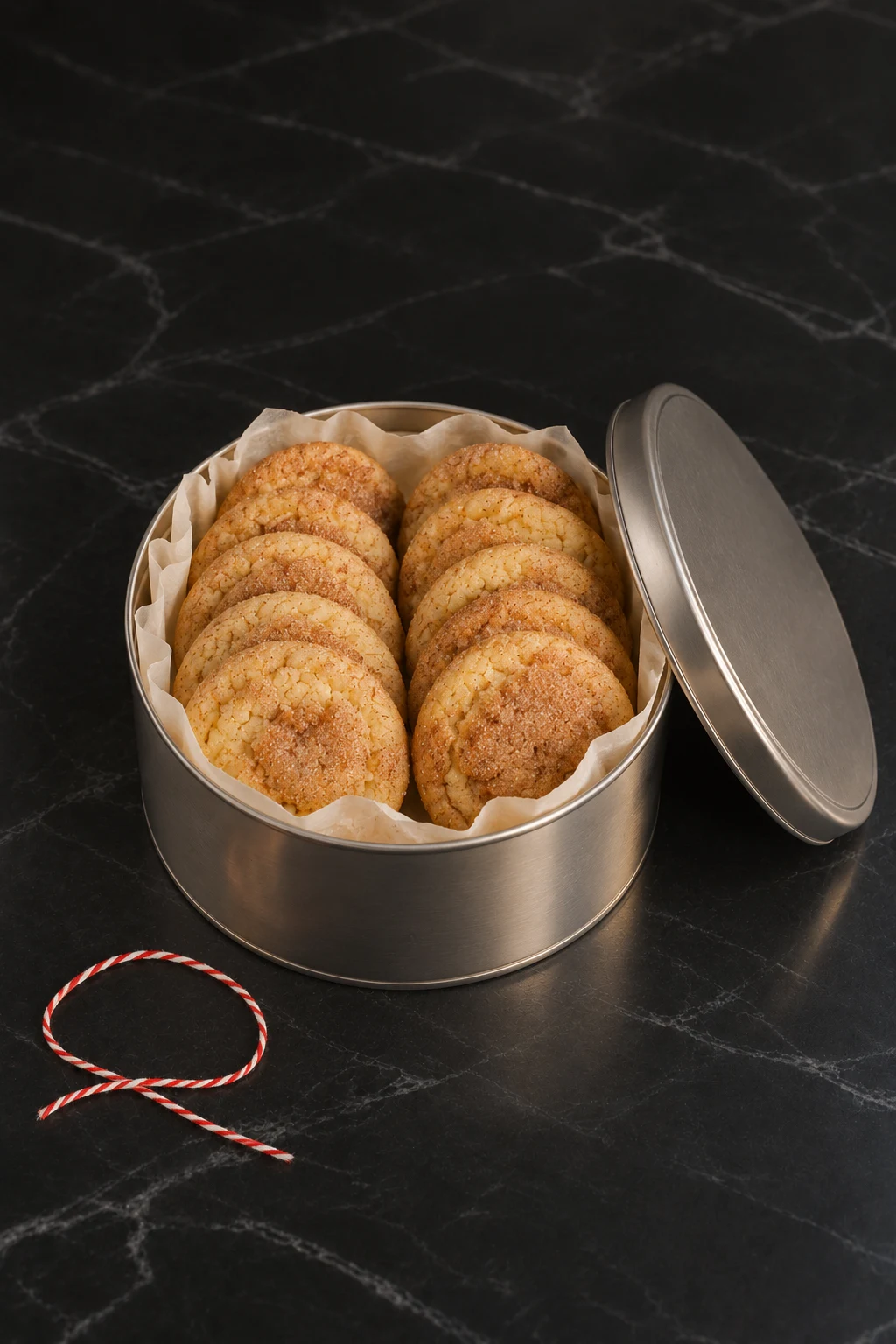
For gifts, stand them on their edges in a parchment-lined tin, which keeps the crackled tops visible and the shells unbroken. They hold up next to stronger flavors: pair them with soft gingerbread cookies, chocolate crinkle cookies and chocolate peppermint cookies for a mixed box, and find more ideas in our Christmas cookies collection. Keep each kind in its own parchment section, since mint and ginger travel into plain butter cookies within a day.
Snickerdoodle Cookies
Made it? Tap the stars to rate it.
Soft snickerdoodle cookies with puffy centers and crackly cinnamon-sugar tops. Two teaspoons of cream of tartar give the classic tang and make the cookies rise, then sink into those crinkled shells. The butter dough chills for just 30 minutes, gets rolled in cinnamon sugar and bakes at 375°F for 9 to 10 minutes, coming out while the middles still look underdone so they stay soft for a week. Makes about 30 cookies, no rolling pin or cutters needed, and the dough keeps 2 days in the fridge.
Ingredients
Snickerdoodle dough
- 2 3/4 cups (345 g) all-purpose flour
- 2 teaspoons cream of tartar
- 1 teaspoon baking soda
- 1/2 teaspoon salt
- 1 cup (226 g) unsalted butter, softened
- 1 1/2 cups (300 g) granulated sugar
- 2 large eggs, room temperature
- 2 teaspoons vanilla extract
Cinnamon sugar coating
- 1/4 cup (50 g) granulated sugar
- 1 tablespoon ground cinnamon
Instructions
- CREAM: Beat the butter and 1 1/2 cups sugar on medium speed for 2 to 3 minutes until pale and fluffy. Beat in the eggs one at a time, then the vanilla.
- DRY: Whisk the flour, cream of tartar, baking soda and salt in a separate bowl.
- MIX: Add the dry ingredients on low speed just until no dry flour remains.
- CHILL: Cover and refrigerate the dough for 30 minutes (up to 2 days).
- PREP: Heat the oven to 375°F (190°C) and line 2 baking sheets with parchment. Stir 1/4 cup sugar with the cinnamon in a shallow bowl.
- ROLL: Scoop 1 1/2-tablespoon (35 g) balls, roll them smooth, then roll each in the cinnamon sugar until fully coated. Place 2 inches apart.
- BAKE: Bake one sheet at a time for 9 to 10 minutes, until the edges are set and the centers still look puffy.
- COOL: Cool 5 minutes on the sheet, then move to a wire rack.
Notes
- Do not skip the cream of tartar: it gives the tang and the crackled tops.
- Chill the dough 30 minutes so the cookies spread to about 3 inches, not thin wafers.
- Done at 9 to 10 minutes, when the edges are set and the centers still look puffy. At 12 minutes they turn crisp.
- Coat the dough balls fully in cinnamon sugar; a thin dusting gives smooth tops.
- Airtight at room temperature up to 1 week; rolled dough balls freeze 3 months.
Nutrition Information:
Yield:
30Serving Size:
1Amount Per Serving: Calories: 140Total Fat: 7gSaturated Fat: 4gTrans Fat: 0gUnsaturated Fat: 2gCholesterol: 29mgSodium: 85mgCarbohydrates: 20gFiber: 0gSugar: 12gProtein: 2g
Read next
 Pistachio Brigadeiro: A Glossy Brazilian Dessert
 Chocolate Cherry Thumbprint Cookies: A Rich, Decadent Bite with a Fruity Twist
 Why These Strawberry Cheesecake Shortbreads Make Sense on a Tuesday
 Dill Pickle Cookies: A Tangy Twist You’ll Always Remember
 Chocolate Snowball Cookies with White Chocolate Center
 How to Make Soft Peanut Butter Chocolate Chip Cookies Like a Pro

★ Made it? Tap the stars to rate it